The Ultimate Business Productivity Hack: Listening
By Chris Benguhe, RaeAnne Marsh and Elaine Pofeldt | July 17, 2025 11:52 am
Turns out, hearing your people is 12 times more powerful than all those other ‘success strategies.’
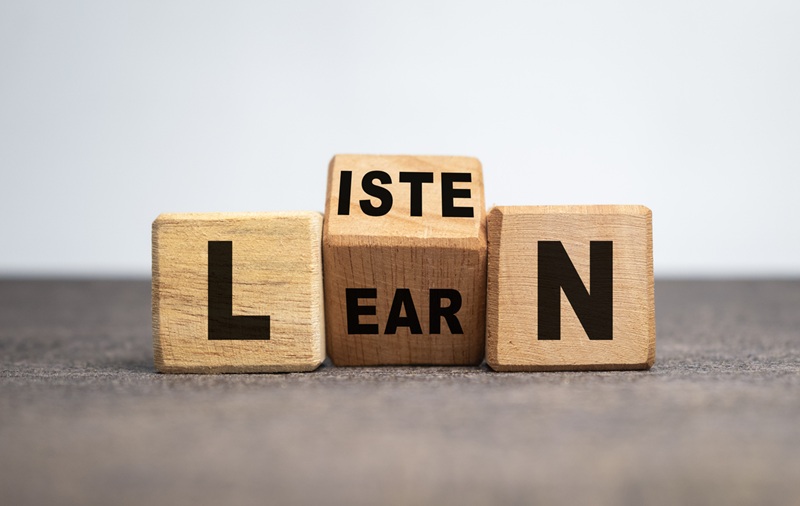
Employees are 50% more likely to be engaged and significantly more likely to remain with the company if they believe their ideas are considered in how things are done — even if these ideas are never adopted. (Image: iStock/ Dadan)
The critical difference that comes from listening with an open, caring heart and a patient and deliberate ear is lifechanging. It’s a heroic ability that extends into every aspect of our lives — and especially business, where an overwhelming majority of workers and customers have long reported feeling unheard by employers.
Why is that? Well, according to Bob Chapman of Barry-Wehmiller, one of the most prominent leaders in the people-centric business strategies movement, it’s because leaders do not think they need to.
“The conventional wisdom is that leaders tell people what to do and how to act,” Bob explains. “Time and again, I’ve said that listening is the most important thing a leader can do. But it transcends the leader role. Listening is the most important thing we, as humans, can do for one another. It shows empathy, it shows you care and, most importantly, it shows the person you are listening to that they matter.”
This unfortunate trend of telling instead of listening and the great case for reversing it is captured splendidly in Dave Garrison’s best-selling book The Buy-In Advantage: Why Employees Stop Caring — and How Great Leaders Inspire Everyone to Give Their All. As Garrison explains, for the last 100 years or so, the business world has looked for “big ideas” from thought leaders promising new ways to solve problems — from lean manufacturing to AI.
However, what is often overlooked is the daily experience of the employees expected to delight customers and create profits, he notes. After surveying thousands of employees in a wide range of industries during the past decade, Garrison and his team concluded that a major predictor of engaged employees is a supervisor who listens to them. Employees are 50% more likely to be engaged and significantly more likely to remain with the company if they believe their ideas are considered in how things are done — even if these ideas are never adopted. “The simple act of seriously considering ideas that originate from the front lines conveys respect and boosts buy-in,” Garrison writes.
And that is something Bob figured out a long time ago and was a central component in his organization’s restructuring.
“At Barry-Wehmiller, we have found that listening — deep, reflective listening — is one of the master keys to our Truly Human Leadership culture.”
Bob began transforming his leadership style into what he calls Truly Human Leadership almost 30 years ago, emphasizing caring for employees like family, and prioritizing purpose and people alongside performance. A few years into this new program, he began holding “Listening Sessions” to discuss their new set of beliefs and asked the very important question: “What can we do better?”
And really listened to the answers. The result: a total company rework that led to one of the most people-centric — and successful — organizations in the world.
That success is finally, apparently, attracting converts. Because of leaders like Bob and others, the realization of the power of listening is starting to reach critical mass.
Perceptyx’s 2025 State of Employee Listening study — produced by the Center for Workforce Transformation — reveals that organizations embracing best practices in listening and acting on what they learn are measurably outperforming their peers, with up to 12 times greater alignment to business priorities, nine times greater progress toward strategic goals and 6.2 times higher satisfaction with their programs. It also shows, for the first time, how mature companies are integrating learning and listening in order to personalize coaching; accelerate employee development; and, ultimately, drive innovation, customer loyalty and financial success.
Ultimately, effective listening improves relationships, trust and decision-making, and leads to greater collaboration, creativity and innovation.
So, here are four social capital leaders this month (leading off with Bob Chapman) — whom we feel really exemplify the potential power of listening — explaining in their own words what they did, how they did it and why it made such a monumental difference in their business.
And the big takeaway is clear: As the fallout of burnout rises and trust in our institutions erodes, the leaders who listen will be the ones who thrive.
The question is: Are you listening?
Bob Chapman, CEO & chairman at Barry-Wehmiller Companies
In most organizations, listening is a greatly undervalued skill.
The conventional wisdom is that leaders tell people what to do and how to act. At Barry-Wehmiller, we have found that listening — deep, reflective listening — is one of the master keys to our Truly Human Leadership culture.
Time and again, I’ve said that listening is the most important thing a leader can do. But it transcends the leader role. Listening is the most important thing we, as humans, can do for one another. It shows empathy, it shows you care and, most importantly, it shows the person you are listening to that they matter.
In 2002, we at Barry-Wehmiller drafted our cultural vision statement, the Guiding Principles of Leadership. To make sure our new principles were not just words on a wall but were instilled deep into the hearts and minds of our team members, we began holding Listening Sessions. We gathered groups of people together at each of our facilities to discuss our new set of beliefs and their feelings about it. We talked about how it reflected our aspirations for what we should and could be and then asked that very important question: “What can we do better?” Essentially, we wanted to know where our actions weren’t aligning with our vision.
The value of these sessions was — and still is — priceless. Back then, when our culture was in its formative stages, the candid dialogue opened our eyes to things we had never noticed before. Because of these sessions, we eliminated archaic practices, identified leadership gaps, discovered hidden talent and learned countless lessons about what it meant to walk our talk. Our team members saw that we were really listening to them and were intentional and passionate about becoming the kind of organization that we described in our Guiding Principles of Leadership.

“Listening is the most important thing we, as humans, can do for one another. It shows empathy, it shows you care and, most importantly, it shows the person you are listening to that they matter.” —Bob Chapman (Image: iStock/CurvaBezier)
In my book, Everybody Matters, Rhonda Spencer, Barry-Wehmiller’s chief people officer, tells this story about a listening session she hosted:
“As we began to try to bring about the culture envisioned in our GPL document, we tried a number of different things. At the Phillips, Wisconsin, location, we had a focus group to talk about how we were doing in living this culture. Well, that opened up a can of worms! It put our small group in the tough position of having to hear a lot of complaints and concerns about the gaps between our vision and reality. I committed to go up to Phillips to listen to these team members and help them understand where we were on the journey. After I sat and listened and talked to the group for a few hours, they said, ‘You should be having this conversation with every person in the Phillips organization.’
“I said, ‘OK, I will.’ (This is an interesting lesson in communication. We always think we’re doing a great job communicating, but in fact we can never communicate enough.) So, I had a series of conversations (now known as the ‘cabin sessions’) at the Marschke Cabin in Phillips with all 400 team members, twenty at a time.
“In one of the sessions, I was talking about trust. A woman from the back of the room yelled, ‘I don’t trust you at all, lady!’
“I thought for a minute and said, ‘Well, I don’t blame you. You’ve been through a lot here, and I imagine it’s hard to believe that the things we’re telling you are true and that we’re sincere. We need to earn your trust.’ That was such an interesting revelation for me personally; having grown up at Barry-Wehmiller and having had the benefit of being led by so many leaders who always had my best interest at heart, I developed a new level of empathy for what people in the companies we’ve acquired had been through.”
Now, as our organization has grown to 12,000 team members around the world, we have implemented a survey mechanism we call “Every Voice Matters” to make sure we’re hearing all the voices in our organization. But at every location, they are still coupled with listening sessions. I regularly hold virtual listening sessions with gatherings of team members with representatives of all our companies from all their locations to give them access to the CEO and so that I can hear their experiences firsthand.
This human-to-human two-way communication, during which we invited honest and often painful criticism, established huge amounts of trust and mutual respect, enabled people to reveal their emotions and frustrations, and sent the message that we were true partners in creating a better future.
We are not taught to listen in our society. So much value is placed on speaking, but not listening. How many listening classes do you see in schools or colleges? They have “speech” classes and debate teams. The skill of listening is special, and we need to be taught how to do it well.
Learning the skills to become an effective listener will make you not only a better leader and team member, and help you to better serve your customers, but a better human being as well. This is why we teach listening internally — not just because it is good for our business, but because it’s good for our people. Our Listen Like a Leader class is the foundation of our internal university and all our leaders are required to take it.
The most common response we get from our team members after they take the class is that it changed their lives. Not just because they can better communicate with their fellow team members, as well as their customers, but their friends and their families. I have heard stories of the skills taught in this class saving marriages and strengthening relationships between parent and child.
For example, the class helped one of our team members in Phillips, Wisconsin, make a very subtle but significant change in communication with his daughter. At the time this team member was attending Listen Like a Leader, his daughter was attending the University of Wisconsin in Madison. They had weekly phone calls that he described as more like exercises in data mining than conversation. The team member said he tended to try to meet his needs as a worried dad, with questions like “How’s school going?” “Are you keeping up with your work?” “Do you need any money?”
But one day, inspired by Listen Like a Leader, the team member did something different. He called to talk to his daughter, and when her phone went to voice mail, he left this message: “I love you.” A couple of minutes later, she called back and told him that his message made her cry while she was walking down a street in Madison.
“That is something I’m going to remember forever,” he told me. “It was like a lightbulb went on.”
It wasn’t just telling his daughter he loved her that made such an impact, as that expression is common in his family. But that day, it was a direct, sincere statement for her; he wasn’t looking for anything in return. It wasn’t about meeting his own needs by receiving information, it was about meeting hers.
Our empathetic listening course has proven so powerful that we offer it to communities and outside organizations through the nonprofit my wife, Cynthia, and I founded, the Chapman Foundation for Caring Communities, and through Chapman & Co. Leadership Institute, our leadership consulting firm. It has been incorporated into primary school and university curriculum, and we are working to bring it to even more of those audiences.
Listening is the foundation of care. If our educational institutions and business organizations taught the skills of empathetic listening, we could see beyond this world of anxiety and tension to the better world we imagine.
Everyone wants to know that who they are and what they do matters. And when you combine listening with recognition and celebration and the creation of a culture of service, you have the keys to helping that become a reality.

“Employee-led ideas shape our culture and our strategy. Everyone has a channel. Everyone has a voice. And when people speak up, we follow through.” —Nicholas Svensson (Image: Pixabay/ Loaivat)
Ginni Rometty, former chairman & CEO at IBM
When we’re in service of people, we also speak to and treat them with respect, dignity, and civility. We emotionally connect, collaborate, ask, and listen. We have empathy, and we step into their shoes.
I also discovered how to bring value by not talking, but by listening with the intent to learn. I’m genuinely curious about people and never particularly liked talking about myself. I’d much rather hear about others. With clients, I became strategically curious, listening for insights and information that I could use to help them. I also listened for points of connection; having something or someone in common helped us relate and establish an authentic bond. Listening with the intent to learn allowed me to make better decisions on behalf of others.
I discovered that listening breeds knowledge, knowledge breeds credibility, and credibility earns trust that allows relationships to flourish. It’s in candid collaboration with those I was in service of that I often discovered the most valuable “ah-has.”
[Excerpted with permission from Good Power (Harvard Business Review Press, 2023) by Ginni Rometty]
Nicholas Svensson, CEO at SMART Technologies
Do you have an organic process for listening to your employees’ ideas that ensures buy-in and supports follow-through?
At SMART, we often say that feedback is a gift, and we treat it like one. Listening is a discipline and while it’s not always perfect, it’s essential to how we improve. We listen to customers and employees because their insights help us make better decisions, faster.
Since 2017, we’ve partnered with Mercer to run an annual employee engagement survey; one of our most important tools for capturing employee voice. We collect both quantitative and qualitative feedback and turn it into clear, actionable plans across the business. By gathering this feedback and polling our employees regularly, our people feel heard, and our customers benefit. When employees are empowered, they’re more confident, more aligned, and more invested in helping customers succeed.
Every year, we share the results across the organization and share what we heard, what we’re doing, and where we still have work to do. We don’t claim to have it all figured out. But we’re clear on the process: gather feedback, act on it, communicate progress. It’s a cycle that builds trust and drives alignment.
A few years ago, feedback showed us our people wanted more chances to make a difference in the organization. We created employee-led Organizational Health teams in response, aligned with core business goals or areas of improvement. We are always genuinely delighted by the level of participation in these teams. People raise their hands and follow through on their promise. It is very clear to us that when people are given the opportunity to contribute in a meaningful way, they show up engaged because they know they’re part of something that matters.
As our approach has matured, we’ve continued to listen and adapt. Just recently, we introduced a dedicated Voice of the Employee team to help us go even deeper, ensuring that employee perspectives are not only heard but actively shape how we grow and improve. This evolution ensures we build a culture where everyone has a seat at the table and a voice in the journey.
This is how we stay sharp and grounded. We focus on performance over results. We treat performance as something to be tuned, not judged, so we can keep improving our chances of achieving the results we want. And we keep the process visible, so people know their voice has weight in what we do next.
But we don’t wait for surveys to listen. We create space for ideas to surface anytime through regular 1:1s, direct outreach, all hands meetings, skip level meetings or informal conversations. When one of our sales team members had an idea to weld a portable wall for demo-ing our interactive projector, we backed her with welding gear and all. That scrappy prototype became a standout tool in the field.
Or take the product marketer with a passion for equine competitions outside of work. She saw a powerful connection between horses and how people learn and started using stories about her horse to explain edtech concepts in classrooms. Her storytelling struck a chord with educators, so we leaned in. It’s now part of how we connect with our audience in a way that’s clear, relatable, and human.

“A key learning was, if you want to help someone, listen more than talk.” —Antonio Nuño (Image: Pixabay/Clker-Free-Vector-Images)
From SMART Academy to sales tools, employee-led ideas shape our culture and our strategy. Everyone has a channel. Everyone has a voice. And when people speak up, we follow through.
What we’ve seen over time is that listening isn’t a one-off action, it’s become part of how we operate, helping us to move faster, scale smarter, and stay connected to what really matters.
Antonio Nuño, co-founder & CEO at Someone Somewhere
Someone Somewhere is a brand that works with indigenous artisans in rural communities. What we do is, we combine their traditional handcrafts with sustainable materials, modern design, a lot of technology and connections to the market so they can raise out of their poverty line and we can create products that are better for the planet and for the people who make them. …
At first, it was very difficult because we arrived with some ideas of stuff — like making apps and the way we thought things should work, and we tried dozens of different ways. We knew the key was finding a very, very scalable way of working with the artisans because, if we’re going to do this, we need to build something where we’ll be able to make millions of products with artisans — because that’s the only way we’ll have a real impact. So, after a lot of different things, one day we were, like, why don’t we just ask the community, “How would they do it?” And their idea was ten times better than ours, so I think a key learning was, if you want to help someone, listen more than talk.