Empathy at Work Is Broken: Employees Are Hurting – and Losing Faith in Leadership
By Chris Benguhe, RaeAnne Marsh and Elaine Pofeldt | August 14, 2025 11:05 am
To rebuild trust and performance, leaders must prove they care – and act like it.
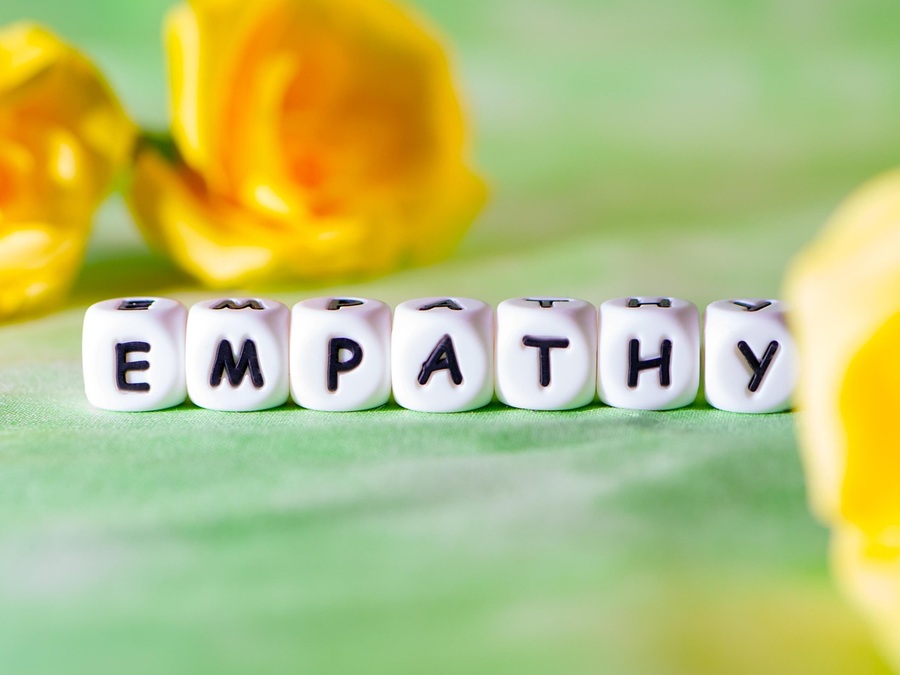
“When you have the desire to feel their misery, you strive hard to be able to feel their joy.” —Don Larson (Image: Pixabay)
Are corporations aware of how people feel — and how people feel about them? They need to be. Because empathy is a crucial life and business strategy.
One of the most sterling proofs of that comes from Sunshine Nut Company’s legendary people-centric CEO Don Larson and his successful mission to create and run a profitable and very successful company by uplifting subsistence farmers in Mozambique and fostering empowerment over dependence. In doing so, he continually and convincingly disproves long-standing misconceptions that failure in African enterprises is due to lacking or inferior individual potential, instead attributing them to external systems. His business model centers on eight transformation goals that restore dignity, hope and opportunity. For Larson, true success is measured by moments of emotional breakthrough — what he calls “tears of joy.”
“If you put any of us into the conditions they live in on a daily basis, we would probably die quickly from the inability to survive,” Larson emphatically states. “My experience is that if you meet them at their level of capability, they thrive. This is my definition of empathy.”
Larson added his powerful memory of what happened when he promoted a tall, burly worker: The man broke down in sobbing tears of gratitude, moving the entire management team and affirming Larson’s belief that moments of dignity and recognition are life’s greatest rewards.
“You can’t get a reward in life any better than that,” he said. “When you have the desire to feel their misery, you strive hard to be able to feel their joy.”
It’s a philosophy that’s proven in action, and was so recognized by Mozambique’s government that they asked him to replicate his program in another region of the country, which he did even in the face of incredible odds and potential real physical danger. (We will be proudly featuring that whole amazing story next week right here on our site!)
The Loneliness Epidemic: America’s Crises of Disconnection and Call to Care.
Larson’s story is a truly beautiful and hope-inspiring example of what can be and what empathy in action looks like. And it looks like we need it more than ever right now as the broader picture across America tells a troubling story.
Researchers with Harvard Graduate School of Education’s Making Caring Common project released data in late 2024 showing that 21% of adults expressed serious problems with loneliness, as defined by U.S. Surgeon General Vivek Murthy as “a subjective distressing experience that results from perceived isolation or inadequate meaningful connections.”
According to the data, the leading causes of the epidemic of loneliness in America were technology (cited by 73%); insufficient time with family (66%); being overworked, too busy or tired (62%); mental health challenges (60%); living in a society that is too individualistic (58%); and a lack of religious or spiritual life (50%).
The researchers recommended promoting a culture that cares for and serves others. They also urged both public and private leaders to help people develop meaningful relationships with others, through efforts such as community events and maintenance of community-focused green spaces.
The Call for People-Centric Human-Centered Leadership
Well, not to toot on our horn — too much — but that’s what we have been screaming at the Center for Social Capital and the Social Capital Insider since we started! Human beings are social animals, and we need each other to not only survive but to thrive in society. So, it should be a no-brainer that this kind of necessary cooperation and integration is needed in the workplace just as it is in every other sector of our lives — if not even more so, if we hope to bring about and maximize our mutually desired success in business. That has been empirically proven time and time again by not just this study but by scores of studies and surveys.
Back in 2023, an Ernst & Young business survey found that an overwhelming majority of employees said empathetic leadership increases morale and is an essential element of fostering an inclusive environment. Furthermore, that study followed up on earlier analysis of empathy in 2021 that found a majority of workers felt mutual empathy between company leaders and employees leads to greater efficiency, creativity, job satisfaction, idea sharing, innovation and even increased revenue.
The Trust Crisis in Corporate Leadership
But somehow, sometimes that doesn’t always translate into the need to understand and empathize with each other when we get down to brass tacks and the tasks at hand that come with trying to grind out those all-important profits.
The reality is that amid a slew of layoffs, rising prices and often stagnating wages, recent data shows most U.S. workers do not believe their CEO genuinely cares about them — and trust in corporate leadership is eroding fast. Here are just a few of a slew of alarming findings:
- Fewer than one-third believe executive leadership is aligned with employee interests.
- Four in 5 U.S. workers say CEOs are overpaid (the growing CEO-to-worker pay ratio is fueling resentment and skepticism).
- Only 19% of U.S. workers believe business leaders have a positive impact on society, while 44% say CEOs have a mostly negative influence and 37% are unsure.
- Trust in CEOs has dropped 21% since 2021 and 7 in 10 people believe business leaders deliberately mislead the public.
- An impressive 86% of executives say they trust employees — but only 60% of employees feel trusted.
- Just 34% of employees believe leadership gives appropriate attention to earning trust.
Ultimately, the real bottom line is, people are hurting — economically, physically, socially and emotionally all over the world as well as here in the U.S. Maybe the worst in a generation. So, if business leaders want to succeed, they must respond by demonstrating they not only care but are aware of what their employees and customers are experiencing and are willing to do whatever it takes to help.

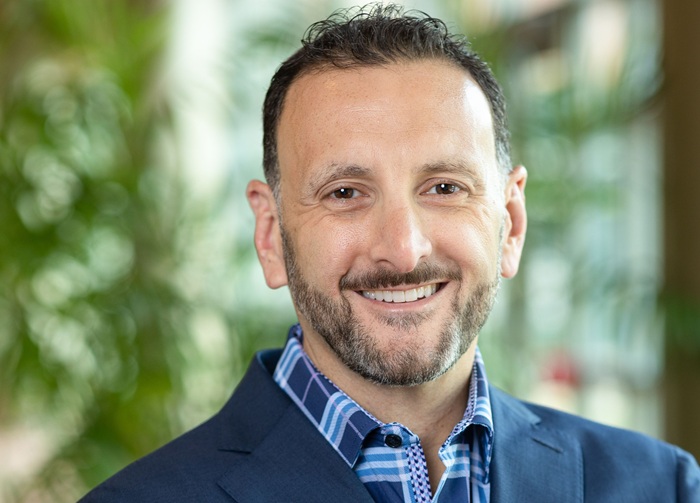
“Empathy has been the secret to my success. It’s how I built a culture of belonging and trust, and why people felt safe enough to show up fully, not to just clock in but to help create something meaningful.” —Garry Ridge (Image; iStock / AndreyPopov)
Putting Empathy into Action
In The Unlocked Leader, celebrated leadership coach Hortense le Gentil argues that today’s leaders must evolve from outdated “superhero” models — those who appear infallible and emotionally distant — to human leaders who lead with empathy, authenticity and vulnerability.
She contends that empathy is no longer optional; in a world of rapid change, emotional exhaustion and fractured trust, leaders who fail to connect on a human level risk alienating their teams and stifling innovation.
The leaders who do the hard work to remind themselves of the importance of this and implement policies that put this crucial quality into the mix at work find incredible and far-reaching rewards.
But what does empathy really mean? And how do you actually put it into action in a business model? It’s not just saying you care or paying some high-priced business consultant to help you amplify your “EQ”; it can and needs to be far more systemic, organic and far-reaching than that.
Since this is such a crucial element of being a Social Capital leader, we at the Center for Social Capital reached out to our celebrated and honored leaders to get their take on what it is and how they wield this sword of success and sensitivity to cut through all the obstacles and silos that potentially separate us at work to find real and authentic ways to connect and help.
Because empathy isn’t just a buzzword—it’s a business imperative.
Read the full exclusive insights from all of this month’s Social Capital honorees below and discover how empathy is transforming leadership from the inside out!
Garry Ridge, Former CEO of WD-40
Empathy, to me, is the courage to care. It’s not nodding along while someone talks. It’s listening without the urge to fix, judge or jump in with your own story.
Empathy is also about presence and trading ego for understanding. True empathy says, “I see you. I hear you. You matter.”
Contrary to popular belief, empathy isn’t some soft, immeasurable trait leaders can afford to overlook. It’s foundational. Without it, you can’t create a sense of belonging. You won’t earn your people’s trust. And you certainly can’t expect people to bring their best if they don’t feel safe or valued.
Leading with empathy doesn’t mean being a pushover; it means being a compassionate leader and showing up with a tender heart and a backbone of steel. It enables you to cultivate a culture rooted in love rather than fear; and create a space where people show up happy, leave happy and contribute to creating happier communities — ultimately leading to a happier world.
When I was younger, I thought empathy meant nodding along while someone shared their feelings. Maybe I’d even chime in with a story of my own to show I understood. Back then, I believed empathy was all about listening and shared experiences.
With time and a bit more life under my belt, I’ve come to see empathy as far more complex.
Genuine empathy isn’t being nearby when someone’s struggling. It’s not standing on a boat deck while they’re seasick and offering a pat on the back — that’s sympathy. Empathy is getting queasy right alongside them.
This kind of empathy isn’t weakness. It’s strength, wrapped in understanding. And it’s what transforms a group of employees into a tribe. Without empathy, leadership is just a title, and more often than not it leaves a trail of disengaged people behind.
I’ll let you in on a little secret: I like to call myself the Dean of Dumbassery. More often than not, I’m consciously incompetent — probably wrong, but roughly right. And knowing that forces me to lead with empathy.
Empathy has been the secret to my success. It’s how I built a culture of belonging and trust, and why people felt safe enough to show up fully, not to just clock in but to help create something meaningful.
At WD-40 Company, empathy wasn’t a buzzword. We intentionally baked it into our way of working. We stopped using the term “managers” and referred to ourselves as “coaches” instead. We didn’t punish failure; we treated it as a learning moment. People weren’t resources. They were human beings.
Empathy helped us grow from millions to billions. Without it, we would’ve stalled. With it, we built momentum that lasted.
Don Larson, Founder & CEO of Sunshine Nut Company
I have always stated that you need to ignite the passions of an individual and give them the ability to act within that motivation to realize a truly high-performing individual. When we moved to Mozambique 14 years ago, I started to deal with all levels of society. Our objective has always been to bring subsistence farmers out of abject poverty and into a life free from suffering, malnutrition and lack of basic needs.
These subsistence farmers were quite capable of living better lives, but they lacked the resources, the opportunities and the education to act. They are smart, resourceful and motivated within their circles of opportunity. But, with almost no means to change their lives, their mindsets are focused on survival, on what will allow them to live another day. This is often misinterpreted as inability to succeed. When I went to a large European gathering and the CEO of a top bank told the large audience his bank wasn’t doing anything further with either smallholder farmers or small to medium enterprises in Africa because they mostly fail, I raised my hand during questioning and said, “My experience is that the failures are typically on our end, because we do not meet them at their level of capability.” I then added: “If you put any of us into the conditions they live in on a daily basis, we would probably die quickly from the inability to survive. My experience is that if you meet them at their level of capability, they thrive.” This is my definition of empathy.
It is understanding the life of a subsistence farmer and their true desire to improve their conditions. It is developing a solution that allows them to thrive, to work hard and shift their mindset to one of hope, opportunity and dignity. Our business model has eight core transformation goals: 1) Replacing dependence with self-reliance, 2) Substituting handouts with empowerment. 3) Shifting entitlement to earning, 4) Exchanging despair for hope, 5) Converting adversity into opportunity, 6) Overcoming stagnation with transformation, 7) Restoring dignity in place of worthlessness, and 8) Swapping failure with excellence.
I see all individuals as equals, whether they are country leaders or part of the subsistence farming community. We all have capability. It is mostly our circumstances that shape our future. Change the circumstances to allow people to see beyond surviving and you quickly see hope spring forth, allowing them to start thriving.
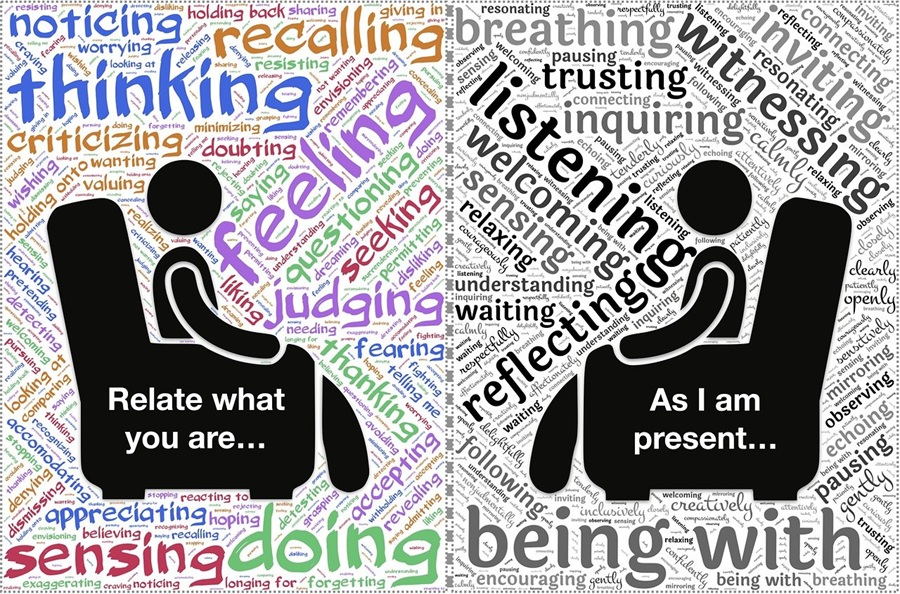
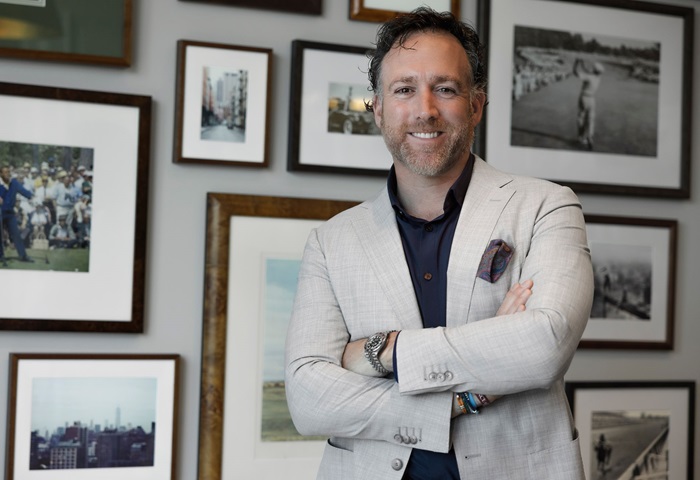
“When done well, leading with empathy becomes contagious. My hope is that by leading with empathy, we will inspire others to do the same.” —Duncan Angove (Image: Pixabay/johnhain)
I had a UNICEF leader here in Mozambique ask what our metrics of success were as she marveled at the orphan homes we build and support as part of our business model. I responded, “Tears of joy.” I frequently shed tears when we get to see people who have been written off by society come into the fullness of life and possibilities. For instance, when I brought a worker into my office and told him he was being promoted to be a supervisor, this tall, burly man broke down in sobbing tears of thankfulness. It lasted for minutes. He had me and three other managers shedding tears as well. When the worker left, I remarked, “This is what it is all about. You can’t get a reward in life any better than that.” When you have the desire to feel their misery, you strive hard to be able to feel their joy.
Jill Koziol, Co-Founder, Board Director & Former CEO of Motherly
Empathy, to me, is the ability to deeply understand and share the feelings of another. It’s about seeing the world through another’s eyes and, more importantly, feeling it through their heart. At Motherly, empathy isn’t just a leadership skill; it’s embedded in our ethos. It guides how we connect with our community and how we support our team. By leading with empathy, we create an environment where everyone feels seen, heard and valued.
Leading with empathy has always been fundamental to how I approach my role. It allows me to forge genuine connections with my team and our audience, fostering a culture of trust and mutual respect. This approach not only helps in navigating the complexities of business but also drives innovation by considering diverse perspectives and experiences. In a world that’s increasingly interconnected, empathy bridges gaps and builds the kind of social capital that sustains and enhances our communal and business engagements.
Duncan Angove, CEO of Blue Yonder
Empathy, to me, is a fundamental aspect of human connection, encapsulating the ability to deeply understand and resonate with the emotions and experiences of others. It goes beyond mere sympathy; it involves actively stepping into someone else’s shoes and seeing the world from their perspective. Empathy is about cultivating compassion and kindness and seeking to understand why someone feels the way they do. This sentiment resonates deeply with me because it highlights the importance of genuine care and consideration for others’ feelings and experiences.
In the context of Blue Yonder, empathy serves as a guiding principle that shapes how we interact with one another and our stakeholders. In fact, empathy is one of our company’s core values along with respect, integrity and inclusion. We believe that empathy is critical in fostering a culture where everyone feels valued, heard and supported. We interviewed associates from across our organization who echoed this sentiment, highlighting how empathy is ingrained in Blue Yonder’s DNA, with leaders who “listen to you,” “try to understand,” and provide support and guidance. This collective understanding underscores the crucial role empathy plays in building strong relationships and fostering a sense of belonging within our organization.
As a global company, empathy allows us to transcend cultures. It offers us the ability to recognize that when we approach others from different cultures and seek first to understand, we are able to better appreciate the other person’s perspective and opinions so we can better collaborate together.
Empathy is not just a soft skill but a cornerstone of effective leadership and innovation. By embodying empathy in our interactions, we create an environment where individuals feel empowered to express themselves authentically and contribute their unique perspectives. This cultivates a culture of inclusivity and trust where individuals feel valued, heard and supported. When we have empathy, we create space for mistakes, which, in turn, more greatly encourages associates to take risks and try new and innovative ways to solve challenges. This sense of psychological safety and mutual respect cultivates trust and collaboration, enabling us to work toward common goals with empathy as our compass.
Empathy lies at the heart of my leadership philosophy, guiding my approach to decision-making, communication and relationship-building. I believe effective leadership is about genuinely connecting with and understanding the needs and aspirations of those we lead. And to do that, I believe leaders must also be humble by always being open to feedback and new perspectives and ways of looking at the world.
Furthermore, empathy transcends mere internal dynamics and extends to our interactions with customers and partners. Drawing from my engineering background, I inherently approach empathy as a crucial component in the development process. By deeply understanding the needs, challenges and aspirations of our stakeholders, we engineer updates and enhancements that go beyond mere functionality. This unique perspective allows us to craft solutions that not only address immediate concerns but also resonate deeply, making a meaningful and lasting impact on our customers’ experiences. In maximizing customer value, we don’t just consider the technical aspects but also the human element, ensuring our products and solutions align seamlessly with the diverse needs and aspirations of our users.
When done well, leading with empathy becomes contagious. My hope is that by leading with empathy, we will inspire others to do the same. This builds the end result of a culture of compassion, understanding and excellence that drives innovation, collaboration and lasting success.
Fred Hassan, Director at Warburg Pincus and Former Chairman & CEO of Schering Plough
Empathy: The Strategic Edge in the AI Era
The AI revolution is unfolding faster than the internet boom of the 1990s. As AI agents rapidly enhance innovation, speed and efficiency across functions, businesses are unlocking long-promised productivity gains. But as machines take over more tasks, the need for distinctly human qualities — especially empathy — becomes more urgent.
AI may be powerful but it is impersonal. Leadership, culture and sustained performance still depend on human connection, trust and inspiration. That’s why organizations focused on high performance, including private equity firms, are investing in empathy upskilling — not as a feel-good initiative but as a hard-edge differentiator.
Empathy begins with deep self-awareness and extends to understanding how customers, teams, competitors and stakeholders feel and behave. It shapes how leaders communicate expectations, instill confidence, course-correct with credibility and celebrate wins. Organizations rich in empathy outperform those that rely solely on metrics and pressure. Outperformance doesn’t come from table-pounding — it comes from building belief, coaching with authenticity and creating environments where people feel seen and supported. David Ricks, CEO of Eli Lilly, exemplifies this: His humility and openness earn trust from every level of the company — a key reason he stands out in CEO of the Year evaluations.
Empathetic leadership also fuels innovation. It enables psychological safety, encourages bold ideas and peer-to-peer team spirit, and drives faster execution. Emotional intelligence, once seen as optional, is now essential. Business acumen is the baseline — but leaders who pair it with empathy inspire accountability, loyalty and performance that exceeds expectations. As the AI revolution accelerates, the edge won’t come from algorithms alone. It will come from leaders who know when to lean into data — and when to lead with heart.
“I’ve realized real empathy takes action — it’s about being present, slowing down, and sometimes even changing what you do because you truly understand what someone else is going through.” —Mark Emery (Image: Pixabay/ Geralt)
Mark Emery, Co-Founder & CEO at Juvo Jobs
For me, empathy is about stepping out of my own world and really seeing life from someone else’s perspective. It’s listening to understand, not just to reply, and caring enough to notice the weight someone else might be carrying — even if I’ve never been in their exact shoes. My faith plays a big role in this. I believe every person is created in God’s image, and that reminds me to approach every interaction with humility and a “it’s not about me” mindset. At its core, empathy is simply meeting them where they are.
When I was younger, I thought empathy just meant being nice or feeling bad for someone. Over the years, I’ve realized real empathy takes action — it’s about being present, slowing down, and sometimes even changing what you do because you truly understand what someone else is going through. Building Juvo360 has really driven that home for me. Working to help hourly workers and the businesses that rely on them has shown me that empathy is not just a “soft skill”; it’s a leadership tool that moves relationships, decisions and results forward.
Empathy is at the center of how I try to lead because I see leadership as service. I can’t effectively guide a team, partner with others or serve the people we built Juvo for if I don’t understand what matters to them. Empathy should shape how we communicate, how I handle tough moments and how I make decisions — because I know those decisions touch real lives and families. Leading with empathy builds trust, invites collaboration and creates an environment where people feel seen and valued — and that’s when the best work and the best relationships happen.
Seth Bogner, Chairman & CEO of HeartPoint Global
To me, empathy is the ability to genuinely understand and share the feelings of others. Empathy requires active listening, deep understanding and thoughtful action to support and connect with others meaningfully.
In the context of leadership, empathy means recognizing the emotions and perspectives of team members and using that understanding to guide interactions and decisions. It’s about creating a supportive work environment, fostering open communication and building strong, trust-based relationships. By being empathetic, a leader can better address the needs of their team, motivate them effectively and navigate challenging situations with sensitivity and care. Empathy is not just a soft skill but a critical leadership capability that enhances communication, promotes collaboration and drives overall team success.
Empathy is at the heart of my leadership style because it fosters a supportive and inclusive work environment. Our business is built on empathy, particularly for the 90% of children worldwide who lack access to cardiac care. Empathy empowers me to navigate challenging situations with sensitivity, ensuring that our decisions prioritize the well-being of all stakeholders.
This approach aligns closely with emotional intelligence, promoting a corporate culture characterized by open communication, collaboration and a strong sense of belonging. By valuing empathy, we create a successful and cohesive team, united by our commitment to making a meaningful difference in the lives of those we serve.
Maraia Tanner, CEO of STAR Harbor Academy
I define empathy as the ability to put yourself in someone else’s shoes — to imagine and feel what it is to be the other person. I find empathy to be both my greatest strength and greatest challenge as a CEO.
It’s been my experience that empathy is often expected to take a backseat in the world of business. There’s a societal presumption that business should be conducted devoid of emotion, focused solely on financial outcomes without consideration for the human element. I believe this approach, while prevalent, has discernable and widespread adverse effects: lack of employee motivation, productivity, reliability and care given to work-product, not to mention theft, high turnover, etc. In life, respect is a two-way street; business should not be set apart from that standard.
That said, I understand the rationale and the desire for mental self-preservation behind why many CEOs choose to limit empathy in their leadership: It makes a hard job much harder. Indeed, my responsibilities would be far simpler if I could disregard the personal impacts to others of the hard decisions I sometimes have to make. Yes, such detachment, while easing the burden of decision-making — “it’s not personal, it’s just business” — does not, in my belief, propel a business to reach its greatest potential.
I have always maintained that my team is the greatest asset we have and taking care of them, as best we can given our limitations, is the most critical component of long-term success. I have found that a culture based on mutual respect and consideration generates the best results by far, for our employees and our company as well as for our partners and clients. While I have not always been able to give my team everything I wish I could and I have certainly had to make decisions that are in the best interest of the company at a cost to people I care about, my team knows I do not make such decisions lightly. They know they are not just cost line items on a spreadsheet which are easily deducted.
I am committed to doing the “right” thing by my employees, even when the right thing is hard or more costly than the easy thing, because it’s who I am and I believe this approach garners a level of productivity, trust and commitment that is hard to come by in business today. Admittedly, in the decade-plus that I have been leading Star Harbor, there have been occasions I feel have fallen short of my ideals, for one reason or another, and when that happens, it hits hard. I then take the lesson so I can do it better in the future. Your employees don’t expect you to be perfect or to sacrifice the business on their behalf; however, they do expect you to be human in the process. No one wants to feel like a number.
The decisions we make as CEOs that adversely affect people’s personal lives or professional trajectories should not be made callously. That’s not to say that the hard decisions shouldn’t be made or that it’s necessary to walk around in a cloud of guilt when they are; however, when there is a human cost to such actions, those costs should always be considered and honored if you want the best out of your team. At the end of the day, it’s just smart business.
Dave Alexander, Founder & Managing Member of Caljet of America
Empathy is a very important part of my life and encompasses additional words or concepts that make me a better, stronger, person and leader. Put together in my mind, intuition, sensitivity, gentleness and empathy equals one concept: intellectual power!
My life’s journey has used these words to learn how to read, influence, develop and lead people to become an entertainer, athlete, entrepreneur and good citizen. I have learned and attempted to do this with mental calmness, composure and evenness of temper, especially in difficult situations.
But when I looked up the definition of empathy in the dictionary, of the 1,000 synonyms for empathy, I personally focused on “caring.” In 2017, I was honored by being named one of the most caring people in the United States by the Caring Institute in Washington, D.C. My ability to care for others has grown as my mind has become more sophisticated, as I have grown more mature … and as my wallet has grown.
I compensate my employees very well — and in many ways. Most importantly, I give my employees and their families “peace of mind” that they are doing well for the owners, that they have a good solid working environment and that they have a great future working for me.