Most New Managers Fail; the Solution Is Obvious but Ignored
By Mark Donohue | April 16, 2026 11:22 am
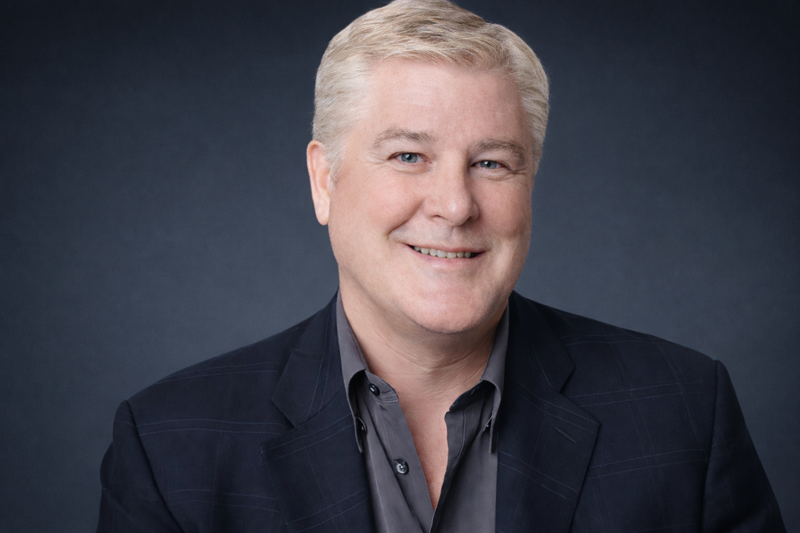
LifeGuides founder Mark Donohue has a game-changing answer.
Empowering employees begins with a simple belief: People perform at their best when they feel supported as human beings, not just managed as workers.
Today’s employees are navigating an increasingly complex world. Economic uncertainty, constant technological change and rising expectations at work and at home can leave people feeling overwhelmed. When employees face these challenges, they rarely take them straight to HR or senior leadership. They bring them to the person closest to them: their manager.
That is why empowering employees ultimately begins with empowering the people managers who support them every day. In today’s environment, leadership cannot simply mean assigning responsibility or driving performance. Managers need the support, reflection and guidance that allow them to help their teams navigate both work and life with confidence.
Research from our partners at the Society for Human Resource Management (SHRM) highlights just how urgent this challenge has become. Fifty-eight percent of managers report they have never received formal training, and nearly 60% of new managers fail within their first two years. The impact of this gap is felt across organizations: One in three employees say their manager lacks the skills needed to effectively lead a team, and HR leaders report spending roughly 28% of their time addressing issues caused by poor people management.
At LifeGuides, we have learned that many managers struggle not because they lack intelligence or ambition, but because they lack the support systems that help them process difficult situations and develop judgment over time. Their teams look to them for guidance and support, yet too often they are left without that support themselves.
Many organizations still rely on short training programs to prepare their leaders. But true leadership competency is built through reflection, mentoring and experience — combining the power of Non-Clinical Mental Health in the form of peer mentoring with targeted people-manager qualifications.
That belief led us to develop PMQ+ with SHRM, a leadership development model that combines practical management training with personalized mentoring. The goal is not simply to teach leadership concepts, but to help managers translate those concepts into real behavior change in the workplace.
As organizations work to meet today’s challenges, empowering people managers has become a business imperative, not a nice-to-have.
In a recent PMQ+ cohort with frontline managers from one of the nation’s largest used car retailers and finance companies, every participant showed measurable improvement in their ability to drive accountability and results. Manager effectiveness scores increased by more than 10%, and conflict competence, often one of the most difficult leadership skills to improve, increased by 5.7%. Post-program scores for retention and team culture reached 9.07 out of 10, reflecting stronger leadership environments across teams.
When these outcomes were modeled using research benchmarks from SHRM and Wharton, the program produced an estimated 5.6× return on investment for the organization.
But the numbers tell only part of the story. What mattered most was the shift in how these managers showed up for their teams. Many described how the mentoring component helped them pause, reflect and approach difficult conversations with greater empathy and clarity. Instead of reacting quickly, they began asking better questions, listening more carefully and empowering their own employees to contribute ideas and solutions.
That is what empowerment looks like in practice.
It also highlights an important point for organizations: Listening cannot be a symbolic gesture. Employees, customers, shareholders and communities all bring valuable perspectives. When leaders create systems that encourage open dialogue and reflection, those voices become a source of insight and strength rather than noise.
Empowerment is not about hierarchy or authority. It is about helping people discover their own capacity to lead.
When organizations invest in mentorship, connection and real leadership development, empowerment becomes more than a philosophy. It becomes a practical system that helps people grow, contribute and thrive together.
Mark Donohue is founder and executive chairman at LifeGuides.