
The job market is not your friend. Why are you letting it make you question your worth?
By Kyle Samuels | May 7, 2026 10:51 am
Founder of Creative Talent Endeavors outlines his strategy for overcoming job hunter’s malaise.
Not long ago, I was conducting a career counseling session over Zoom when the woman on the other side of the screen suddenly started waving a stack of papers in front of the camera.
“Kyle,” she said, visibly frustrated, “these are my last nine years of performance reviews from the company I worked for before I got laid off.”
She held them up again.
Every single one said the same thing: Exceeds Expectations.
Then she paused.
“I’ve been looking for a job for six months,” she continued. “I can’t even get past a first-round interview. It’s starting to make me question everything. What if I was just a personality hire and they liked having me around?”
You could see the doubt settling in as she said it.
I quickly reassured her of something important. “This is America,” I told her. “We are capitalists. Nobody is paying someone six figures just to be their pal.”
But the feeling she described is one I hear from job seekers constantly. People who once felt confident in their abilities suddenly find themselves wondering: Was I ever actually good at my job?
And that question — more than any rejection email — is what makes today’s job market so psychologically difficult.
Why So Many High Performers Feel This Way
The truth is that today’s hiring environment can make even the most capable professionals question their value.
Over the past five years, the labor market has gone through enormous disruption. More than 6.5 million layoffs have been announced in the United States alone, including roughly 1.17 million cuts in 2025, the highest level since the pandemic.
When layoffs occur, recruiters are often the first jobs to go. From a company’s perspective, the reasoning is straightforward: If you are not hiring, why continue paying people whose job it is to hire?
But that decision creates ripple effects for candidates.
When recruiting teams shrink, companies are left with:
- Overloaded hiring managers,
- Inexperienced recruiters managing complex searches,
- Minimal follow-up or communication, and
- AI screening systems rejecting applications automatically.
In many cases, a human being never even sees the job seeker’s application.
For job seekers, the experience can be deeply disorienting. They may have spent years building expertise in their field, delivering strong results and earning glowing performance reviews. Yet suddenly they cannot even secure a second interview.
It begins to feel personal.
But in most cases, it isn’t.
The Candidate Experience Has Deteriorated
Another dynamic is at play as well.
For the past several years, the labor market pendulum has swung sharply toward employers. After the hiring boom of 2021 and early 2022, companies pulled back aggressively.
When employers hold the leverage, candidate experience often suffers.
The unspoken mentality becomes: It’s a buyer’s market. You get what you get, and you don’t pitch a fit.
Applicants may never hear back. Interviews are canceled without explanation. Automated rejection emails arrive minutes after submitting an application.
From the employer’s perspective, they are overwhelmed with applicants and trying to manage hiring efficiently.
From the candidate’s perspective, the process can feel cold, impersonal and dismissive.
That disconnect has led to something more concerning: a breakdown in trust on both sides of the hiring equation.
Rebuilding Confidence During a Job Search
So how do you regain confidence when the job market starts to make you question your worth?
There are three strategies I consistently recommend.
- Prepare for interviews like it actually matters. Preparation is still one of the biggest differentiators in hiring.
Before any interview, ask yourself a few simple questions:
- Have I thoroughly researched the company?
- Do I understand the background of the people interviewing me?
- Have I practiced behavioral questions using the STAR method?
- Am I presenting myself professionally, even if the interview is virtual?
These details may seem small, but they shape how employers perceive you. Preparation signals professionalism, seriousness and respect for the opportunity. And in competitive hiring environments, those signals matter.
- Apply strategically, not indiscriminately. The temptation during a job search is to apply to everything. LinkedIn makes it easy. With one click, you can submit dozens of applications in a single afternoon.
But quantity rarely produces quality outcomes.
When you apply to roles where you are not realistically qualified, you dramatically increase the likelihood of rejection. And repeated rejection chips away at confidence.
Instead, focus on opportunities where:
- Your experience clearly aligns with the job requirements,
- You can demonstrate measurable results, and
- You can articulate why the role makes sense for your background.
Strategic applications produce far better results than mass applications.
Or put another way: A hundred applications without a strategy rarely outperform ten applications with the right connections behind them.
- Leverage your network above all else. In a world increasingly driven by automation, human endorsement matters more than ever. Your job search should not revolve around submitting applications. It should revolve around people.
There is a framework I often use when thinking about referrals: KLT — Know, Like and Trust.
Before asking someone for help, ask yourself three questions.
- Do they know me?
- Do they like me?
- Do they trust me?
All three matter.
If someone does not know you, they are unlikely to refer you. If they know you but do not like you, they will avoid recommending you. And if they like you but do not trust your work, they will protect their reputation by staying silent.
But when someone knows, likes and trusts you, the dynamic changes completely. They become advocates. They speak enthusiastically about the work they have seen you do. They give hiring managers confidence before you ever walk into the interview.
And that endorsement carries tremendous weight.
Activity vs. Action
When people feel desperate during a job search, they often confuse activity with action.
Submitting hundreds of applications can feel productive. But if those applications rarely generate responses, the strategy becomes self-defeating.
Low response rates lead to more frustration. Frustration leads to desperation. And desperation leads to applying for jobs that may not even be good fits.
That cycle only deepens the discouragement.
Action, by contrast, focuses on creating advantages.
Using AI the Right Way
Many job seekers now rely on AI tools to write résumés and cover letters. These tools can be helpful, but they also create a new problem: Everyone’s application begins to look the same.
Instead of using AI solely to perfect documents, use it to identify connections within your network.
Look for shared affiliations that create natural points of contact:
- Alumni from your university
- Former colleagues
- People who worked at the same companies
- Professional organizations
- Fraternities or sororities
Even a small shared connection can dramatically increase response rates. Outreach messages that reference a genuine commonality often receive three to five times more replies than generic cold messages.
Executives receive hundreds of emails every day. Cutting through that noise requires something human. If you attended Purdue University, for example, you might start a message with a simple phrase: “Boiler Up.” You may have never met the person you are contacting. But that phrase instantly signals a shared identity.
Will everyone respond? Of course not. But the people who do respond will do so because they want to help.
And sometimes that reminder — that people are willing to help — is exactly what restores confidence during a difficult job search.
The One Thing to Remember
If you remember only one idea from this article, let it be this: Focus on the people who know, like and trust you.
Those are the individuals most likely to open doors, advocate on your behalf and help you navigate a challenging job market. Because, while hiring markets change, one thing remains remarkably consistent: People still hire people.
And sometimes the fastest way to rebuild confidence is to reconnect with the people who already know your value. Not the algorithm. Not the application portal. The people — those who know you, those who like you, and those who trust you.
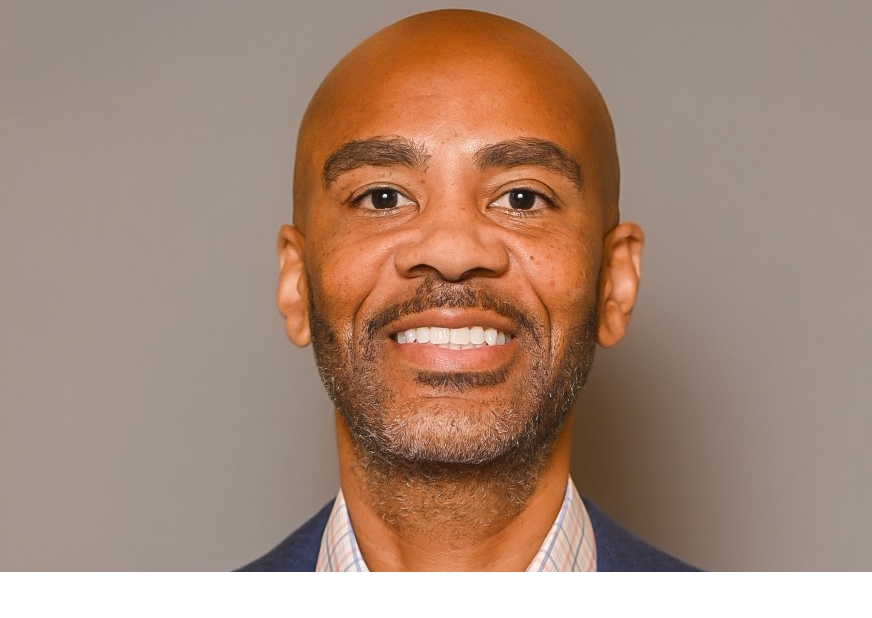
Kyle Samuels is the founder and CEO of Creative Talent Endeavors, a retained executive search firm known for helping organizations identify and hire the leadership talent that drives growth, transformation and long-term value. Under Kyle’s leadership, CTE has been recognized twice on the Inc. 5000 list of fastest-growing private companies and was named the No. 4 fastest-growing company in Charlotte. He was also named to Engagedly’s 2025 Top 100 HR Influencers list.
Kyle is also the creator of the award winning Fairantee™, a value-based pricing search algorithm that uses data to determine the price of a search, not an arbitrary percentage like most search firms use.