AI Is Fueling Progress in Many Fields in an ‘Exponential Curve of Getting Better,’ According to HumanX’s CEO.
By Chris Benguhe, RaeAnne Marsh and Elaine Pofeldt | July 9, 2026 11:45 am
Stefan Weitz says the challenge will be managing the ‘sticky’ middle, in which mass displacement from jobs takes place.
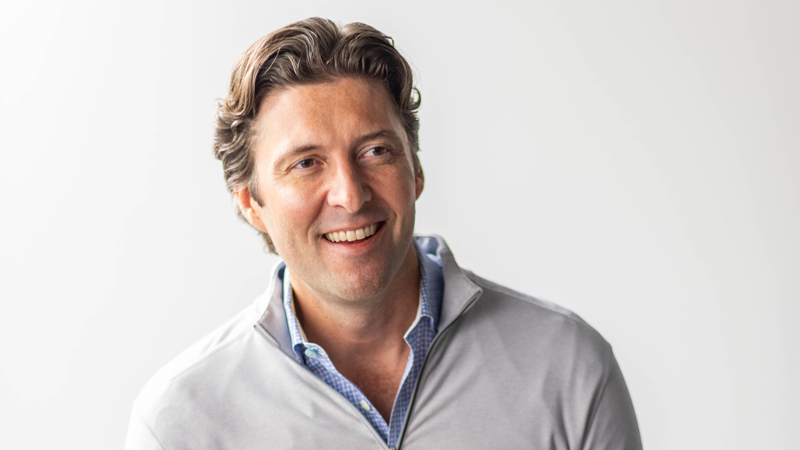
Stefan Weitz has a rare front-row seat to observe the growth of AI. He is CEO at HumanX, a fast-growing community for AI and its deployment, tapping his experience as a Big Tech executive, serial entrepreneur, self-described private equity survivor, angel investor and general partner for SilverCircle, an invitation-only capital pool for entrepreneurs and founders.
At HumanX, Stefan gathered together global leaders in AI in San Francisco in early April 2026 to share ideas on real-world applications of AI, with an emphasis on using it for the good of humanity. Upcoming HumanX events will take place in Amsterdam from September 20 to 22, 2026, and in Las Vegas from March 7 to 10, 2027.
“What we’re seeing now with AI is just the acceleration of progress itself compounding,” says Stefan. “And so, we’re used to linear models of progress, things build[ing] on each other almost in linear fashion. And what we’re seeing with AI in particular is really an exponential curve of getting better. And the speed with which things are being augmented, taken over, accelerated way past human abilities is so much faster than anything else we’ve ever seen in history. That’s the problem. It’s just that there’s going to be a really sticky middle and a very uncomfortable displacement of people.
“I don’t know when it’s going to happen,” he continues. “I don’t know for how long it will last. But to not understand that will be to our detriment because it’s different than anything we’ve seen before. And so, we are going to have pain. Anyone who says otherwise is simply not paying attention.”
One big challenge ahead will be the displacement of a significant portion of the population from their jobs as AI is adopted, he notes. Beyond the social costs, there will be economic ones. Funding social programs may be difficult, for instance, he says. “How do you pay for that if there’s no one paying taxes anymore?”
Young people who have earned college degrees may not be able to build the traditional careers they expected, he notes. A computer science major may not be able to get a job as a software engineer an early-stage company.
That’s where entrepreneurship comes in, he believes, alluding to new tools that allow more people to build technical products without knowing how to code. “So many people at this point have the opportunity to go build something on their own, which they never could have built five years ago,” he says.
Stefan doesn’t consider himself a people-centric leader in the classical sense. However, he adds, “I look at success in life as more purpose and meaning and fulfillment than I do material things or ownership or money or anything else.”
He does take inspiration from “people-oriented” cultures like the early one at Microsoft, where he worked in the late ’90s and early 2000s.
“I can remember when I was there, we had soccer fields on campus, we had baseball fields on campus, we had theater troops, we had trivia clubs, and it was like a big college campus,” he recalls. “And you didn’t leave; your social network was there, and your people were there, and you trusted people. And you could see them, look them in the eyes and understand and learn from them. You got mentored by great people who were above you in the hierarchy but was pretty flat overall.
“I remember thinking back, I was talking to someone recently about this. I said, ‘I wish more people could have experienced growing up in an environment like that at an enterprise because it did, it absolutely informed the way I approach even running my teams today. And then how I share information and what I share and why I share it.’”
Stefan has built his career while living with multiple sclerosis. While he says excellent medical care has allowed him to live “with no real actual effects at all” for the 21 years since his diagnosis, he is well aware that could change. “I think that gave me the incentive to hurry up to a certain extent. Because you never know if today’s the last day,” he says.
Stefan spoke recently with Chris Benguhe, founder and president of the Dave Alexander Center for Social Capital and the publisher of the Social Capital Insider. Click on the link below to hear the full conversation.