Fairness in Business: 11 Leaders Proving It’s a Competitive Advantage
By Chris Benguhe, RaeAnne Marsh and Elaine Pofeldt | February 19, 2026 11:41 am
In a world that’s not always fair, business can be one of the greatest potential sources of equity, access and opportunity to increase prosperity for the company, the employees and the world at large — because it has to be.

Increasingly, investors want to know how companies treat their people — not just their shareholders — as studies show that fairness in compensation can lead to higher stock prices and real growth. (Image: iStock/ bankrx)
A few months back, we focused on the importance of fairness and the companies that make it a central part of their operating system, as we do each year since it is one of our Ten Core Principles of Social Capital Leaders. We knew it mattered, but when it became one of our most-read articles of the year, we realized just how important it was to our readers.
Since then, the conversation around fairness has only grown more urgent. Workers are demanding greater transparency in pay and promotion. The seemingly exponential growth of AI is forcing companies to confront fairness head on, compelling leaders to examine whether their hiring, promotion, training and evaluation systems truly treat people equitably.
Investors are asking the same questions. Increasingly, they want to know how companies treat their people — not just their shareholders — as studies show that fairness in compensation can lead to higher stock prices and real growth. That’s been demonstrated with hard data by researchers like Dan Ariely, a professor of psychology and behavioral economics at Duke University and co‑founder of Irrational Capital.
And with this month being Black History Month, it felt like the right time to revisit this powerful concept as well — to celebrate fair access to prosperity and opportunity,
Previously Shared – and New – Data Shows the Case for Fairness Is Only Getting Stronger
As we shared a few months back, the O.C. Tanner Institute’s 2024 Global Culture Report (The 80% Experience | 2024 Global Culture Report | O.C. Tanner) found that “four-fifths of employees worldwide lack opportunities, technology, and autonomy in their work, and a very large number of them feel ignored and unvalued despite the imperative jobs they do.”
Meanwhile, the APA’s Work in America Survey (2025) (The experience of working in America during times of change) reported widespread concerns about discrimination and fairness, with many U.S. workers fearing they may be treated unfairly because of race, age or class.
And a new study released after our last article shows that roughly one in four employees worldwide reports experiencing discrimination, with even higher rates among LGBTQ+ workers, younger employees and racial or ethnic minorities.
Employees who face discrimination are also 2.5 times more likely to report stress and burnout, according to Meditopia’s Workplace Discrimination Statistics report Statistics on Workplace Discrimination (2026 Guide) – Meditopia for Work, making attention to this matter crucial for sustainable business continuity and growth.
Fairness as the Ultimate Growth Strategy
So, this year, we decided to move up our revisit of fairness — with added leaders, exclusive insights, and a few new angles on what fairness in business really means and the potential benefits it creates.
We’re proudly featuring some remarkably inclusive CEOs who are putting fairness at the center of their leadership. What they have to say offers real insight into how the rest of us can do the same.
And for everyone reading, it’s also an opportunity to tap into the powerful economic upside that fairness is creating — not someday, but right now.
This being Black History Month, it is the right time to celebrate fair access to prosperity and opportunity. (Image: iStock/ ElenaPost)
Matt Wilkerson, Founder & CEO at Extern
Fairness of opportunity means that your ability to advance isn’t limited by where you were born, who you know or what doors were opened for you. So, it’s defined by your willingness to learn and the proof of what you can actually do.
For instance, at Extern, we see fairness of opportunity as access + evidence. Everyone should have access to meaningful professional experiences, and the ability to prove themselves through real work, not just through resumes or credentials that often reflect privilege more than potential.
We believe that “experience” (the thing everyone needs but few can get) becomes something that’s distributed equitably, not reserved for those who have elite networks.
Fairness of opportunity is about starting lines. Fairness of outcome is about finish lines.
Extern focuses on building fairer starting lines by making sure every student, regardless of background, has access to real, mentored work experience that builds confidence, capability and a portfolio that speaks for itself.
We don’t promise equal outcomes. Different people will always perform differently. But we can engineer a system that gives everyone an equally credible shot at proving themselves. In that sense, fairness of opportunity is about designing an ecosystem where merit can actually surface and not be buried beneath privilege or access gaps.
The biggest challenge today is credential bias. Employers still overvalue degrees, networks and prestige rather than demonstrated ability. It’s a structural problem that perpetuates inequality even when companies have good intentions. AI may amplify that bias if it learns from historical hiring data that’s already skewed.
The opportunity (and what excites me) is that we can finally measure and distribute opportunity differently. With technology, we can give millions of students project-based experiences, feedback loops and skill signals that show proof of work rather than pedigree.
The future of fairness won’t come from rewriting job descriptions. It’ll come from rebuilding the infrastructure of experience itself. That’s the work Extern is doing: manufacturing opportunity at scale so that potential can finally be seen.
Beth Ford, President & CEO at Land O’Lakes Inc.
Our industry is a broad and critical subset of our economy from the American farmer to businesses, such as the cooperatives I lead to the rural communities that both support and benefit from the success and strength of our food supply.
We’re focusing on the things that are most important to our members, their families and their businesses. And from my perspective, I don’t get involved in politics. We don’t talk politics. We talk policies that are enablers for farmers, for the food supply.
Working together and including diverse voices and ideas is rooted in Land O’Lakes’ history as a cooperative. Our employees and our members need to always feel heard and valued for who they are.
Stefan Weitz, Co-Founder & CEO at HumanX
Fairness of opportunity means the best idea wins, regardless of where it comes from. I was bred at Microsoft in the early days where it genuinely didn’t matter what level you were, what you looked like, what you wore or what car you drove. There was literally a guy who only spoke to Bill Gates through a puppet, and everyone just … talked to the puppet. The first time I saw it as a young employee, I thought someone was pranking me. Then I realized — this is what meritocracy actually looks like.
At HumanX, I get schooled daily by people who propose better ideas than the ones I had. That energizes me. Whether it’s how we lay out the agenda, how we reach our audiences or how we’re creating a show experience with no rival (steampunk carnival for closing night, anyone?), the best thinking wins. Fairness means creating an environment where “yes, and” thrives — where people can take your idea in a completely different direction or build something better than your initial concept.
Here’s what I learned the hard way: Fairness is brutally relative. I once thought my stock award at Microsoft was totally unfair given what I’d done for the company. Years later, when I was the one distributing awards, I understood the complexity. You’re balancing contribution, market conditions, budget constraints, team dynamics and future potential.
The difference? Opportunity means everyone gets to compete. Outcome means everyone gets the same result. The former drives excellence. The latter kills it.
The key is setting clear goals for achievement and holding people to high performance standards. When people know what they’re aiming for and what success looks like, fairness becomes a clearer conversation. They know when they’re hitting the mark and when they’re not. That clarity — and not equality of outcome — is what makes fairness actionable rather than theoretical.
The challenge is that we’ve conflated fairness with comfort. Real fairness can be uncomfortable. It means your idea might lose to someone else’s better one. It means getting honest feedback when you’re not hitting the bar. It means watching someone junior to you get promoted because they’re outperforming you.
The opportunity, especially with AI, is unprecedented transparency. We’re looking to build systems at HumanX that can track contribution patterns, idea attribution and performance metrics in ways that would’ve been impossible five years ago. Not to surveil people, but to create objective records of who’s driving what outcomes. When someone proposes a session format that drives 40% higher engagement, we know it. When someone’s outreach strategy converts better, the data shows it. The tools we have to synthesize the digital footprints we all leave across the company every day were just unthinkable not long ago.
AI can help remove the politics and unconscious bias from fairness discussions. But that depends on us using it to illuminate contribution rather than to automate away the uncomfortable human conversations about performance. The technology is the easy part now. The culture that values meritocracy over comfort — that’s the hard work that never stops.
Michael Brady, CEO at 40 Million Owners
Fairness of opportunity means creating a workplace where every individual, regardless of background or circumstance, has access to the tools, training and support needed to succeed. It is about focusing on the potential of each person and ensuring they have a real chance to contribute and grow within the organization.
At Greyston Bakery, we brought that belief to life through open hiring, a model that removes traditional employment barriers like background checks, education requirements and interviews.
Today, I am inspired by how the employee ownership movement expands that same principle of fairness into wealth creation. Models like Employee Stock Ownership Plans (ESOPs), Employee Ownership Trusts (EOTs) and worker cooperatives ensure that those who create value share directly in its rewards. These models align fairness with ownership, turning an ideal into a measurable business practice that strengthens both individuals and organizations.
In an employee-owned company, fairness of outcome naturally follows fairness of opportunity because the structure ensures that when the business succeeds, everyone benefits. True fairness is not about equalizing results, but about creating conditions where outcomes are the honest reflection of equal access and shared participation.

Companies that embed equity into their business model through inclusive hiring, transparent advancement pathways and broad-based ownership don’t just do good. They perform better. (Image: iStock/ PashaIgnatov)
The Greatest Challenges and Opportunities for Fairness in Business Today
The greatest challenge to fairness in business today is inertia. Organizations cling to systems that fail both people and performance. Hiring practices screen out potential in favor of pedigree. Advancement favors familiarity over merit. Ownership structures exclude the workers who create the value.
The greatest opportunity lies in making fairness a competitive advantage. Companies that embed equity into their business model through inclusive hiring, transparent advancement pathways and broad-based ownership don’t just do good. They perform better. They attract top talent, drive innovation and build the resilience needed for long-term success.
Organizations that integrate fairness into operations consistently outpace peers in employee engagement, creative problem-solving and sustainable growth. When people see a clear path forward and share in the value they create, they invest more deeply in outcomes.
Fairness isn’t separate from strategy. It is strategy.
Karla Trotman, President & CEO at Electro Soft Inc.
Fairness of opportunity means removing barriers that prevent people from showing up as their full, authentic selves and having the ability to contribute their best work. It’s about creating an environment where one’s natural hair, accent, background or unconventional path doesn’t limit one’s potential.
I learned this by watching my grandmother run her restaurant. She created a space where everyone felt seen and valued. I’ve tried to create that same environment at Electro Soft. When a young woman interviewed with us and hesitantly asked if her green hair and tattoos would be a problem, I told her the truth. I said I didn’t care what color her hair was as long as she showed up on time every day and did good work. And in that moment, I could see the stress instantly leave her body. Something special happens when people feel valued for who they are.
Fairness of opportunity means that everyone at Electro Soft gets access to the same resources, training and clear pathways for advancement. Fairness of outcome would mean everyone progresses at the same rate or ends up in the same place regardless of their choices and effort.
At Electro Soft, we’ve built a stair-step advancement model that shows every team member exactly which skills or certifications are required to progress to the next pay level. It’s transparent. Everyone can see the path forward, and everyone has access to the same training to get there. We also pay for skill, not just showing up. If someone earns a certification or develops a new capability, their compensation reflects that. The opportunity is there for everyone, but individuals must decide how far and how fast they want to progress.
One thing we’ve worked hard to address is the language barrier. There are quite a few people who speak English as their second language, and technology has been a game-changer for us. We can communicate more effectively now than ever before, which means language is not an excuse for someone to be left behind or overlooked.
The distinction matters because fairness isn’t about making sure everyone ends up in the same place. It’s about making sure no one is blocked from getting where they want to go because of things outside their control. We remove the barriers. After that, it is up to each person to decide what they want to build for themselves.
The biggest challenge today, from my perspective, is that systemic barriers are still very real, whether people want to acknowledge them or not. I discuss this in detail in my book, Dark, Dirty, Dangerous: Building the Vibrant Future of Manufacturing. I mention in the book the backlash against organizations like Hello Alice and the Fearless Fund for simply trying to level a playing field that has been tilted for decades.
Black business owners are disproportionately denied funding — only 31% of us get our full requested amount compared to nearly 50% of white business owners. Thirty-eight percent of Black-owned businesses are denied financing outright. These are not opinions, but facts. And when someone tries to address it, they get sued for “discrimination.”
The other challenge is outdated perceptions. Take, for example, my industry, manufacturing. It is still seen as “dark, dirty, and dangerous,” when reality is so very different. Young people of color, women and immigrants will be the future of this industry, but they need to see themselves represented in leadership roles. That is why visibility matters, but the current rhetoric and actions of various parties have disregarded their interest. And for an industry primed to make a comeback in America, we are doing it a great disservice by isolating the very people who can save it.
Isak Pretorius, Group CEO at ForAfrika
Fairness of opportunity means creating an environment where every individual — regardless of gender, background, ethnicity or socioeconomic status — has equal access to resources; information; and advancement based on merit, potential and effort rather than privilege or bias.
ForAfrika’s approach emphasizes capacity building and empowerment, so, in the workplace context, this translates into:
- Equal access to training, mentorship and development programs.
- Transparent recruitment and promotion processes focused on values and skills alignment rather than connections or background.
- Inclusive decision-making that ensures voices from all levels, particularly underrepresented groups, are heard and valued.
Fairness of opportunity is about ensuring everyone starts on a fair footing and has a genuine chance to grow and contribute.
In ForAfrika’s philosophy, fairness of opportunity is the means while fairness of outcome is the evidence that those opportunities were truly equal. Fairness of opportunity ensures equal access to opportunities and removing systemic barriers, whereas fairness of outcomes ensures results (representation, pay, leadership positions, etc.) are fair. An analogy of fairness of opportunity in the ForAfrika approach would be providing tools, education and resources so communities can thrive independently, while an analogy for fairness of opportunity would be measuring whether communities reach self-sufficiency. Both are necessary; opportunity ensures empowering and outcomes validate impact.

“Fairness isn’t just about outcomes, but about the way decisions are made, especially under pressure.” —Isak Pretorius (Image: iStock/ yourstockbank)
Greatest Challenges to Fairness in Today’s Business World:
Systemic inequality: Legacy systems and unconscious bias continue to restrict access to opportunities.
- Unequal access to education and digital tools: Gaps in skills and connectivity perpetuate inequality.
- Cultural and institutional barriers: Organizational cultures may unintentionally favor certain groups, and their leadership or communication styles.
- Economic pressure: In tough markets, fairness initiatives are often deprioritized for short-term profit.
Greatest Opportunities for Fairness in Today’s Business World:
Fairness through localization: Like ForAfrika’s community-led model, businesses can localize hiring, leadership, and decision-making to build ownership and trust.
- Technology for inclusion: Digital platforms can democratize access to training, mentoring and remote work opportunities.
- Data transparency: Using analytics to track representation, pay equity and mobility metrics promotes accountability.
- Values-driven leadership: Purpose-oriented companies that integrate fairness into strategy see stronger performance, innovation and retention.
ForAfrika demonstrates that when equity and empowerment are foundational, both organizations and communities flourish — showing that fairness isn’t just ethical, it’s a driver of sustainability.
One situation that stayed with me was when we uncovered some inconsistencies in pay and grading across the organization. It happened during a season of real financial pressure, and the easier option would have been to postpone addressing it.
Instead, we chose to commission independent benchmarking through Birches. It wasn’t a comfortable decision, but it felt important to understand the reality properly rather than work with assumptions or half-measures.
The question I kept coming back to was, “How did we get here?” Not in order to apportion blame, but to understand the systems and decisions that had led to the inconsistencies in the first place.
For me, fairness in that moment meant treating people with dignity, being honest about what we could and couldn’t change immediately, and committing to address root causes rather than simply managing the symptoms.
Fairness isn’t just about outcomes, but about the way decisions are made, especially under pressure. When people can see that processes are thoughtful, transparent and principled, trust grows, even when the answers aren’t easy.
Trent Griffin-Braaf, Founder of Tech Valley Shuttle and Success Map Initiative™
Fairness of opportunity means every person has access to the tools, information and pathways needed to advance — not just the ones who already know how to navigate systems. It’s the intentional removal of invisible barriers that limit people based on background, history, race or zip code. True fairness is not about lowering standards; it’s about ensuring that everyone has a real, supported path to meet and exceed those standards. In practice, fairness requires structures — not slogans. It shows up in hiring pipelines, onboarding support, mentorship access, performance review transparency and leadership development that includes all talent, not just the already-connected.
Fairness of opportunity is about creating the conditions.
Fairness of outcome is about the results those conditions produce.
You can’t guarantee identical outcomes — people will always bring different talents, choices and ambitions — but you can ensure that no group is systematically disadvantaged in the process. When organizations only track performance outcomes without examining the journey to get there, inequity hides in plain sight. When we measure both — the opportunity and the outcome — we can see where systems need restructuring. Fairness is not a moment of charity; it is a sustained system of access, accountability and growth.
The Greatest Challenges and Opportunities Today
One of the greatest challenges is that many companies still view fairness, DEI or inclusion as programs, not operating principles. They treat fairness as an initiative rather than a design choice embedded into hiring, leadership selection, promotion pathways, vendor relationships and culture. Another challenge is fear — fear of doing it wrong, fear of backlash, fear of conversation.
But the opportunity is just as large: Organizations that lead with fairness are consistently more innovative, more adaptable and more trusted. Fairness is not only the right thing to do — it is a strategic advantage. When employees believe opportunity is real and accessible, they perform differently. They stay. They create. They empower others.
Fairness is the foundation of a workplace where people are not just employed — they are valued, developed and able to thrive.
Abigail Johnson, Chairman & CEO at Fidelity Investments
At Fidelity, we believe that diversity is a business imperative. A company that has associates with diverse backgrounds and experiences is in the best position to thrive.
Supporting our employees in a way that allows individuals to bring their whole selves to work each and every day is one of the most important things we can do. This includes supporting women in the workplace. Fidelity established its Women’s Leadership Group Employee Resource Group years ago. The WLG’s mission is to help women and Fidelity thrive. The group’s goals are to provide development opportunities to members with a focus on “developing the whole you — professional, personal and financial.”
Women are a critical part of the future of financial services. We want more women to consider our industry and Fidelity for their careers, and we are committed to providing benefits and programs to enhance our culture that will help us to develop and retain our women leaders.
Examples of these benefits and programs include generous paid parental leave (16 weeks; six weeks spousal), paid leave to care for a loved one (four weeks), student loan repayment program and flexible work options, and backup daycare. In addition, our RESUME return-to-work internship offers an opportunity for people to accelerate their career path despite time away from the workforce. Fidelity is one of only a few companies offering a program that offers this kind of path with a specific focus on licensing in the financial advisor space.
By 2044, there will be no ethnic majority in the U.S. and women are surpassing their counterparts in levels of education and workforce participation. In addition, innovation is happening at a rapid pace, and companies need to be constantly incubating new ideas. I want Fidelity to tap into the power of our differences by looking for associates with diverse backgrounds and experiences and ensuring that our culture welcomes them and creates an environment where everyone thrives.
[And she added in last year’s annual report these thoughts relevant to the idea of fairness of opportunity:] A great customer experience is fueled by associates who are engaged in dynamic careers that provide learning opportunities to better understand all facets of Fidelity’s business. This is why we launched a new skills and career development experience that provides our more than 77,000 associates with learning recommendations and tailored career-path guidance.

“The positive spillovers of inclusion are indisputable and well documented: greater workforce participation, higher creativity, more capital allocated to children’s needs.” —Bob Sternfels (Image: iStock/ Drazen Zigic)
Bob Sternfels, Global Managing Partner at McKinsey & Company, along with colleagues Tracy Francis, Anu Madgavkar and Sven Smit
In inclusion, we consider equality of opportunity and broad-based progress of outcomes for all — especially sufficiency of living standards — and the narrowing of inequalities among genders, ages, ethnicities, family backgrounds and places of residence.
The positive spillovers of inclusion are indisputable and well documented: greater workforce participation, higher creativity, more capital allocated to children’s needs. However, poorly conceived measures to boost inclusion can have unintended negative consequences that can include distorted product markets, reduced investment or faster environmental depletion. For example, in developing economies, free or highly subsidized nonvolumetric pricing of electricity used to pump water can lead to groundwater depletion.
Efforts to achieve equality can also backfire if they become a box-ticking exercise or a quota-driven program, which may fail to address the root causes of inequality. As a result, the goal of achieving a fairer workplace or society may not be achieved, and outcomes may even worsen for certain groups.
When it comes to achieving sustainable, inclusive growth, it is crucial first to fully recognize both the reinforcing as well as the counteracting loops. Then the conversation must move from agreeing on the targets — for who would not agree to such a tantalizing vision? — to understanding how to solve the tough problems that stand in the way. For our part, we have put our hypotheses on those problems at the top of our research agenda and look to learn even more from the leaders of the global organizations we work with who are “making a dent in the universe” through sustainable, inclusive growth. We hope that the ways in which we’ve sketched out the forces and counterforces here contribute to our collective understanding. With that, it may be possible to start to move toward a sustainable and inclusive and growing global economy.
The goals of sustainability, inclusion and growth can reinforce each other and create a virtuous circle. More inclusive healthcare could add half a point to global GDP growth by 2040. Advancing women’s economic potential in the workforce could add $13 trillion to global GDP growth. And growth rates for sustainable products and markets outstrip conventional ones 10 to 20 percent in all categories.
Driving all three — sustainability, inclusion and growth — won’t be easy and there are some real tensions that need to be addressed. As technology is implemented at an ever-faster rate, one hundred million people will need to be reskilled this decade. And energy transitions, if we don’t focus on inclusion, will be regressive. If I take the U.S. alone, 60% of low-income households face severe energy burdens, meaning they spend more than 10% of total household income on energy. Just transitions have to be a crucial component as we think about climate transition.
And I think we all know, as business leaders, that 40% of our workforce right now wants to change jobs in the next six months. The regulatory environment is increasingly uncertain, and we have multiple stakeholders to manage. If we want to be bolder, all these things have to come together.
Frank Musolino, CEO at TDIndustries
My definition of workplace fairness is informed by the principles of servant leadership and employee ownership. TDIndustries’ culture has been deeply rooted in servant leadership for nearly 80 years. And at its core, corporate servant leadership is fundamentally about empowering others, encouraging personal growth and prioritizing the well-being of every employee.
It follows that fairness of opportunity requires us to meet employees where they are, remove barriers to success, help them obtain the right career path and give them the tools they need to fulfill their potential.
Of course, this starts with giving each individual access to the right resources, training and opportunities to advance. It also means doing away with a “one-size-fits-all” approach to career development and continually engaging employees in an active exploration of what they need to flourish.
Opportunity is the foundation. Examining outcomes tells us if our methods truly work. Striving to provide fair opportunities is just the first step that we take, as servant leaders and business professionals, to empower our workforce to grow, learn and develop. All business endeavors come with success metrics. So, measuring fairness of outcome shifts our focus to the effectiveness of our efforts.
Continuous aggressive improvement in all that we do is part of TDIndustries’ mission. Keeping an eye on the results of our pursuit of fairness is important because it enables us to continuously improve our methods to nurture talent in all employees.
Retaining top talent is also critical in our industry — construction, facilities service and the skilled trades are all experiencing a talent shortage. At TD, we truly celebrate the power of individual differences as one of our core values. So, we believe it is imperative to recognize that the unique backgrounds and experiences of the next generation of construction and facilities service leaders and skilled trade professionals are what will give this industry its creative edge going forward.
The challenge for business leaders today is to avoid focusing only on economic pressures. As servant leaders, achieving fairness ultimately requires empathy, humility, integrity and stewardship. For the business world to support fairness, leaders must continue to see the unique intrinsic value in people. TDIndustries has always had a people-centric culture. And while we evolve with and embrace advances in technology and innovation in production, we recognize that the strength of character and talent of our people and the quality of our relationships are the keys to our success.
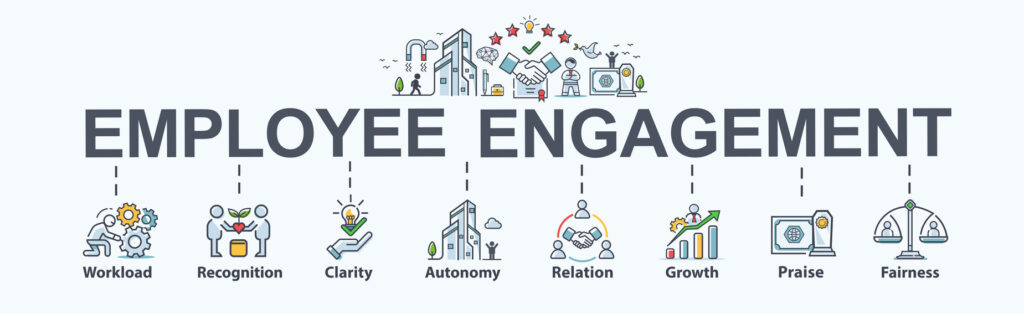
“We recognize that the strength of character and talent of our people and the quality of our relationships are the keys to our success.” —Frank Musolino (Image: iStock/ PlargueDoctor)
Ed Bastian, CEO at Delta Air Lines
Editor’s Note: At The Center for Social Capital, we believe one of the most powerful ways to put fairness into action is to share the fruits of success — profits — with the employees who made that success possible. Delta has been doing exactly that in a big way for quite some time, which is why it absolutely needed to be included in this feature.
On February 13th, the powerfully people‑centric airline celebrated its annual Profit Sharing Day by gifting employees a whopping $1.3 billion bonus pool — larger than that of all other major North American carriers combined, according to Delta. Below are some of the powerful reasons and comments from CEO Ed Bastian, both recent and from the last few years, that we felt were essential to include.
“Sharing our success is central to our values,” says Ed Bastian. “That’s why we’ve paid more than $11 billion in profits directly to our employees worldwide since 2015. Congratulations to every member of the Delta team on this well-earned payout and thank you for your outstanding performance taking care of our customers in 2025.”
Bastian’s commitment to fairness also shows up in how he leads day to day, as he explains that employees know “they can send me an email and that I will get them a response right away to whatever challenge or question or whatever they may be. That’s true for customers and it’s true for employees. They’ll send me something, and in 10 minutes, they’ll get a note back from me. And they’ll say, ‘You got an amazing bot,’ but no, it’s me. And it’s always fun doing that. So, I think the accessibility is really important. It’s my job. It’s what I do.”
Ultimately, that commitment to fairness of accessibility reflects a deeper overall respect for people. “That’s who we are,” Bastian says. “And that’s how we go through this every single day. How can we make our people’s jobs easier? How can we be better? Yeah, we gotta make hard decisions at times, and we gotta make changes — it’s a tough business. But keeping people first on your agenda is the everyday job of — in my opinion — the CEO.”
And he sums up Delta’s philosophy simply: “At Delta, our No. 1 job is taking care of our people — our success flows from this simple concept. Sharing profits with our people, along with providing tools and education to help manage and grow their wealth, is part of our responsibility as a values-led organization.”
And that’s the perfect punctuation on our reflections on fairness this month.