The Secrets of Dave Alexander’s Powerful (and Unique) Path to Success
By Chris Benguhe, RaeAnne Marsh and Elaine Pofeldt | March 19, 2026 11:57 am
How taking care of people, 287 triathlons, and an unexpected honor later in life shaped his incredible legacy – and there’s more to come.
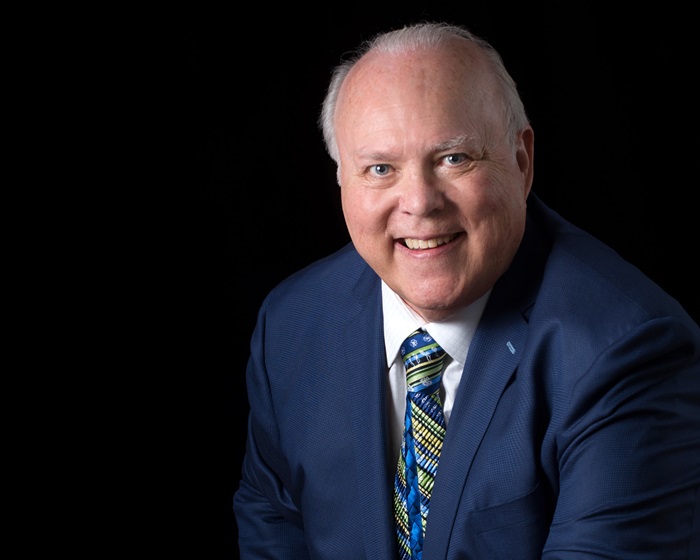 Dave Alexander founded Caljet of America in 1982, using a credit-card loan of $1,000 to fund the company. At the time, there was a monopoly on fuel storage in the Arizona area, and Dave was, essentially, the new guy on the block. Over the next 43 years, he built it into the largest fuel-storage company of its kind in the state. Today, it handles, trades and sells more than $8 billion a year in products and services.
He’s done that while taking care of his employees better than his competitors in measurable ways, such as giving them a premium healthcare policy for $1 per paycheck. “I had found out, at an early age, when you give back, you keep people’s loyalty and dedication,” says Dave, who was named one of the most caring people in America by the Caring Institute in Washington, D.C., nine years ago.
He was also named to our Top 66 People-Centric Leaders of 2025.
Dave is the perfect example of a successful people-centric leader who rightly belongs on this powerful, prestigious list for all those reasons.
But there is one more really big one: He believed in our center, our team and our vision of promoting the power of capitalism done right through people-centric business strategies two years ago and continues to be our biggest advocate.
Q and A
Editors: Dave, you’ve competed in 287 triathlons and more than 500 total events. Why did you compete in so many, and how did you accomplish that, given your admittedly larger-framed physique isn’t the typical triathlon body type — if we may be so candid?
Dave Alexander: Well, I’ve never won a race, but I absolutely do the best job that I can with the assets that the Lord has given me. I’m an endomorph. I don’t win races; I just do the best I can. I never give up. And I look at myself every day and ask, whether it’s business or racing, “Did I prepare properly for what I’m going to do today? Have I allocated my resources both mentally and physically?” Every race that I’ve ever entered, I’ve won something. Because I chose some of them because they were so incredibly difficult and didn’t know if I was going to be able to complete it or not; some of them, my wife became very worried, and so did I, if I could complete it or not.
The biggest example is a race back in early 1988. It was called The Beauty and the Beast, in St. Croix. It was such an incredibly hot day. It was 88 degrees and 88% humidity. The apparent temperature was 122. I had fear, but it wasn’t irrational fear. And I had to do such difficult things. The Beast was an incredible hill, steeper than any of the hills in the Tour de France. Some of the professional racers got off their bikes and ran up the hill because they couldn’t do it.
I had a special bike made with an incredible low ratio gear where I could climb it without walking, but even then, I had to zigzag back and forth to make it up to the hill. But I didn’t want to be seen by the cameras walking. They would have made jokes about that. So, I got off the bike and I’m starting off on the run, and it was difficult. I’m getting toward the end of the race, and I saw something that was more important to me than the race; I saw a phone booth, and I stopped. I used my company credit card and called my wife to let her know that I was okay and I was going to make it. It was only a matter of how long it was going to take. And I was the last finisher.
Everybody kept quitting, and the sag wagon kept catching up to me. It was so difficult, but I made it. And I was last, but 35% of the starters did not finish. I feel very proud that I was able to do it and make it to the end.
Editors: Did you know it was going to be that difficult? If so, why do it?
Dave Alexander: People don’t know what they can and can’t do because they don’t try. I didn’t think I could do these difficult races, but I prayed about it, and I said, “I’m going to do this, and I’m going to make it happen,” and I just had the will to get there. And I always completed the race, and to do the best I could.
Editors: Do you see a connection between the triathlons and being successful in business?
Dave Alexander: There is no difference at all. They’re both difficult things. My businesses have been successful because I drive and push and do it with kindness to all those around me. I make my customers very happy with the assets we have. For instance, we have terminals, and terminals have lots of pumps. I spent additional money to put two pumps for every operation, so if one breaks, we flip a switch, and we keep working. So, the customers know that we’re never broken, we’re always working. They can come to us and get their fuel. And right now, we’re full, and we have people asking to move more business to us, and we don’t have the room. It’s a good problem.
Editors: You did not go to college, right? So where did you learn to be so successful in business?
Dave Alexander: Well, I did not chart my path; I lived it by what I learned and used outside of a formal education. I started doing magic in Los Angeles as a child. I did my first show for money when I was only nine years old, and I made $5. In 1954, that was a lot of money for a nine-year-old to make. But magic probably did more for me in my life because it taught me how to communicate and use my eyes, which are my most powerful asset. They’re big, they’re bright, they’re blue, and I could control the whole room with my eyes. And that, along with the communication skills that I learned performing, helped me so much in my business development.
My father was in his mid-40s when I was born. So, he worked through the Depression, and he was very much risk-advantaged and wouldn’t take much of a risk. It had to be pretty much a sure thing. Along my pathway, learning and meeting lots of very famous, wealthy, successful people, I learned how to make prudent decisions and take risks with a good, prudent point, and so I made money. My father learned a lot, but he didn’t make a lot of money.
He was very disappointed in me that I did not go to college. That eventually changed, and he knew that I would be successful; he just didn’t know how. And recently, after making money and giving money to colleges, I wanted an honorary degree to actually honor my father. Well, that didn’t happen, but my lawyer pushed and shoved, and wrote a letter, and got me, just recently, an honorary doctorate degree. And something happened where I now know that my father knows about it. And I’m very pleased that that happened. It is quite an honor.
Editors: You spoke earlier about your commitment to your customers being a big part of your success. But you also have a powerful commitment to your employees that you are quite emphatic and proud of, correct?
Dave Alexander: I hire people that augment what I know, or know things that I do not know, and then I compensate them highly. And I also, and I still do it today, provide them with a Cadillac healthcare plan for $1 per paycheck. So, the rest comes out of my wallet. I must make enough money to provide that, but that gives the employees peace of mind for themselves and their family that they’re going to be taken care of.
Editors: What inspired you to run your business that way?
Dave Alexander: Well, there’s not any one thing. First, my parents were so much older than their peers when I came along, so they raised me with a good inside voice to be out in public and with adults more than children. Then, I got involved in Scouting and life. And when I eventually started a business, I didn’t go into a boardroom or a meeting with one item, I went in with 12 — the Scout law — and used whichever principles in there fit for the meeting. Trustworthy, loyal, helpful, friendly, courteous, kind, obedient, cheerful, thrifty, brave, clean and reverent — and I would use whichever ones were appropriate to make the meaning better, and I even teach those principles to my employees today.
There are three main things in Scouting. The oath, the law and the motto. And to me, the motto is probably the most important. And it’s so important to me, we have four terminals, we have a large American flag at each one, and flying below the American flag is a Scouting flag that says, “Be prepared.” Because we all must be prepared for life from the moment we were born. And all the things we go through, whether it’s puberty, starting to date, life experiences, you’ve got to be prepared for those things.
I’m now 80 years old, and I’m starting to experience some changes, and I must be prepared for them.
Editors: If you had to pick one lesson that was most important, what would it be?
Dave Alexander: I’ve truly learned to take care of people. I chose to help you and your center because I knew you would make a good entrepreneur. And I didn’t ask you to put my name on this — but I am proud to have my name on a center that recognizes that capitalism works when you realize that taking care of people is taking care of business.
Editors: Talking of taking care of people, your wife Marilyn is one of the most important people in your life, and both of you have taken care of each other in amazing ways, right?
Dave Alexander: She’s an incredible person, and she works very hard. In the first part of our marriage, she worked, had several little jobs. She started a business. Now, she’s very involved in supporting me and helping with the charities that we’ve chosen to support. And that’s one of the things that we do very carefully: We choose … You can’t give money to every charity that’s good. So, you must pick them with your knowledge, your passion and your intuition, and give them enough to make a difference. I don’t want to give $1,000 to 1,000 charities. I want to give a large amount of money to just a few charities where they can really make a difference.
My true legacy, and Marilyn is on board with it, is Scouting, because that probably did more for me in growing and maturing and becoming a leader than anything else. So, that’s my legacy, but we have a few others in health and in food to help make things better for others.
You must follow your passion and your intuitions. It must come from your heart, and you must believe in them to give back, or it’s just giving money into a hole.
You need to have passion and intuition that it’s the right place to give. We’re very careful, because people know we give. We get a lot of people coming to us and asking for money. So, one of the first things you have to learn is how to say no very nicely.
Editors: Well Dave, this has been wonderful, and thanks for saying “yes” to sharing these amazing insights with us!