Top 5 CEO Interviews of Spring and Summer 2026 Prove People-Centric Business Leadership Is Profitable
By Chris Benguhe, RaeAnne Marsh and Elaine Pofeldt | August 13, 2026 11:46 am
Check out these powerful insights from our most-watched exclusive conversations with trailblazing business leaders – and learn how people-centric leadership drives total, long-term success.
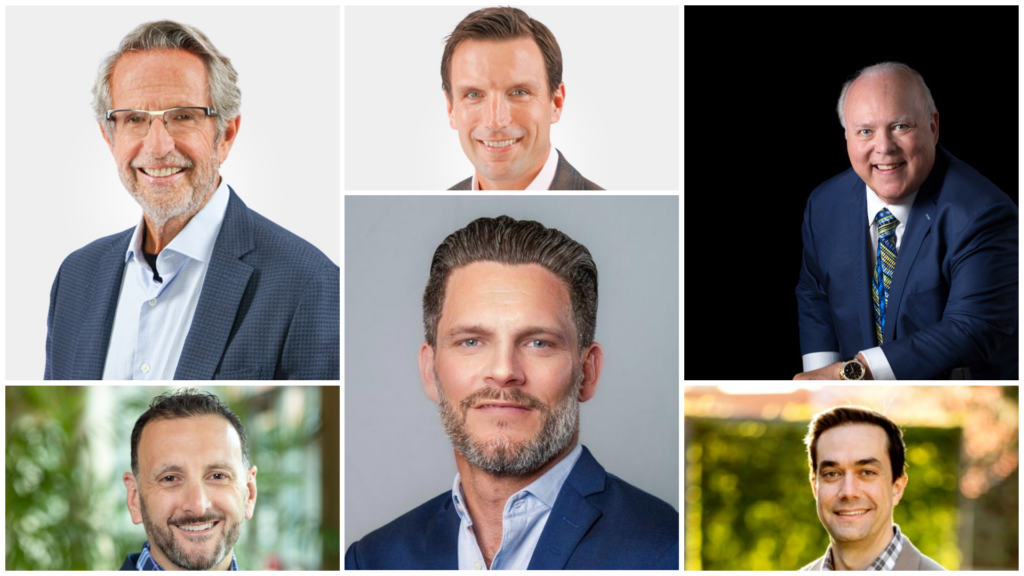
Happy Summer! As we near the halfway point of our third and most successful year at the Center for Social Capital and the Social Capital Insider by far, we’re taking a moment to highlight the most-watched CEO interviews so far this year, since we’ve had so many! This exclusive roundup features a diverse slate of top executives talking openly, honestly and sincerely about how they are leveraging their commitment to taking care of people to drive sustainable profitability and build valuable social capital within their organizations, because they realize the two are inseparable.
Discover the key takeaways from these essential leadership interviews that define success in today’s dynamic business landscape. One interesting and unexpected note: Several of these are interviews we ran in years one and two of our center but, incredibly, they are still racking up enough views to make it into our Top 5 most viewed this year! Maybe that’s because these leaders are redefining success at a time when people are thirsting for a new view of success by investing in and cultivating their greatest asset — people — because they know that taking care of people IS taking care of business.
As Barry-Wehmiller Transitions to a New Generation of Leadership, One Thing Stays the Same: Its Focus on People
Company president and CEO Kyle Chapman carries forward father Bob Chapman’s driving principle that all team members ‘are somebody’s precious child.’
A giant in the people-centric leadership world passed away in March. Bob was a powerful inspiration for our work at the Dave Alexander Center for Social Capital. In keeping with his impact, we are once again dedicating our video headline this week to our last interview with him, where he was joined by his son Kyle, who has assumed leadership of the company and is carrying forward his father’s legacy. This extraordinary exchange is a testament to the values Bob lived by and the strength of his relationship with his son.
Bob Chapman, chairman and former long-time CEO of Barry-Wehmiller, experienced a powerful revelation about leadership at the wedding of his friend’s daughter. Looking at the bride and groom, he thought, “Oh, my goodness, that is somebody’s precious daughter and son that we are worshiping today in terms of how wonderful it is they’re coming together. All 12,000 of our global team members are somebody’s precious child.”
It was this people-centric philosophy that helped him scale the company. After taking the helm of the private company at 30 years old, he grew Barry-Wehmiller into a $3.6-billion global capital equipment powerhouse, leading the company through more than 150 acquisitions over 40 years.
Along the way, he developed what he calls Truly Human Leadership, designed to make employees feel valued, cared for and an integral part of the company’s purpose. “When we see people as functions, engineers, accountants, receptionists, we treat them accordingly,” he says. “We may be a nice guy, we may treat them nicely, but it’s an economic relationship, not a human relationship. But when you see them as somebody’s precious child, knowing that the way you treat them is going to profoundly impact their health and the way they go home and treat their family, it changes everything. And the lens through which we see people is profoundly important.”
Watch the full interview at: http://www.centerforsocialcapital.com/as-barry-wehmiller-transitions-to-a-new-generation-of-leadership-one-thing-stays-the-same-its-focus-on-people/
Isak Pretorius Is Forging a Sustainable Economic Future for Africa’s Population
By leading ForAfrika as a bridge between the nonprofit and for‑profit worlds, he’s created a circular model that rejects those limiting labels and focuses instead on one holistic goal: ‘being for good business.’
“I believe that thriving is a result of a complex set of decisions that we make on a daily basis. So, you can have unlimited resources and still not thrive,” says Isak Pretorius, group CEO of ForAfrika. One of Africa’s largest NGOs, with more than 40 years of impact across the continent, ForAfrika has a powerful for-profit element as well, working together to create prosperity and opportunity in Africa.
“We engage with those communities where they’re at,” Isak says, explaining, “We listen to that community, we respect them. And when we hear from them what their plan A is, then we take our knowledge, experience, expertise, and we help them to adjust that plan where necessary to create plan A+.” This, he makes very clear, is different from plans that announce, “We have community buy-in”: “What you actually have, though, in many cases, is support from community to the only thing that had resources on offer. But it’s not their plan A, and it’s therefore inherently unsustainable from day one. And in our opinion, in many ways quite disrespectful to that very community.”
ForAfrika’s approach is to engage in a way that listens to the community’s plan, helps them polish and improve their plan and then bring resources to that plan. “It’s inherently sustainable from day one because the community owns it. It’s their plan. They’ve got to make it happen, not you, and you’re there to support them in that journey. And so that’s where we establish true strategic partnerships, I want to call it, with those communities. And then we walk a journey with them.”
Watch the full interview at: http://www.centerforsocialcapital.com/isak-pretorius-is-forging-a-sustainable-economic-future-for-africas-population/
Dave Alexander Built a Multimillion-Dollar Business by Giving Others Peace of Mind
The founder of Caljet of America embraces Boy Scouting’s key principles in everything he does.
To Dave Alexander, founder of Caljet of America, the highest value someone can live in business is to give those around them “peace of mind.”
For his three direct reports, he says, their mission statement is, “I give Dave peace of mind.”
He, in turn, strives to give his employees peace of mind, too.
“I don’t give every one of them, of course, the financial statements, but I demonstrate to them that we’re a strong company and they’re going to be taken care of,” he says. “My employees get a Cadillac health insurance policy for $1 a paycheck.”
Dave Alexander founded Caljet of America in 1982, using a credit-card loan to fund the company. At the time, there was a monopoly on fuel storage in the Arizona area, and Dave was, essentially, the new guy on the block. Over the next 30 years, he built it into the largest fuel-storage company of its kind in the state. Today, it handles, trades and sells more than $8 billion a year in products.
He’s done that while taking care of people better than his competitors in measurable ways, such as giving them a premium healthcare policy for $1 per paycheck — earning him a spot in our Top 100 Social Capital companies last year. “I had found out, at an early age, when you give back, you keep people’s loyalty and dedication,” says Dave, who was named one of the most caring people in America by the Caring Institute in Washington, D.C., five years ago.
Watch the full interview at: http://www.centerforsocialcapital.com/dave-alexander-built-a-multi-million-dollar-business-by-giving-others-peace-of-mind/
Charlie Malouf Saved His Company by Creating Clear Career Paths and Incentives for His Team
The president and CEO of Broad River Retail, a licensed Ashley Furniture retailer, led the company from near-bankruptcy to a remarkable turnaround through a people-centric, abundance mindset.
Charlie Malouf’s statement early in his conversation with Chris Benguhe sets the tone for his exclusive interview for the Dave Alexander Center for Social Capital: “I’m surrounded by some amazing people, and business is more fun when you make it about people and about lifting others up.” And he shares the remarkable story of how he came to apply that attitude toward business.
Charlie, president and CEO of Broad River Retail, a licensed Ashley Furniture retailer, discusses how his company’s near-bankruptcy experience in 2015 transformed their approach to business. Rather than cutting costs and reducing headcount, he invested more in his people by creating clear career paths, incentives and elevated titles for his sales associates. This “human capital” focus, versus a traditional “human resources” mindset, empowered his team and led to a remarkable turnaround and growth for the company.
“Our purpose statement is, “Furnishing Life’s Best Memories,’” he says. “But the way we like to think about it is outwardly focused. So, we like to think of it as ‘Furnishing Life’s Best Memories … for others.’ For other people.” And by “other people,” Charlie means employees — whom he calls “our own memory makers” — and their families as well as customers and partners. “Because it’s not a zero-sum game; it’s a spirit of abundance, a mutual prosperity — and we want a healthy ecosystem for our neighbors, for our community, for our planet, for our friends in the industry, and for other organizations whom we get to support.”
Watch the full interview at: http://www.centerforsocialcapital.com/second/charlie-malouf-saved-his-company-by-creating-clear-career-paths-and-incentives-for-his-team/
Matt Wilkerson Breaks Down the Barriers to Entry for Millions of Young Job Seekers
Extern co-founder creates access and opportunity for students and learners when the job application demands ‘experience.’
Matt Wilkerson is the CEO and co-founder of Extern, a company that provides a subscription platform for job-ready experiences called Externships. The concept for it came out of a series of experiences that were “great opportunities” for his career but never quite worked out for him as planned. They did, however, serve exceptionally well as learning steps.
Matt’s personal background and experiences shaped his motivation to start Extern. He initially wanted to pursue a career in art and film, but ultimately decided to attend MIT, where he earned a dual degree in engineering and management. “I’d gotten in off the waitlist at MIT at the last minute and looked into it and said, ‘I think I want to go there to really push myself.’” While there, an internship opportunity he’d been offered got cancelled — and this experience led him to explore careers in consulting and banking, eventually working at Morgan Stanley. However, he found the work environment unfulfilling and went on to work as an investor at a venture capital firm, which also did not fully align with his values.
Combining these experiences with impetus from a friend, he co-founded AHAlife, a luxury e-commerce platform that helped connect artisan designers with customers. “I was finally in a world where I was applying more creativity, learning what it was like to be an entrepreneur, making every mistake you can imagine.” This also helped him rediscover his passion for serving and supporting people, which eventually inspired him to start Extern.
His thought at the time was, “All right, I’ve gone through so much, seen so much that I have more confidence in taking an even bigger risk now on my own.” And this, he shares, “is what led me down the path of solving a really hard problem that we’ve made a lot of progress on — and we’re still working on — of, ‘How do you help people get, especially young people, people coming out of college, get meaningful jobs and have meaningful careers?”
Watch the full interview at: http://www.centerforsocialcapital.com/matt-wilkerson-breaks-down-the-barriers-to-entry-for-millions-of-young-job-seekers/
Check out the rest of our articles and interviews in our archive at: www.centerforsocialcapital.com/social-capital-archive-articles/