Community Is Business Success: Our Summit Proved It, and These 16 Leaders Share How They Do It
By Chris Benguhe, RaeAnne Marsh and Elaine Pofeldt | October 29, 2026 11:36 am
Inside the inaugural Summit for People-Centric Leadership in Phoenix, and this month’s honor roll of Social Capital leaders building community through their business.

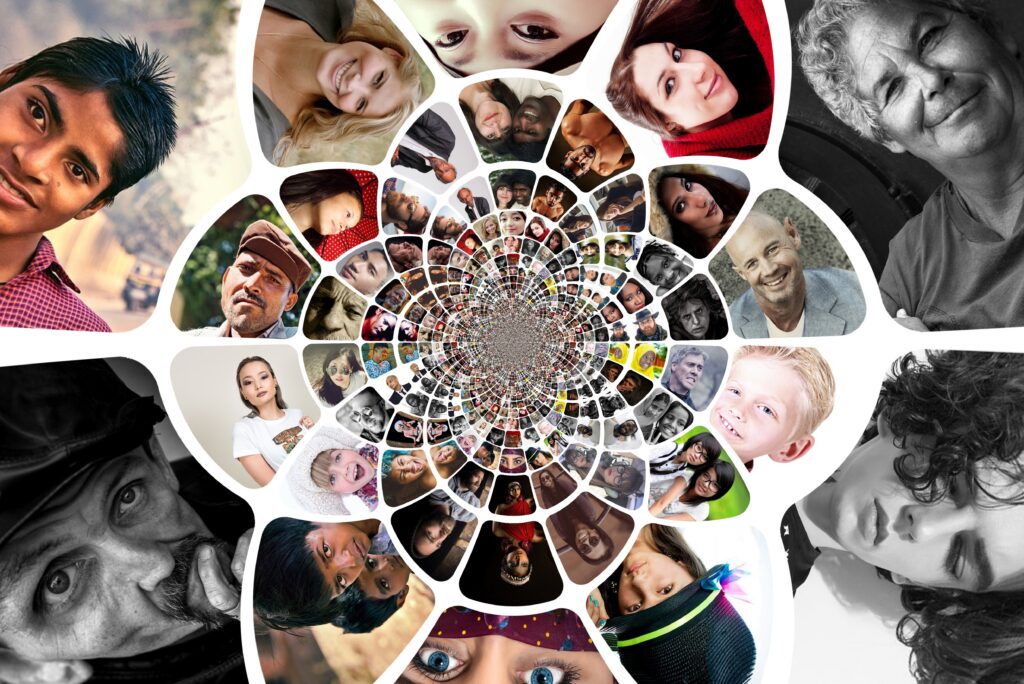
Thirteen leaders shared the stage and spotlight at the inaugural “Summit for People-Centric Leadership”, from CEOs and founders to authors and investors, each with a practical, people-first approach to business. (Image: geralt Pixabay)
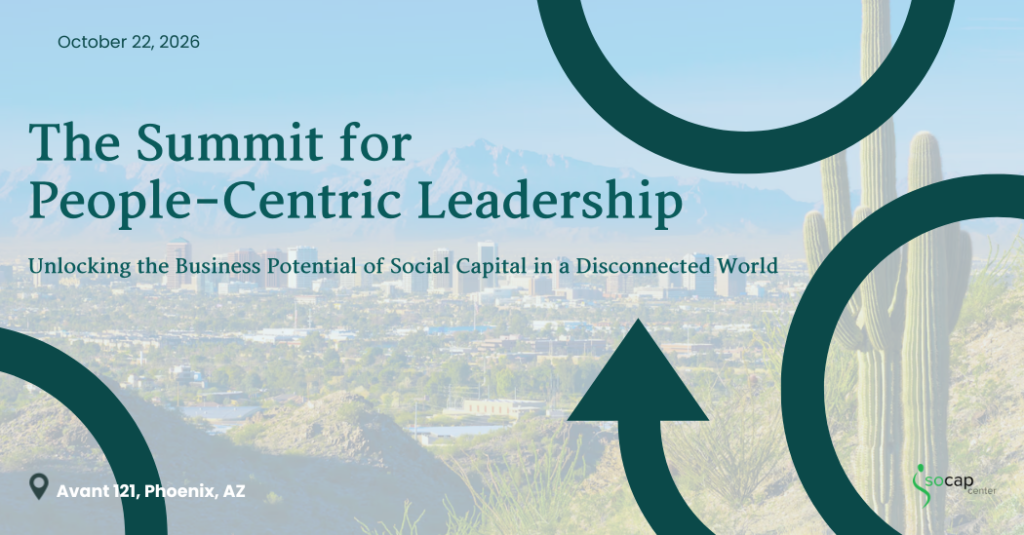
On October 22, 2026, an intimate and exclusive gathering of CEOs, HR leaders and business owners came together at AVANT 121 in Phoenix for the inaugural “Summit for People-Centric Leadership: Unlocking the Business Potential of Social Capital in a Disconnected World.” They came aligned around one shared belief: Taking care of people is taking care of business. And they collectively recognize that business leaders have both the greatest opportunity and responsibility to help heal a fractured world, and that the leaders who do will reap the rewards of long-term, sustainable success.
That community is laying the groundwork of the underlying fabric of the bigger, new business leadership ideology that says the profit-only model is dead. So, what is the new MO? People-centric leadership is about creating community and fostering the relationships within it.
We opened the day with John Lennon’s song “Love.” What do love and business have to do with each other? Everything. Love and business not only can go hand in hand, they must, if our nation, our world, capitalism itself and each one of our companies are going to survive and thrive. That’s especially true now, when loneliness is an epidemic, when disconnection runs rampant despite more electronic connectivity than ever, and when people everywhere are hurting.
It’s also a time when, for the first time in human history, business leaders have access to some of the greatest resources on the planet. If we do it right, we have the chance to build a world of abundance and prosperity for everyone, and business leaders can lead the way.
At its heart, that’s all about community: the community of our nation, of our world, and of our business community.
We believe in that wholeheartedly at the Dave Alexander Center for Social Capital. But we don’t want you to take our word for it. We want to prove it with the words and actions of the remarkably successful leaders we’ve interviewed and the speakers who joined us at the Summit, all of whom back their beliefs with actions that strengthen the communities of their customers, their employees and the places where they operate.
Thirteen leaders shared the stage and spotlight at the Summit, from CEOs and founders to authors and investors, each with a practical, people-first approach to business. We will be sharing more of their words and ideas in the coming weeks, so be sure to check back every week for more.
It Started with Dave
One leader was with us in spirit although he could not be there in person because he was laid up with a broken ankle: Dave Alexander himself. Dave is the founding sponsor of our Center, and his name is on it most deservedly.
Dave started his fuel terminal company, Caljet of America, with a thousand-dollar credit card loan and his solemn word to his bankers and investors that he would make it a success. How did he do it? Some might guess he was smarter, more aggressive, more cunning or even more predatory than the other guy. In fact, he did it by being more compassionate and caring toward his employees, his customers and his community than the competition, which at the time controlled almost all the business. That was Dave’s opening. And today, Dave has the majority of the business in his industry in Arizona and runs the largest independent motor fuels terminal in the Southwest.
That’s the idea behind our Center: Love and business aren’t opposites. And thinking of “the community” rather than just “the company” is the mindset that makes it work.
A Disconnected World
Loneliness isn’t a slogan. In 2023, the U.S. Surgeon General issued an advisory calling loneliness and isolation an epidemic. Cigna has found that 57% of Americans feel lonely, including more than half of American workers. Harvard’s Making Caring Common project found that 21% of adults report serious problems with loneliness. Younger generations report the most loneliness of all, even though they’re more connected than any generation in history.
These are the people who sit in your meetings and at the desks in your offices, who keep the machines running and the computers whizzing along, and whose work keeps products and services flowing so the profits and revenue can flow, too.
Yet many of those people today feel unheard, misunderstood or simply not considered. That fuels a backlash, not just against business but against capitalism itself. That doesn’t mean the free market is dead. It means we’ve mismanaged it. We don’t need to get rid of capitalism. We just need to take care of the people in all our communities.
Business as Community Builder
A culture of camaraderie, connection and shared purpose drives extraordinary results in the workplace, and it spills out into every part of society. Businesses that build real, organic connections through their business model strengthen their brand, their internal infrastructure and their value to workers, customers and society. With disconnection at the root of so many social ills, that matters more than ever.
Few leaders prove it better than Vince Barsolo, CEO of Televerde, who joined us as a speaker at the Summit. Televerde is a global B2B sales and marketing company serving major enterprise clients with a bold, profitable employment model rooted in second-chance hiring. Incarcerated women make up 60% of its global workforce, and its recidivism rate is under 7%.
As Vince has shared with us, Televerde protects a culture that feels like family. Its quarterly companywide town halls split time between business updates and recognition, and that recognition comes from peers, not just from the top, as employees nominate one another and explain why. Vince personally visits every prison-based center each quarter to share updates face-to-face and listen to the women’s stories, often bringing alumni who show what’s possible after reentry. He even turned down a private office when he became CEO, so people could stop him in the hall with ideas and concerns.
That community extends to clients, too. Visitors to Televerde’s centers often expect to meet “inmates” and instead meet women much like themselves, who want to support their families and build careers. Through the Televerde Foundation, clients hear directly from women about the obstacles they’ve overcome, and many leave moved, realizing they’re not just buying a service but investing in a woman, her children and the ripple effect of her success. (Read more of Vince’s insights in the body of this article).
Capitalism the Way It Was Meant to Be
That may sound unusual for a for-profit company. But it’s how capitalism was supposed to work, according to Adam Smith, who believed capitalism had to benefit society as a whole to function properly. In The Theory of Moral Sentiments, Smith wrote: “Though it may be true, therefore, that every individual, in his own breast, naturally prefers himself to all mankind, yet he dares not look mankind in the face, and avow that he acts according to this principle … he must upon … all … occasions, humble the arrogance of his self-love, and bring it down to something which other men can go along with.”
For Smith, our happiness depends on the happiness of others. To succeed, we must stay connected to what our families, friends and neighbors think, need and want, and work toward the good of everyone who has a stake in our success. It’s a complex relationship, but being human is complicated. So is running a successful business.
We’ve seen plenty of proof that building communities around shared values pays off in marketing, promotion and customer loyalty. Customers now expect deeper engagement with the companies they buy from and with like-minded fellow customers. A First Round Capital survey found that 80% of startup founders considered building a user community important, and 28% called it crucial to their success.
Venture capitalist Brad Feld, co-founder of Foundry Group and a key figure behind Techstars, makes a similar case in his book Give First: The Power of Mentorship. His core idea: Give your time, expertise and support without expecting an immediate return. The value comes back, just not always in predictable ways. That isn’t altruism. It’s strategic legacy-building.
“Creating a strong sense of community among our employees is central to our company culture.” –Jasmine Jirele (Image: istock / IvelinRadkov)
Honoring Our Social Capital Community
All of this brings us back to the Summit. The gathering of so many leaders who share this belief was more than a milestone for our Center. The real human connections formed that day are already sparking change, inside each speaker’s and attendee’s own organization and across the wider business community, and they grow directly out of a shared commitment to people-centric leadership. These leaders came from far and wide to share their beliefs, their actionable plans and their support to our community and the bigger community of those who believe that people are the new P&L (People and Love).
In that spirit, this month we honor 16 Social Capital leaders who are building thriving communities in a whole lot of powerful and very real, diverse and dynamic ways. Some joined us on the Summit stage; others we have come to know through our interviews and reporting. All of them are proof that community is business success. We hope you find their words instructive, inspiring and uplifting.
We’re pretty sure Adam Smith is smiling somewhere about it, too.
Jasmine Jirele, President & CEO at Allianz Life
Creating a strong sense of community among our employees is central to our company culture. We believe community is built when employees feel connected, recognized and empowered to make a meaningful impact.
Employees can join our Employee Recognition Committee, which recognizes and celebrates employee achievements by developing programs and events that are engaging and motivate performance. The ERC hosts bimonthly recognition ceremonies and various fun events around campus, including meat raffles, bingo, craft classes and more. On top of that, it is a great way for employees to network with employees in other parts of the company that their role might not otherwise work with.
We also have eight Employee Resource Groups and one Inclusion Group made up of highly engaged employees from a variety of backgrounds who come together for a shared purpose or initiative to raise awareness, share information and activate other employees to create positive change within our company and local community.
In addition to the groups and committees, we offer mentorship opportunities, volunteer initiatives and holistic benefits that support employee well-being. Together, these programs help create an environment where employees feel valued, supported and encouraged to bring their authentic selves to work every day.
We believe the experience our employees have directly influences the experience our customers receive. When employees feel supported, valued and connected to their workplace community, they are better equipped to build trusting relationships, deliver exceptional service and help customers navigate important financial decisions with confidence.
We also strive to extend our commitment to community beyond our workplace and into the communities where our customers live and work. Through more than $6 billion in impact-related investments, we support housing accessibility and affordability, economic inclusion and job creation, and environmental sustainability. This includes $2.7 billion invested in affordable housing across 47 states, Puerto Rico, the U.S. Virgin Islands and Washington, D.C. since 2009, including more than 1,600 housing units in our hometown Twin Cities community. These investments reflect our commitment to creating positive outcomes not only for our customers but for the broader communities they call home.
We empower our employees to share their time and talents with nonprofits in a way that matters to them. In 2025, our employees delivered in record ways, logging more community engagement hours than ever and contributing more than $386,000 through volunteer-directed grants. Through our V8 program, we provide employees eight hours of paid time off each year to volunteer with any eligible charitable organization.
We also offer Allianz-led volunteer opportunities throughout the year, which employees do not need to use their V8 hours for. These events include trash pickups; Free Farmers Markets, which are convenient food pickup events at Allianz Field that are held in partnership with Minnesota United FC and Keystone Community Services; and much more.
We also offer opportunities for employees who would rather stay on campus to do their volunteering, including partnering with local nonprofits for annual hygiene packing events.
We also tap into our employees’ professional skill sets by offering skills-based volunteering. Employees can dedicate their time and professional knowledge to help nonprofit organizations in areas where they may be understaffed or lacking knowledge, including marketing, human resources, creative and much more.
Scott Davison; Chairman, President & CEO at OneAmerica Financial
Ultimately, I think community starts with trust. People want to know they’re more than an employee number. They want to know they’re working for leaders who care about them as people.
We’ve worked hard to create a culture where associates feel connected to the organization and to each other. That starts with authentic communication, listening to feedback and responding when people tell us something isn’t working.
We’ve also learned that small things matter. Programs like our Best Days, recognition programs and opportunities to spend time together help people build real relationships. When people feel connected to one another and to the mission of the organization, community tends to take care of itself.
The way we treat each other inside the company has a direct impact on how we show up for customers. I’ve always believed that a culture of trust on the inside creates stronger relationships on the outside. That’s why our strategy is built around earning and keeping trust over the long term.
We do what we say we’re going to do. We treat people fairly. And we’re there when customers need us most. I often say we’re in the trust business. The products matter, but trust is really what customers are buying from us.
Serving our communities has always been part of who we are.
We encourage associates to support causes they care about, and we make it easier for them to get involved. With manager approval and as schedules allow, associates can volunteer during the workday. Through our OneAmerica Cares platform, they can find nonprofit organizations and volunteer opportunities in their communities.
We also back that up with financial support. For every hour an associate volunteers with a qualifying nonprofit, OneAmerica provides grant funding to that organization.
I’ve always believed communities are strongest when people are willing to roll up their sleeves and help. Writing a check matters but showing up matters, too. We do both.
Vince Barsolo, CEO at Televerde
Televerde is a unique company. Most of our workforce consists of incarcerated women working inside prison-run call centers, while the rest are in corporate offices around the world. My job is to make sure those two groups feel like one community.
To me, Televerde has always felt like a family, and that’s something we protect. Each quarter, we bring all employees together for a companywide town hall. Half the time is spent on business updates and the other half is dedicated to recognition. What makes it powerful is that recognition isn’t top-down — employees nominate one another and explain, live, why that person made an impact. That kind of peer validation builds pride and trust. And in every town hall, employees participate in Voices of Televerde, sharing why they’re here and what this work means to them. These touchpoints strengthen ties and remind everyone they belong to something bigger.
For our prison-run centers, visibility is key. I go to every center each quarter to deliver updates face-to-face, answer questions and hear what women are working on — which they love to tell me about. For many, it’s their first exposure to corporate life, so the lessons feel especially meaningful. Alumni often join me, and the entire room goes silent when they speak. You can hear a pin drop. The women see living proof of what’s possible when they reenter society.
For me, accessibility is the foundation of community. That’s why I chose to not take a private office when I stepped into this role. I want people to see me, stop me in the hall, and bring me their ideas or concerns. That openness is what keeps the family feeling alive.
We Bring Our Customers into Our Community
We open the doors and invite them in. When clients visit our prison-run operations for the first time, they’re often surprised. At first glance, our centers look like any other call center. The difference is that the people at the desks happen to be incarcerated. The experience dramatically changes perspectives. Many describe it as life-changing because it reframes their view of incarceration. They come in expecting to see “inmates” and instead meet women who feel familiar — women who want to support their families, succeed in their careers and make their way in the world just as they do. That realization creates empathy and connection, changing how clients think about opportunity and second chances.
We welcome clients into our non-incarcerated offices in Phoenix, Glasgow and Córdoba. There, the feedback is consistently about the teams’ passion, skill and expertise. While the experience is different, the outcome is the same: Clients leave with a stronger sense of connection to our people and the community they’ve become part of.
We also encourage clients to join us at Televerde Foundation events. Televerde launched the Foundation in 2020 to prepare women for reentry and to stay engaged with them for as long as they need support. Twice a year, our clients hear directly from women about the obstacles they’ve overcome and the careers they’re building. Those stories are powerful. I’ve had friends and clients attend and be moved to tears. These are people who don’t usually cry. That’s when it hits them: They’re not just buying a service. They’re investing in a woman, her children and the ripple effect of her success.
For some clients, that connection goes even further when they hire Televerde program graduates into their own organizations. That’s community coming full circle. Women not only get a second chance but also a new future with companies that already believe in their potential.
Building an Extended Community
At Televerde, we want our employees to feel supported not only at work but in the communities where they live. That’s why every corporate employee gets two paid volunteer days each year to use however they choose. Some spend that time with the Televerde Foundation, but many choose local nonprofits, schools or causes that are personal to them. The choice is theirs.
What’s been exciting is seeing leaders turn those days into team-building opportunities. Whole departments will volunteer together at food banks or community centers. At our executive retreats, we also make giving back part of the agenda by packing meals for families in need or helping prep for a fundraiser. It’s good for the community, but it’s also good for us. Serving side by side creates shared experiences outside the office that build stronger bonds inside the office.
For me, the point is simple: when people feel connected to the communities around them, they bring that energy and perspective back to work. It makes us better colleagues and a stronger company.
“At Televerde, we want our employees to feel supported not only at work but in the communities where they live.” –Vince Barsolo (Image: geralt/ Pixabay)
Richard Moore, President & CEO at Good Feet Store
I love that aspect of giving back as a company and supporting causes in our community and nationwide. We should do it — but it shouldn’t stop there. Servant leadership is actually thinking about the well-being of our employees, of my board members, of my partners. And that, then, will actually see a positive outcome on their production, on how they relate with me and how we achieve.
For me, it boils down to helping people live a better life, helping people do the things that they want to do. And those people are definitely our customers, but they’re also our partners, our employees and, for us, franchisees.
A lot of folks think servant leadership is “What will we do for our nonprofit? What will we as a company give back to causes that makes us feel great about working really hard over here and making a lot of money?”
This is the give back part of the conversation. It is the investment part of it. It is the piece that matters to bottom-line numbers. And I think that’s the most important piece that people sometimes get lost on when they think about this in that way. For me, the idea of living a life of abundance and not of scarcity comes down to just how you see the world, and how you believe in each other, and believe in what we can be and what we can do.
If you live a life of scarcity, you’re always going to worry. You’re always going to try to take your piece of the pie. And somebody else is after it. So then, you spend your energy defending what really wasn’t yours to begin with, right? Or defending what you clawed for and took from someone else. But that is draining, that is tiring, that’s not fun. And then, are you a good dad when you come home after living a workday like that? Are you a good husband, a good wife? You’re just not.
If you flip it on its head and say, “Hey, let’s live a life of abundance. How do we create a win for all of us?” might I on occasion get a few less pieces of the pie than my partner or my associate or the customer? Maybe. But I think, over time, it creates more pies and I think it creates more opportunity.
And guess what? That’s capitalism. That is the fundamental piece of capitalism. People have said, “No, no, no. It’s greed, greed, greed. Take, take, take.” No; it’s to create a machine that continually grows, continually gives people an opportunity to level up in any way that they think is up, right? And I think that’s the beauty of it.
Julie Hancock, Managing Director at Camelot Homes
Camelot doesn’t just build homes; we build communities. And supporting those communities is vitally important to our culture. Giving back is something we do together. It’s not just a matter of writing a check. Established by the Hancock family in 2004, the Camelot Foundation receives a portion of our profits every year, so philanthropy is built into how the company operates. In this way, when the company does better, we have more to give to the community, and everyone benefits.
Our customers live in the same Phoenix-area communities the Foundation serves. The Foundation has made more than 440 grants totaling more than $2 million to local charities, so when someone buys a Camelot home, they’re buying from a builder that is invested in the community they’re moving into.
We give people the time and the opportunity to give back to the community, removing a real barrier to volunteering. Every employee gets a paid half-day off each month to volunteer at a charity of their choice. We don’t assign the cause; they pick what matters to them. That’s about six paid days a year per person. On top of that, we coordinate company-hosted events that give our team an easy way to volunteer together.
We also host annual teambuilding charity events that bring the team together around a cause. Events like The Saguaros’ Olympiad fundraising event and Boys Hope Girls Hope of Arizona’s Hope Ignites Phoenix annual breakfast and golf tournament are just a few of the events we have annually participated in. Most recently, Camelot employees, from the field to the front office, worked together to pack emergency food boxes for St. Mary’s Food Bank. That shared work is what builds relationships across roles. And because Camelot has been family-run since 1969 and is now employee-owned, each member of the Camelot team sees the company’s good as their own.
Dave McLurg, Founder & CEO at The Board International
I think the key is to be able to provide an environment where people can really get to know each other. So, we work very hard in initially providing a little bit of background information. I find that introductions are often missed out — all of a sudden you have an employee who comes in, nobody knows who they are, doesn’t know what their background is. The first 30 days is a very uphill climb. It reminds me of going to kindergarten or grade one where some kids knew each other and you didn’t know anybody.
So, we’re very intentional in having a background of each [newly hired] person and things about their family, their kids, their interests, their sports. And we send that out in an email so people know what their background is. Because what’s interesting is, you can be standing beside somebody and they’re a stranger; but you find something in common, immediately you bond. So, we are very intentional and try to accelerate that.
And we have someone who walks [the new hires] around to introduce them, to say this is who they are and this is their background. It gives them credibility and trust. It’s no different from an introduction here [at the inaugural Summit for People-Centric Leadership] — most people don’t want to talk about themselves; they’d rather talk with someone else. So, an introduction is vital so that the person knows, “Okay, well this person’s worked in this industry. They’ve got some background. They know what they’re doing.” So then there’s trust immediately.
We’re very, very, very intentional in that. We feel that initial connection is vitally important because once they get comfortable from a business standpoint, they’re going to perform better, no question. But I don’t worry about people performing; I want to make sure they’re peaceful, happy and fulfilled. That’s the thing that we really measure, because the people we hire, we know are going to wake up and work hard. We just want to make sure at the end of the day they say, “Man, I’m glad that I worked there.”
We extend that value to our customers. Peter Drucker – whom I’m a big fan of – said, “The purpose of a business is to create and keep a customer.” A lot of people think the purpose of a business is to make a profit, have great operations, have a great product or great service, great technology. I agree with that. You have to have all that. But if you do not have a customer, then you do not have a business. So, it says “Create and keep” — you have to create the customer and then you have to keep them. You’ve got to be able to deliver on that promise, so you have to have great operations, you have to have great service, you have to have great technology, you have to have great finances because you got to make money — and you have to have great people.
What we really talk about is, “The customer is the key.” People say, “Well, what comes first, the customer or the people?” And I believe it’s the customer, because you can have people but if you don’t have a customer you don’t have a business. So, we educate people on that. I think education does not talk enough about that. People see the customers almost as an irritation. They’re frustrated. Someone’s coming in, they’re asking all these questions, they’re asking for all this information.
We don’t see that. We love our customers because my name may be on the paycheck signing it but it’s really the customer that signs it. We really educate people on the reality that we all sit here because of the customer. And I feel that comes through in that mindset of “customers are there. They really are there to serve.”
We believe that service is honorable. A lot of people look down on serving and they think it’s almost like you’re subservient. We’re not saying that. We’re saying that we will respect our customers, we want our customers to respect us, but being a servant leader is really an honorable profession.
We really believe in giving back and we put aside a certain amount of our profits, but generally it’s been me or the executive team that’s made the decision. What we’re looking at doing is: I’ve been inspired by Bell Bank [here in Phoenix], one of the best business banks. They are an ESOP company and they have a fund — I believe it’s now up to two, three, maybe $5,000 — where each employee can give back to their community; they choose. For instance, it could be a family member who’s going through a tough time, and they could donate $500.
The other part of it is, we’re big in giving back our talent. We’ll come alongside organizations — a lot of nonprofits, churches — and help them. We’re obviously pretty good with our numbers. We can help them with that. We can help them with strategy. We can introduce them to donors. We’re very encouraging in making people give back not only their time but also their talent and their tradition.
Payam Zamani, Founder, Chairman & CEO at One Planet Group
I’m a firm believer in the concept of community-building, both at business but also in other spaces that you’re able to influence. Recently, I started a conference called One Planet Summit, which, basically, brings like-minded people who want to elevate business to serve humanity together so they can have the space to have these conversations. And I believe that collective success comes through collective unity. If you don’t have unity, it’s very difficult to together rise. And that is something we want to be able to achieve.
At work, the way we try to accomplish that is [through] whatever our business may be, and our primary businesses at One Planet are about online marketing. We’re not solving the problem of hunger in the world or finding a cure for cancer, but we want to sign up for just causes. As a result, our employees, collectively, are working towards a — or even more than one — just cause. In our case, our just causes are healing racism in America. I see racism as the most challenging issue in this country; it’s very important for us to work towards that.
The second thing is empowering women and girls globally. These are just causes. And just because we are good at online marketing, we don’t believe that we should go out there and do our own projects; rather, we want to find grassroots projects, operations that we can support. Hopefully, with our support they can do more of the good work that they are already doing.
The other thing is collective service. Collective service can contribute to that community-building effort. In our company, what we do is offer up to nine paid service days to our employees. On those days, together or individually, we serve humanity however we see fit. There’s one thing we ask our team not to do on those days, and that is to please not serve a political party on those days, because by nature they’re divisive. That community-building is, as a result, built on the foundation of serving others together.

“I’m a firm believer in the concept of community building, both at business but also in other spaces that you’re able to influence.” –Payam Zamani (Image: PCH-Vector/ iStock)
Jordan Rose, Founder & President at Rose Law Group
Rose Law Group team members share a common bond of feeling honored to be able to work together to make our community better every single day. Our team is 100% focused on service to our community, and that really brings us together. We all feel lucky that our work lives are in service to others and our time spent together solving problems makes a positive impact. Working as a team here at Rose Law Group and applying all our mental capacity to solving an issue really brings us together in meaningful ways.
We are in the business of serving people in our community every day by helping to solve their most challenging problems. We also find it highly gratifying to support the nonprofits that are most meaningful to our clients.
We also provide periodic free seminars on topics that we think can be additive to our clients. During the pandemic when we were worried about how the community could hold together, we nearly immediately instituted a weekly Zoom call where hundreds of community members appeared to talk with some riveting panelists just so that we could all try to move through that challenging time together. We try to find ways our community can work together, seeing past differences to a better tomorrow.
Every RLG team member is required to be involved in one outside charitable activity, as we feel it is our obligation and privilege to give back. Whether it is their kid ‘s school, a sports team, an arts organization, a healthcare provider or even a religious institution, RLG supports our team members in spending time with the things that mean the most to them. We encourage that they take leadership roles in these groups, and provide time off and financial support so that our team can have the most positive impact possible. If you’re a member of the RLG Team, you by definition care about the wider community — that is just a basic tenet of the type of people we chose for our work environment. We believe in giving back to this community that has given all of us so much joy, and we are just grateful to be able to do that!
Bob Dalton, Founder & CEO at Sackcloth & Ashes
When building a community, one of the most important questions you can ask is, “What type of value are we bringing people to make them want to be a part of our community?”
This question gets to the heart of what makes a community special. When people are feeling valued, which unfortunately isn’t often nowadays, they not only work more effectively but it creates a positive culture and environment that they work within.
A company that’s generous with its team members creates a generous community. As cliché as it may be at this point, a play on President John F. Kennedy’s quote in relation to this topic would be, “Ask not what your people can do for you, but ask what you can do for your people.”
Peter Block writes in his book Community that the goal isn’t community; the goal is belonging. People are asking three questions when it comes to belonging:
- Do you see me?
- Do you hear me?
- Does what I say mean anything to you?
Your executive team is asking those questions. Your team members are asking those questions. Your customers are asking those questions. Your family members are asking those questions.
If you want the hack to building strong relationships and communities, focus your efforts on making sure the people in your life and work can say, “Yes” to those three questions.
Amy Lemire, CSP®, DTM; President & CEO at AIM Training and Consulting, Inc.
Thinking of the way you create a sense of community reminds me of a saying that I have on my desk: “I practice what I preach” — knowing what my values are and practicing those and living those and showing up as those. I sometimes think about strength-finders. For instance, I’m “woo”; I love winning people over. I love positivity, I love communication. Those are some of the ways that I show up daily, and I actually have a mantra that I read every morning … that reminds me of who I am and what my genuine gifts are, so that when I am with my team they feel that and they know that. And then again, being congruent with my values and my image and making sure that I am consistent with that on a daily basis is the way I built my community.
And they respond. I like to be someone the team can count on and [who keeps] an open door, and also that it’s fun at the same time — that there’s always work to be done but that everything starts with heart and our passion for serving people. I think the more I show up that way, the more they understand that and it becomes our culture.
One of my strong beliefs is that we play an inner game and an outer game of success. Our inner game is our habits, specifically our thought habits, and our outer game is our skills and tactics. The way I really show up with my customers in those places is I make it a point to, number one, be someone who’s easy to do business with. Number two, I always want people to feel heard, understood, seen and appreciated when we’re interacting, whether they decided to do business with me or not. I know that the number one reason I got into the business I’m in is I love serving people and I love helping and supporting people, so if I lead everything with that thought and that belief and that part of my values, it makes the rest easy.
I have another mantra: “Give unconditionally.” Boundaries are very important to me; it’s been part of my journey, so when I say, “Give unconditionally,” it means don’t be afraid to give your time, talents and treasures to causes, to other people, to groups, organizations. Sometimes, that may be financial support, but a lot of the time, volunteering and helping others really helps us feel fulfilled. It helps us be better with the people that we’re serving every day when we fill our cup that way by serving others through acts of service.
As an example, there’s a nonprofit organization called National Speakers Association, and I teach a course called Speakers Academy. One of my passions is to help other people who are trying to be speakers, trainers, consultants get started in the business. I think part of the way I teach my employees is by my actions, by them knowing that I’m volunteering. Once in a while, I get people who just proactively reach out to me who are getting started, who just say, “Hey, can I pick your brain for 30 minutes?” And I’m always happy to do that. Again, with that, it reinforces for me all the mentors and the coaches and guides I’ve had throughout my life. It’s my way of giving back.
Justin Martin, Co-Founder & CEO at Nox Group
At Nox Group, we believe a strong sense of community starts with shared values, purpose and goals. We create an environment where employees feel connected to one another, take pride in their work and understand how their contributions support our collective success. By prioritizing our people and giving them the support they need to succeed, we empower them to deliver projects safely and efficiently, ultimately creating a better experience for our customers.
Supporting our people also means recognizing that they have lives, families and passions outside of work. We foster a culture where employees can be “yes moms” and “yes dads,” with the flexibility to attend their children’s ballgames, school events and community gatherings. We also believe employees should have the opportunity and capacity to give back to causes they care about. Through our Volunteer Time Off Program, employees can use paid work hours to support local organizations of their choice, making a meaningful difference in the communities where they live and work.
Lynda Resnick, Co-Owner at The Wonderful Company
In the Central Valley of California, our people do the hard work of feeding our nation. Their children deserve every opportunity. Wonderful Career Pathways is one of the many ways we are committed to ending the cycle of poverty by taking a holistic view and focusing on the social determinants of a healthy society. This program empowers students to enter college with 60 credits and a two-year head start on classes — or graduate high school and step right into higher-paying jobs in healthcare, education and agriculture. And Wonderful is with them every step of the way.
Frederica Peterson, Founder of Frederica Peterson Consulting
I think you create and build a real sense of community internally among your employees by finding out what their interests are and building activities around that. Because when we’re doing things we love to do, the guard’s down; it allows us to really be able to connect
Some of the best times of community-building for me, the job just brought organically. I remember, for instance, we were in cellular, and I think there were 180 people when I first started in the company, and it grew crazy. But that core knit group of people in the 30 years I was there, we all stayed close, about 50 of us. Because of the things that we went through and the things that we did.
Now, when we’d inherit teams, I would find out what they like to do. Some people like to go out and eat whereas other people like to do activities that make them move. We would make sure that we touched on everybody so that everybody would be open to doing everybody else’s activity.
It’s not just a single activity; it’s ongoing. It’s figuring out what they like; not “What’s always worked for you?” but “What do they like to do?” Because if you inherit a team of 20-somethings, they’re not going to want to go out to eat dinner all the time. They’re going to want to go do stuff. So, it’s really figuring out what your team likes, and that helps build connection.
I loved this, as an example: It was like a lacrosse, with the tall sticks, but you got in bumper cars and you played lacrosse with the bumper cars. And we had a diverse team — they were people hitting 60-something, and then middle 40s, and then 20s. And we had a ball and it didn’t matter what age we were. We were just all into it because we were all competitive. It was fun. So, sometimes you have to take a chance and get feedback and then other times you have to just listen.
When your employees are happy, your customers are happy. Nine times out of 10, if you call a customer service department that is based in the United States and you’re getting really shoddy customer service, not following up, people aren’t polite, et cetera, I guarantee you that’s the culture of the company. But then conversely, if you talk to a company where every time you call, consistently, the experience with their customer service people is good, then they’re treating them well — it’s organized, communicating, all the things in order to be able to allow people to feel good about the work they’re doing and not feel like they’re just being treated like worker bees.
I don’t have that many people working for me, but I could tell you about companies I’ve worked for. For instance, KPMG was big on this. Volunteer hours were literally part of their employment agreement. They would give you 16 hours a year, I think it was, in order to be able to go and volunteer anywhere. You’d get paid full. You could work for Habitat for Humanity, you could do missions, whatever it was. And that’s what encouraged it, because people literally could take two days off and go do some volunteer work that they really, really believed in. It wasn’t a competition between home obligations and not getting paid if they wanted to go do something. It just opened them up to be able to do other stuff. To me, when you can work it into the fabric of the culture of the company, it becomes so much easier.
Lyneir Richardson, CEO at The Chicago TREND Corporation and Non-Resident Senior Fellow at The Brookings Institution
We are a small team doing hard work in neighborhoods that most investors overlook and undervalue. Everyone on our team, from property management to finance, knows why we do this and who it is for. Our team shows up at our shopping centers, at community investor meetings and at tenant openings.
Once each quarter, we review as a team the core values of our company:
- Win-Win-Win: The pie is big enough for all of us; winning doesn’t mean others lose.
- Lead The Charge: Urgency, intensity and courageous action are key factors to our success.
- Bring It On: We embrace challenges with a positive attitude and focus on finding solutions.
- Push The Envelope: We leverage industry knowledge, relationships, creativity and persuasion to catalyze inclusive economic growth.
- Of Service: We collaborate and lead with a spirit of service to people.
We continue to invest in trainings and professional development for the people on our team. We are adding staff as we grow and have taken steps so that every employee benefits from our profit-sharing plan.
We treat our tenants, our shoppers and our community investors as partners, not transactions. Our model invites people to become owners, not just workers or consumers. We call it #WeOwnThis.
For community investors, we host quarterly meetings to build financial knowledge and an ownership mindset. We have brought 559 community investors into ownership. I am proud that we have started to make distributions to investors. The core of our approach is to make commercial real estate investment accessible to people who have historically had fewer opportunities to own commercial real estate.
For tenants, we help small businesses grow by providing free rent periods and buildout allowances. We have helped three Black entrepreneurs become open franchises and eight other small businesses expand into new locations at our centers. We also produced videos that spotlight the importance of local businesses at our Chicago-area centers.
For shoppers, we focus on bringing the stores and services the neighborhood actually needs. For example, 30% of our tenants provide healthcare services. We have been investing to make the shopping centers safer and more welcoming. For example, our holiday tree lighting event brings the community together with hot coffee and hot cider.
Community work is not something our team does on the side. It is the job. Our mission is to revitalize commercial properties in low- and moderate-income urban areas to drive broader community economic development and create wealth for residents, local entrepreneurs and our investors. Leveraging our relationships, expertise and capital, we share knowledge, provide access to resources and attract goods and services that strengthen neighborhoods. We create pathways for diverse people to have an ownership stake in commercial real estate.

“When your employees are happy, your customers are happy.” –Frederica Peterson (Image: Anna/ Pexels)
Jamie Ratner, Founder & CEO at CertifiKID Holdings, LLC
At Macaroni KID, our whole business is about community. From our HQ team to our publisher community, we focus on staying connected and supporting each other. This creates a strong internal bond that spreads out to local communities. By working closely with our publishers and giving them the tools they need, we help them build their own vibrant local communities.
This strong foundation naturally extends to the businesses we work with and the parents who subscribe to Macaroni KID. We engage with our audience through social media, local events and community partnerships. We love hosting and joining events like family festivals, workshops and charity drives to build real relationships.
By focusing on what local parents need and creating spaces for them to connect, we strengthen our ties and make sure our community-first approach benefits everyone.
Brandon West, Founder & Chief Purpose Officer at PHOS Creative
Community is one of our core values at PHOS. It is something we build into our organizational rhythms, our culture and the way we show up for one another every day.
Even before someone walks through our doors, we want them to feel our commitment to investing in this core value.
When a new team member accepts a position at PHOS, we gather the entire team to record a welcome video. It starts with me congratulating them, building lots of excitement for their first day and letting them know how thrilled we are to have them join us. Then I turn the camera around with a little message from the team, and everyone erupts in a chorus of “WELCOME TO THE TEAM!” as we shout and celebrate.
No joke, people watch that video 10+ times before their first day. They send it to their family. They share it with friends. Because it communicates what we hope they’ll feel every day they are with us: You belong here.
We have branded a new hire’s first day as “Best First Day Ever” (BFDE). The day begins with a commissioning ceremony in our lobby. The whole team gathers as we speak words of welcome and purpose over them. With a lightbulb in hand, the new team member approaches our PHOS Light Wall, made up of 287 sockets spelling out “LIGHT,” each one representing a mission moment in our company. As they screw in their new lightbulb, we clap and celebrate them joining our community.
After the ceremony, we sit down for a two- to three-hour onboarding session where we walk through our mission, our vision, our values and our Business as a Ministry philosophy. When we get to our core value of community, I always tell them, “You’ll find as much community here as you’re willing to seek.”
The truth is: Loneliness is everywhere. The statistics are staggering. The majority of adults and the vast majority of leaders say they feel lonely. And yet, loneliness is surrounded by shame. It convinces us to stay silent. To hide. To believe we are the only ones.
We want PHOS to be a place where that shame is broken and community is found. A place where people can be honest about where they are. A place where community is not only available but actively offered. A place where no one walks alone.
You cannot force people to build community. But you can create the kind of culture where they are invited into a community of welcoming, warm people.
Building community is not about perks or programs. It is how we love our people. It is what we choose to value. And it is how we show up for one another on the hard days, not just the highlight reels.
At PHOS, we are committed to building that kind of community. Because we are not here just to make people happy. We are here to build a community where people can truly flourish.