
What Makes Leaders Worth Following?
By Marshall Goldsmith and Suzie Bishop | November 12, 2026 12:31 pm
3 power bases all coaches – and anyone looking to inspire their team – need, according to world-renowned coach Marshall Goldsmith and leadership expert Suzie Bishop.
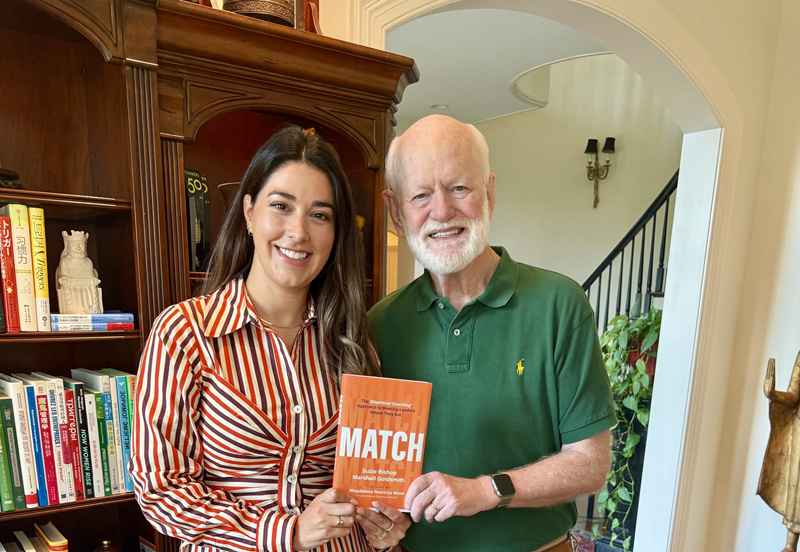
Excerpted from Match: The Situational Coaching® Approach to Meeting Leaders Where They Areby Suzie Bishop and Marshall Goldsmith. Used with permission of the publisher, 100 Coaches Publishing. Copyright © 2026 Leadership Studies, Inc.
The word “power” can make some people feel uncomfortable. The average person doesn’t think about themselves as having “power.” Instead we think of high-level politicians and CEO’s as the one’s with power in the world. But the truth is, any time we are trying to coach or influence others, we are all pulling from the same three power bases. What makes the difference is whether or not you’ve invested in those power bases. And that’s not something we should be afraid of. Let’s look at how this shows up in a coaching relationship.
Coaching is typically described in relational terms: understanding, communication, support, accountability, empathy, care. All these things play a critical role in a successful coaching relationship. But the real goal of coaching is behavior change. Coaching is influence. And what enables influence to actually take place? The answer is power. Influence is driven by power. Whether or not coaches consciously think about power dynamics, they are always present beneath the surface of the coaching relationship.
Power, simply put, is the potential to influence. It’s why people choose to listen to you. It’s what gives your words and feedback weight and allows the coachee to take your advice and insights seriously. The more power you have, the more effectively you can influence a coachee’s behavior, performance, and long-term success.
Imagine standing in a pitch-black room holding a flashlight. If the batteries are working, you press a button, light fills the space, and you can see where you’re going. But if the batteries are dead, it doesn’t matter how many times you click that button; you’ll still be standing in the dark. Power is the battery of coaching. It’s what allows you to “turn on your coaching light” and influence effectively.
You can do everything right—identify the coaching opportunity, accurately assess a coachee’s readiness and choose the correct coaching style—but if you lack the power to drive that style, your attempt to influence will fall short. You simply cannot coach effectively without power.
Years of research on power, leadership, and coaching have identified three core power bases that enable us to influence effectively in any situation.
Legitimate Power
In traditional organizational settings, legitimate power usually comes from hierarchy. Managers have legitimate power because their role gives them the authority to make decisions, set priorities, and establish expectations for others. Coaches might not be the coachee’s boss. But that doesn’t mean legitimate power doesn’t exist in a coaching relationship. In fact the coaching relationship itself creates legitimate power. When someone agrees to work with a coach, they’re recognizing the coach’s role in guiding the development process. That role carries real expectations. The coach establishes the structure of the engagement, defines how the work will happen, and holds the coachee accountable for the commitments they make. While the coach may not have authority over the coachee’s job, they do have formal authority within the coaching process itself.
In cases where the coach is hired by the organization, that endorsement can also become a source of legitimate power. The coachee knows the coach’s expectations are directly connected to those with formal position power.
Many coaches unintentionally weaken their influence by downplaying this role. In an effort to be supportive or well liked, they soften expectations and avoid holding the coachee accountable when they don’t follow through on commitments. When that happens, the coaching relationship can quickly drift into reflection without real change.
Effective coaches take a different approach. They establish expectations early. They make it clear that coaching comes with guidelines and accountability. It’s not simply a conversation; it’s a process meant to produce real progress. When someone commits to trying a new behavior, the coach follows up. When progress stalls, the coach addresses it directly. This structure signals that improvement is expected.
Expert Power
People are more open to influence when they believe the person guiding them has credible insight. That credibility may come from technical skill, lived experience, pattern recognition, or a demonstrated track record of success. In coaching relationships expert power can come from two different places.
First, a coach may have expertise in a specific domain. A health coach understands fitness and nutrition. A writing coach understands the craft of writing. A basketball coach understands the game. In these situations the coach’s influence comes partly from their knowledge of the field and their ability to guide someone toward improvement within it. The more specific the coaching niche, the more a coach is expected to bring domain expertise to the relationship.
But coaching expertise often runs deeper than subject-matter knowledge. Great coaches are experts in the process of helping people improve. They understand how growth happens. They know how to structure development over time, how to identify obstacles, and how to guide someone through the discipline required to change behavior. Like a music coach prescribing daily practice on a specific technique, all coaches establish the cadence of development: what to focus on first, how to build momentum, and how to track progress along the way.
In many coaching engagements, the coach’s expertise isn’t in performing the coachee’s specific job. Instead, their expertise lies in helping the coachee think more clearly about their challenges and uncover solutions for themselves. The coach knows how to ask the right questions, surface insight, and draw answers out of the person that may otherwise remain buried. In that sense the coach’s expertise is in the practice of coaching itself.
Referent Power
Referent power is influence rooted in trust. It exists when others believe you consistently demonstrate behaviors that earn respect. Unlike legitimate power, which comes from role or position, referent power is never granted automatically. It’s something others choose to give, and it comes from the relationships you build.
Trust plays an important role in leadership, but it’s even more important in coaching. Coaching requires honest conversations about performance, behavior, and development. Without trust those conversations can’t move beyond the surface. A coachee may listen politely, but behavior can’t truly change without deeper vulnerability, honesty, and collaboration.
Legitimate and expert power often help a coach establish credibility early in the relationship. But as the coaching relationship carries on, your influence increasingly flows through referent power. The coachee begins to trust your intent, judgment, and perspective. They become more open to difficult feedback, more willing to experiment with new behaviors, and more committed to following through on the work between sessions.
That trust is built, in large part, through clarity of intent. Coachees are constantly subconsciously asking, Is this person really for me? The most effective coaches make that answer unmistakable: I’m here to help you have a better life. Not just better results. Not just better performance. A better life. And when that intent is clear, the relationship becomes more personal, the work goes deeper, and your influence expands exponentially. That’s when people are truly willing to examine blind spots, confront uncomfortable truths, and try behaviors that initially feel risky. Referent power takes time to build and very little time to lose. But when it’s present, it becomes the most durable and influential form of power a coach can have.
Excerpted from Match: The Situational Coaching® Approach to Meeting Leaders Where They Are by Suzie Bishop and Marshall Goldsmith. Used with permission of the publisher, 100 Coaches Publishing. Copyright © 2026 Leadership Studies, Inc.
Suzie Bishop is vice president of product development at The Center for Leadership Studies, where she has spent more than a decade transforming how the Situational Leadership® Model is taught, experienced and applied by leaders worldwide. She is the co-author, with Marshall Goldsmith, of Match: The Situational Coaching® Approach to Meeting Leaders Where They Are. She is also the co-author with Sam Shriver, of Situational Leadership®: The Model for Leading Others, Navigating Change, and Unlocking Performance.
Marshall Goldsmith is a renowned executive coach and author, known for his bestselling books such as What Got You Here Won’t Get You There and The Earned Life. He has written more than 31 books that have been translated into 36 languages and has been recognized as the No. 1 leadership thinker in the world. His newest book, co-authored with Suzie Bishop, is Match: The Situational Coaching® Approach to Meeting Leaders Where They Are.