Family-Friendly Policies Are the New Competitive Edge in Business: Six CEOs Leading the Way
By Chris Benguhe, RaeAnne Marsh and Elaine Pofeldt | July 23, 2026 10:58 am
Compelling new research shows supporting home life significantly boosts retention, productivity and profit.
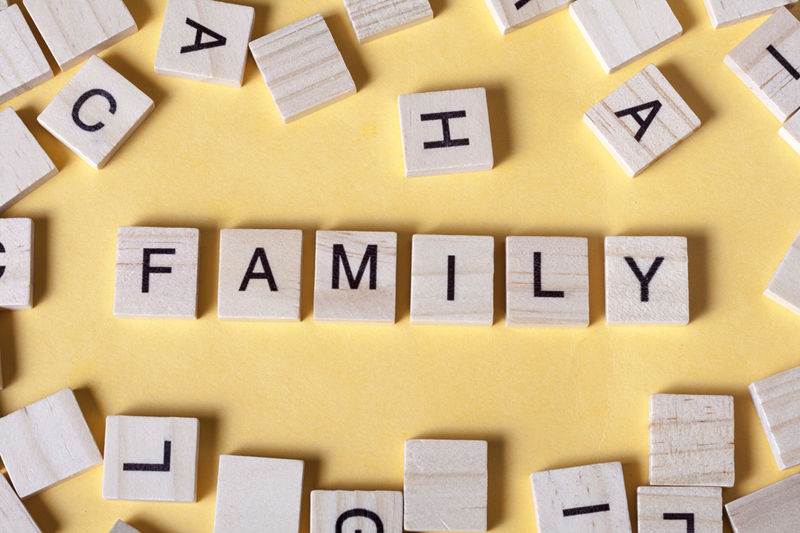
Our families are the reason we do what we do. (Image: iStock/ Motizova)
There is not a day that goes by on LinkedIn’s business behemoth of a platform that everyone from heavyweight CEOs to frontline employees scrambling to make ends meet does not post some compelling personal anecdote about a cherished child, mother, father, brother, sister or other that is the reason for their being, and the whole point of why they do whatever they do in their work world. Every time I see it, it reminds me of what a great country, what a great system and what an amazing world we live in, because those people in our personal world are the whole point of our struggles and our success in the business world.
Ultimately, the health, happiness and prosperity of employees’ families are inexorably connected to productivity, morale and a company’s bottom line, as well as the well-being of society — because our families are the reason we do what we do. And with the recent rising trend of criticizing capitalism, business realizing this fact and fostering families may just be one of the smartest and most organic ways to refute those detractors by supporting the very foundation of American values — the family.
Conversely, if we as a society do not respect and consider the vital role families play in the corporate landscape, and the dire conditions our families are in when we do not support them, we risk jeopardizing not only individual well-being and happiness but the value, success and profitability of our companies, our society and our very capitalist system.
What It’s Actually Costing Employers to Ignore The Struggles of Our Families
According to a February 2026 report from the Institute for Child Success, The Child Care Crisis Costs the U.S. Economy $172 Billion Each Year in lost earnings, productivity and revenue. That’s up sharply from $122 billion just four years ago. A national poll cited in the same report found more than 60% of working parents with young children said struggles finding childcare had caused them either to arrive late, leave early, miss full days or, at the very least, lose focus on the job. Roughly one in four said the whole situation had at one point or another led to reprimands, demotions or even being fired.
A separate 2026 analysis found Childcare Disruptions Are Costing the U.S. Up to $70 Billion a Year due to specific disruptors like daycare closings, sick nannies and no last-minute backups, leading to lost productivity, turnover and absenteeism among frontline workers in healthcare, manufacturing, retail and hospitality.
OK, so now that we have sufficiently depressed you with the problem, here’s the Social Capital solution to inspire you: A 2024 report from Vivvi and The Fifth Trimester, The R.O.I. of Caregiving Benefits, found that for every $1 an employer invests in caregiving benefits, it sees a whopping $18.93 in return — that’s an 1,800% return. And though 67% of parents said they’d considered leaving their job in the past year, 42% of those said they stayed specifically because of their employer’s support for caregiving, and 59% said they’d likely stay with their company at least four years if they had backup or subsidized childcare.
Moreover, this isn’t an isolated finding. A 2024 study from Boston Consulting Group and Moms First, Childcare Benefits Pay for Themselves at US Companies, analyzed five major U.S. employers — Etsy, Fast Retailing, Steamboat Ski Resort, Synchrony and UPS — across e-commerce, retail, hospitality, financial services and supply chain. Every one of them saw a positive return on their childcare benefits, ranging from 90% to 425%. Synchrony’s 60 days of annual backup care benefit led to a 45% reduction in unexpected employee absences, and at Etsy, 82% of eligible parents said childcare benefits played a role in their decision to join the company. BCG also found that retaining as few as 1% of eligible employees is often enough to cover the full cost of the benefit. (Synchrony President and CEO Brian Doubles is one of our honored CEOs this month, so you can read his own comments on building a family-supportive culture below.)
These are powerful, documented retention statistics verified by multiple sources, two different research teams and multiple companies of very different sizes and in totally different industries.
Clearly these are not anomalies, but realities. So, you would imagine it would be a no-brainer for every single company to get in the family SUV and ride to riches, right?
Well, thankfully, SHRM’s 2026 Employee Benefits Survey, Despite Reports of Cuts, Paid Parental Leave Shot Up in Past Year, found that indeed 46% of employers now offer paid parental leave, up seven percentage points in a single year — with paid maternity leave, paternity leave and even paid prenatal leave all climbing.
But what about the other 54% of employers — what are they thinking? Well, incredibly, a handful of high-profile employers made headlines this year for cutting parental leave and related caregiving benefits, citing a need to bring policies in line with “market norms” — whatever that means.
That just doesn’t make dollars or sense. But it’s indicative of a real schism going on in our society that’s at the heart of one of the major reasons we launched our Center for Social Capital. It’s the distinction between long-range, growth- and success-oriented people-centric leaders — who understand the true complexity of “self-interest” as Adam Smith explained it many years ago —and those who simply do what benefits only them and possibly their shareholders in the very short-term.
But at the end of the day, the betterment of society and the general welfare ultimately also benefits everyone’s own bottom line. That’s exactly what Redesigning the Workplace to Be Family-Friendly: What Governments and Businesses Can Do, UNICEF’s global research on family-friendly workplace policy, found: that these benefits extend not only to individual companies, but to the broader community in a very big way, resulting in healthier children, greater gender equality and more sustainable economic growth.

By supporting families, companies can pave the way for a brighter, more inclusive future where everyone has the opportunity to thrive. (Image: iStock/ Alessandro Biascioli)
The Real Bottom Line – Is Family
Ultimately, employees who feel supported and understood are more likely to be loyal, engaged and productive, and companies that prioritize family-friendly policies have a significant advantage in attracting new talent as well.
And the benefits extend far beyond the office walls, because families are the fundamental building blocks of society. By supporting employees in their roles as parents, spouses and caregivers, companies contribute to the well-being of entire communities. This, in turn, fosters a more stable and prosperous society overall — which is, by definition, the basis of successful capitalism. That’s probably why destroying the traditional nuclear family unit was one of the stated goals of Karl Marx as he laid out his plan for how to replace capitalism with communism. By supporting families, companies can pave the way for a brighter, more inclusive future where everyone has the opportunity to thrive.
This month’s honored CEOs and business leaders get that, and they are going above and beyond saying it, not just with these powerful statements they recently shared with us but by enacting life-changing and sometimes life-saving policies that will help families, companies, our nation and humanity not only to survive but to thrive.
Jasmine Jirele, President & CEO at Allianz Life Insurance Company
At Allianz Life, our mission is to help people secure their future. That mission extends beyond our customers to our employees and the people who matter most to them. We know that employees bring their whole selves to work every day, and when families are thriving, employees are better able to focus, contribute, innovate and grow.
Today, employees are navigating a world that feels increasingly complex. They are balancing work responsibilities with caring for children, aging parents, partners and loved ones. They’re managing financial pressures, health concerns and the uncertainty that can come with a rapidly changing economy. More than ever, employers have an opportunity — and a responsibility — to create an environment where employees feel supported both professionally and personally.
Our approach is simple: listen to employees and evolve our benefits based on what they tell us they need.
Over the past five years, we’ve continued to expand programs that help employees care for themselves and the people who depend on them. Some of the key initiatives include:
- Hybrid and flexible work arrangements that allow employees greater control over where and how they work.
- A “work from anywhere” program that gives employees additional flexibility to spend time with family while remaining productive.
- Expanded parental, bonding, adoption and surrogacy benefits that support families through different paths to parenthood.
- Enhanced caregiver support resources for employees caring for aging parents or other loved ones.
- A lifestyle spending account that can be used for a wide range of needs, including childcare, financial planning and wellness.
- An onsite health clinic for employees and eligible family members that offers primary care, urgent care, chronic condition management and mental health support.
Like many professionals, I’ve experienced firsthand what it means to balance a demanding career with family responsibilities. I’ve navigated the realities of being a working parent while also helping care for older family members. Those experiences reinforced something I’ve long believed: People should never feel forced to choose between being successful at work and being present for the people they love.
Throughout my career, I’ve benefited from leaders who trusted me to deliver results while also allowing flexibility when life required it. As CEO, I want our employees to experience that same trust and support.
Family Looks Different for Everyone, and Our Philosophy Reflects That.
At Allianz Life, we strive to create benefits that are inclusive of all family structures and life stages. Some employees are raising young children. Others are caring for aging parents. Some are supporting siblings, domestic partners, grandparents, close relatives or other loved ones. Many employees are balancing multiple caregiving responsibilities at the same time. We also provide benefits for another important member of some families — pets. We offer discounts for doggie daycare at a local facility, and even bereavement time for when someone loses a pet.
Our goal is not to define family for our employees. Our goal is to support the people (and animals!) who are important in their lives.
One Allianz employee, Emma, shares the impact that our family-friendly benefits have impacted her, specifically our fertility benefits:
“I utilized the fertility benefits in our Medical plan to grow my family back in 2022/2023. I’m older for a first-time mom and was worried that the longer I waited to become a mom it might not happen. Using our fertility benefits was a relief to grow my family without the burden of the full IVF costs. I was able to easily find a provider in network and what I was responsible for when it came to costs was very straightforward. My little embryo turns three this July and I’m hoping to add one more to the family, thanks to our fertility benefits in the medical plan.”
Jonathan Keyser, Managing Partner at Keyser
As the father of six children, I’ve learned that building a family and building a business aren’t competing priorities — they’re deeply connected. That perspective has shaped how we lead at Keyser.
One of the most meaningful policies we’ve introduced is three months of fully paid maternity leave for new mothers. We wanted to remove the pressure of choosing between career and family during one of life’s most important transitions. It wasn’t an industry standard — it was simply the right thing to do.
This reflects our eleventh operating principle:
“We are a family, and always protect and serve each other. In love, we hold each other accountable through authentic, honest, and kind discussion. We are fiercely loyal to each other, and we love and care for each member of the team at all times simply because they are family.”
We also recognize that family means different things to different people. Whether someone is raising children, caring for aging parents, supporting a spouse or showing up for chosen family, we strive to create a culture where people have the trust and flexibility to be present for the people who matter most.
The impact is evident in how our employees describe Keyser. In our engagement surveys, team members consistently highlight the genuine care, trust and support they receive from leadership and one another. That culture has contributed to recognition as an Inc. Best Workplace and an Arizona Top Workplace — awards driven largely by employee feedback.
We believe supporting families isn’t simply a benefit. It’s a reflection of our values and one of the reasons our people choose to build long-term careers at Keyser.

“As the father of six children, I’ve learned that building a family and building a business aren’t competing priorities — they’re deeply connected.” —Jonathan Keyser (Image: iStock/ Rawpixel)
Debbie Kovesdy, Founder & CEO at GenTech and The GenTech Foundation
GenTech has always prioritized family values within our company culture. From the beginning, we’ve integrated these values into our hiring and scheduling practices by proactively inquiring about candidates’ time commitments and family responsibilities during the interview process. We maintain an open dialogue with our employees, valuing their feedback and actively seeking ways to improve our policies for the benefit of all. We actively schedule job assignments around our employees’ school and personal schedules.
We recognized a need for childcare support among our employees with young children. In response, we’ve instituted a policy that allows these employees’ children to attend our KidsTech programs on a complimentary basis. This initiative not only eases the burden of childcare but also provides a valuable learning experience for their children. We have not incurred any significant gaps or unsolvable situations.
We recognize that “family” has diverse interpretations. At GenTech, we strive to be considerate of the unique family structures and personal needs of each employee, extending our sense of community to include their significant others and children. Many of our employees socialize outside of company time and attend large company gatherings with enthusiasm and pride.
My vision for GenTech has always been to create the kind of company where I would love to work. This includes fostering a supportive and social environment where employees feel valued and have ample opportunities for career advancement as their personal needs evolve.
Joe Ucuzoglu, Global CEO at Deloitte
We have also included these extraordinary words from Joe Ucuzoglu that we shared in our last family-friendly feature article and some additional relevant thoughts because of how important they are in light of Deloitte’s continued commitment to its family focus.
At Deloitte, we believe that the well-being of our people is paramount. By supporting our employees and their families, we create a more inclusive, productive and engaged workforce. This commitment not only drives our success but also strengthens the communities we serve.”
On one end, there’s some skepticism as to whether this is virtue signaling. On the other end, there’s some lingering debate about whether this broader focus on stakeholders detracts from shareholder returns. If you cut through all the noise, what we’re seeing is actually a huge convergence of interests. This is core to sustaining a vibrant capitalist system. If you take a long-term view, the only way that you’re going to deliver sustainable shareholder returns is to take really good care of all of those constituents.”
If we embrace the obligation to serve a broad cross-section of constituents, we do right by our employees, we do right by the communities where we live and work. By virtue of doing right by those constituents, profits will be an outcome, not the initial or primary objective. They’re a natural long-term outcome.

“Always measure success by the way you touch the lives of others.” —Bob Chapman (Image: Pixabay/ Sasin Tipchai)
The Late Bob Chapman, Former CEO & Chairman at Barry-Wehmiller
Bob Chapman, an important, supportive and loyal friend to our Center up until his passing earlier this year, was a huge proponent of recognizing and treating each employee as a whole person who has a life and family beyond the workplace. He was, in fact, the textbook case of how people‑centric leadership translated directly into profit and growth to the tune of turning a struggling $20 million supplier when he took over in 1975 into a multibillion–dollar global enterprise with more than 150 acquisitions that Harvard Business School even developed a case study on.
One of the many facets of his philosophy was built on his belief in treating every employee as “someone’s precious child” that he discussed in his article “CEO’s of the Future Must Not Be Penny-Wise and People-Foolish,” excerpted below:
Understand that leadership is the stewardship of the lives entrusted to you. When we walk through the door each morning, we should be aware that the way we lead will have a significant impact on the health and family life of those we have in our span of care. Our focus as leaders should be to give those in our care a ground sense of hope for the future. Leadership is the stewardship of the lives entrusted to you with the vision of sending people home each night knowing that who they are and what they do matters.
Always measure success by the way you touch the lives of others. Many years ago, we at Barry-Wehmiller created our cultural vision, “Guiding Principles of Leadership.” The overarching statement in this document says, “We measure success by the way we touch the lives of people.” We believed that, going forward, we would be able to consider any leadership decision in light of how it would touch the lives of all our people — our team members and their families, our customers, suppliers, communities and shareholders.”
Brian Doubles, President & CEO at Synchrony
Editor’s Note: Brian was unavailable for current comments, but his past remarks and continued commitment to family made it impossible for us to leave him out of this feature.
Synchrony’s Flex Model allows employees to work remotely with no mandated in-office days, no badge tracking and no attendance surveillance company-wide. That’s combined with an incredible family-friendly benefits package that includes 22 weeks of paid maternity leave for birthing parents, 12 weeks of paid parental leave for all new parents, up to 60 days of backup childcare and eldercare coverage, enhanced family planning benefits, and wellness and financial coaches.
Why he bucks the trend of forcing employees back to the office – and the experience of his own family:
We’ve always had a very strong culture, and we’ve had a great culture and we pride ourselves on that. The biggest thing that we’ve done, particularly through the pandemic, is really listen to our employees. And that sounds simple, but a lot of our best ideas in terms of how to support our employees unique and special benefits, they come from our teams… one of the things that they also said was, ‘Wow, this remote work is really working.’ I even saw it myself. I was surprised. I was wrong… And as we got into this rhythm… employees were happier, they felt better supported.
I saw it myself. I have two young girls, 12 and 13, so they were 9 and 10 at the time. For the first years of their life, I wasn’t around to get them on the bus in the morning. It was a good result if I could get home in time before they went to bed. I wasn’t getting home for family dinners. And all of a sudden we’re spending 24 hours together, which has its own set of challenges…
And as we started to listen to employees and employees that they’re taking care of elderly parents or sick loved ones, and just how this helped them managed through that time period, we said, ‘We should make this permanent.’ And we did that in October of 2020… we knew we could operate the business successfully like that. And we haven’t gone back on that, and I don’t think we will because if the business is performing and our customers are happy… then I don’t see a reason to change.
And on flexibility for moms:
We know how important moms are — to families, and to Synchrony. That’s why we’ve partnered with organizations like Moms First (formerly Marshall Plan for Moms), and designed our benefits and ways of working so that 95% of female caregivers at Synchrony say that we provide the flexibility they need.