The Best Buyer for Your Business Might Already Work There
By Katie Boland | July 16, 2026 11:58 am
Why we started Unlock Ownership and why employee-owned companies, done right, can change the world.
If you own a business and you’re somewhere north of 60, you already know the question is coming. Maybe a broker has already called. Maybe a private equity associate sent a flattering email about your “exceptional platform.” Maybe you’ve just started doing the math on what retirement actually looks like and realized that most of your net worth is locked inside a company you can’t easily sell.
You spent decades building something real. What happens to it, and to the people who helped you build it, after you step away is now the decision in front of you.
For most owners, that decision gets answered badly, or not at all. I want to make the case for a path many owners never consider: selling your company to the people who already run it. This isn’t charity or a feel-good gesture. Employee ownership, done right, produces more durable businesses, wealthier workers, healthier communities and a cleaner conscience for the founder walking out the door. It is one of the most socially redemptive things a business owner can do, and it also happens to be good business.
The Choice Most Owners Don’t Know They’re Making
Picture the main street of your town five years from now: the bakery, the HVAC company you’ve called for a decade, the independent pharmacy, the manufacturing plant that employs 50 families. The storefronts are still there. But the businesses you loved are effectively gone. Some kept the old sign and gutted the operation. Staff you knew have been laid off; prices have spiked; and quality has cratered into frozen pastries, aggressive upselling and endless wait times. The profits that once sponsored the Little League team are being wired to a tower in Manhattan.
This isn’t dystopian fiction. It’s the playbook, and we’ve watched it run in industry after industry. In veterinary care, private equity rollups brought higher prices, rushed appointments, and a push to upsell unnecessary tests over animal welfare. In HVAC, technicians get pressured to sell full-system replacements instead of honest repairs. In dentistry, the “standard of care” gets quietly rewritten to maximize billing codes. When profit becomes the only metric, customer value is the first casualty, and the trusted handshake gives way to an algorithm designed to extract maximum cash before the next quarterly report.
This matters to you specifically because of the numbers. Baby boomers own about 40% of all small businesses in the United States, roughly 2.9 million companies. As that generation retires, an estimated $10 trillion in productive assets will change hands. It’s the largest transfer of business wealth in history, often called the “Silver Tsunami.”
The hard part is the math of getting out. Only about one in five businesses put up for sale ever finds a buyer. Fewer than 30% successfully pass to family. That leaves millions of healthy, profitable companies facing a grim binary: get bought by extractive capital, or simply close, vaporizing jobs and community wealth overnight.
If you do find a buyer, the default buyer right now is private equity. These firms aren’t acquiring your company to steward your legacy. They’re acquiring it to extract value, loading it with debt, cutting costs by firing your longest-tenured people, slashing benefits, consolidating and stripping the “local” out of what you built. When PE wins, the community loses. Decisions move from people who live in your neighborhood to fund managers obsessed with quarterly returns, and the wealth that used to circulate locally, paying for groceries, mortgages, and tuition, gets pulled out. Foreign investors already own roughly 40% of U.S. corporate stock, so selling Main Street to Wall Street often means shipping the economic engine overseas.
That’s the choice most owners don’t realize they’re making when they sign. You aren’t only selling a company. You’re deciding what happens to everything the company touches.
The Alternative: Sell It to the People Who Built It
Another path exists, and it’s more available than most owners think. You can transition the business to the people who show up every day to run it, through an Employee Stock Ownership Plan (ESOP), a worker cooperative, or an Employee Ownership Trust (EOT).
The aggregate potential is staggering. According to the Ownership Capital Lab, transitioning just 10% of these Silver Tsunami businesses to employee ownership would secure 2.6 million jobs, preserve $600 billion in economic activity and build wealth for 8.2 million Americans.
Set the aggregate aside for a moment and look at one company. Apex Plumbing, in the Denver metro area, spent 37 years as a family-owned business doing residential sewer- and water-line work. When the owner retired in 2022, he faced the classic fork: sell to a competitor or a PE firm or find a way to preserve what he’d built. With financing and support from Apis & Heritage Capital Partners, he transitioned Apex into a 100% employee-owned company through an ESOP. Shares went to the plumbers and staff who’d built the company’s reputation. Service quality held up, because the people doing the work now own the outcome. The jobs stayed secure. And the wealth generated by fixing Denver’s pipes stayed in the pockets of Denver’s workers.
That’s what it means to anchor wealth instead of extracting it. When workers own the business, three things tend to stay put. The jobs stay, because employee-owned firms are far less likely to lay people off in downturns. The wealth stays, because employee-owners hold household net worth nearly twice that of peers at conventional firms. And the business stays rooted in its community.
There’s a justice dimension owners shouldn’t overlook. The retiring owners are predominantly white baby boomers, while the workforces powering these companies are increasingly diverse. Selling to employees orchestrates a real transfer of assets to Black and Brown workers who have been systematically excluded from ownership. It has to be real ownership, too. Research suggests workers need a stake of at least 30% to see transformative effects. That kind of equity is how you actually close the wealth gap.
Why These Companies Succeed
Skeptics assume employee ownership is the soft option, nice in theory and soft in performance. The evidence points the other way, and the reason is structural.
When the people doing the work also own the upside, the daily incentives change in ways no management consultant can engineer from outside. A technician who owns equity won’t upsell a customer a system they don’t need, because the company’s long-term reputation is now their retirement account. Turnover drops, which preserves the institutional knowledge and customer relationships that make small businesses valuable in the first place. Decisions get made by people with skin in the game and feet in the community, so they’re calibrated for durability rather than for a five-year exit. That’s why employee-owned firms tend to be more resilient in recessions and hold their workforces when competitors are cutting.
When the ownership structure aligns the interests of the worker, the customer, the community and the investor, doing right by people becomes the engine the business runs on rather than a cost it absorbs. These companies succeed because their structure makes their values economically rational.
Politically, employee ownership is a genuine consensus issue. It polls above 90% support among both Democrats and Republicans. Everyone agrees we should strengthen local economies, reward work and broaden who gets to own capital. This is a pragmatic, broadly popular solution waiting to be funded.
Why We Started Unlock Ownership
If employee ownership is so clearly superior, you’d expect it to be the default. It isn’t, because capital is the gatekeeper, and the capital is wildly mismatched.
Private equity firms sit on enormous piles of “dry powder,” cash ready to deploy instantly. PE buyouts represent roughly a $3.6 trillion juggernaut. The entire employee ownership investment field, by comparison, holds about $500 million in assets. That’s a 7,000-to-1 mismatch. Workers rarely have the capital to buy out an owner, and traditional banks are often too rigid or risk-averse to finance these transitions without personal guarantees, even for profitable, decades-old businesses. The extractive option is easy and fully funded. The productive option is hard and starved of capital. That’s a market failure, plain and simple.
That failure is the reason my co-founders, Deborah Frieze and Brian Boland, and I started Unlock Ownership. We came at it from a simple conviction: You cannot just grant your way out of a structural ownership crisis. You need investment capital, deployed at scale, aimed at the moment of transition when an owner is deciding who to sell to.
Unlock Ownership is built as a multi-donor fund designed to be the “easy button” for foundations and donor-advised funds to deploy catalytic capital into employee ownership. There is more than $300 billion sitting in DAFs right now, largely idle in mutual funds. That money has already been tax-advantaged for the public good, yet it quietly funds the status quo. We aggregate that kind of capital and channel it into the specialized infrastructure these transitions require. We de-risk the deals for workers and give owners who want to do the right thing a viable, well-financed exit, so that selling to your employees stops being the harder, lonelier choice and becomes a real option on the table.
What This Means if It’s Your Business
For an owner, the takeaway is simple and a little urgent. The Silver Tsunami is here. The assets are for sale. The only open question is who buys them, and that part is up to you.
You can sell to a firm that will strip-mine what took you a lifetime to build, or you can sell to the people who helped you build it and watch your legacy compound in their lives and your community for another generation. The structures exist. The financing is increasingly available. And the performance data says the redemptive choice is also the sound one.
Employee-owned companies, done the right way, can change the world, and I believe they should. The best buyer for your business might already work there.
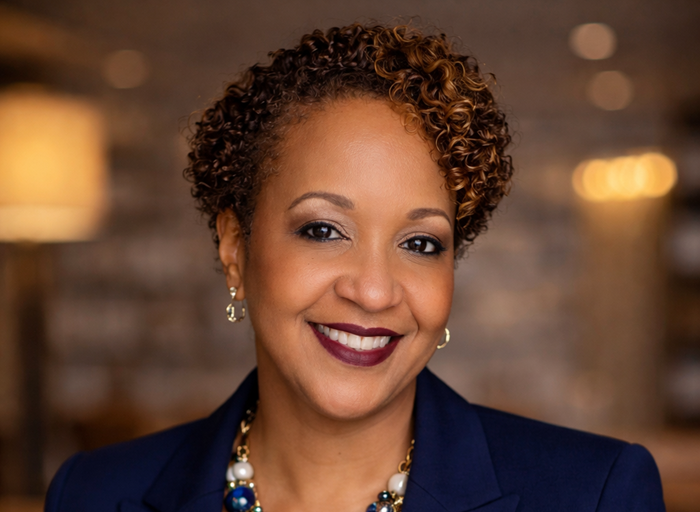
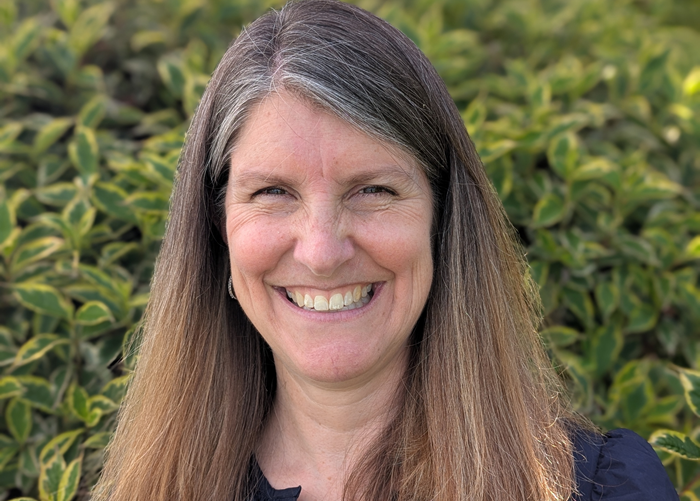
Katie Boland is a co-founder of Unlock Ownership.
The model matters: There’s an important distinction between the model used by firms like Apis & Heritage and the predatory version of private equity. Both use debt to acquire companies. The difference lies in who that debt serves. In a traditional PE buyout, debt extracts cash for distant shareholders while assets are stripped. In the worker-ownership model, debt acts as a bridge: it buys out the retiring owner, then gets paid down through the company’s own profits, with equity value transferring directly into employees’ retirement accounts rather than to a Wall Street firm. One model uses leverage to loot; the other uses it to liberate.