The Loneliness Epidemic Is Bad for Business — Are Company Leaders Listening?
By Chris Benguhe, RaeAnne Marsh and Elaine Pofeldt | September 24, 2026 12:02 pm
Why listening and employee empathy are now measurable drivers of trust, retention and performance.

We don’t need to get rid of capitalism — we just need to take care of people. (Image: iStock/ Jorm Sangsorn)
As American business grapples with real disconnection, burnout and eroding trust from employees and consumers alike, the successful leaders of today and tomorrow are proving that prioritizing people isn’t at odds with business success — it’s the foundation of it. It is no longer a soft skill, but a required tool for sustainable success.
The Loneliness Epidemic: America’s Crises of Disconnection and Call to Care
When we first reported on this a few years back, researchers with Harvard Graduate School of Education’s Making Caring Common project released “Loneliness in America: Just the Tip of the Iceberg?” showing that 21% of adults expressed serious problems with loneliness, as defined by U.S. Surgeon General Vivek Murthy as “a subjective distressing experience that results from perceived isolation or inadequate meaningful connections.”
But since then that number has exploded. Just one year later, the Cigna Group released an exhaustive study on the topic, “Loneliness in America,” finding that more than half (57%) of Americans are lonely. In fact, younger generations (Gen Z, millennials) actually report even higher loneliness than older generations — despite being more technologically connected. The same research also found more than half of American workers classify as lonely, with real, quantified links to workplace productivity and job performance.
We don’t need to get rid of capitalism — we just need to take care of people.
The reality is that there are a whole lot of people out there right now who are hurting, who are not feeling heard, understood or even considered. And it is causing a massive backlash not just against business but against capitalism and our very core capitalist system. But the growing rejection of capitalism in America isn’t a sign that the free market is dead; it’s a sign that it has been mismanaged.
Capitalism is inherently good when it values human dignity, and treating people as infrastructure rather than expenses is proof of that. By making this shift, these CEOs aren’t just improving their bottom lines — they are literally saving capitalism from its own worst critics and saving their own businesses as well.
And so much of that starts with listening. The critical difference that comes from listening with an open, caring heart and a patient, deliberate ear is life-changing. It’s a heroic ability that extends into every aspect of our lives — and especially business, where an overwhelming majority of workers and customers have long reported feeling unheard by employers.
Why is that? Well, according to the late Bob Chapman of Barry-Wehmiller, one of the most prominent leaders in the people-centric business strategies movement, it’s because leaders do not think they need to.
“The conventional wisdom is that leaders tell people what to do and how to act,” Bob “was always up-front about. “Time and again, I’ve said that listening is the most important thing a leader can do. But it transcends the leader role. Listening is the most important thing we, as humans, can do for one another. It shows empathy, it shows you care and, most importantly, it shows the person you are listening to that they matter.”
This unfortunate trend of telling instead of listening — and the great case for reversing it — is captured splendidly in Dave Garrison’s best-selling book The Buy-In Advantage: Why Employees Stop Caring — and How Great Leaders Inspire Everyone to Give Their All. As Garrison explains, for the last 100 years or so, the business world has looked for “big ideas” from thought leaders promising new ways to solve problems — from lean manufacturing to AI.
However, what is often overlooked is the daily experience of the employees expected to delight customers and create profits, he notes. After surveying thousands of employees in a wide range of industries during the past decade, Garrison and his team concluded that a major predictor of engaged employees is a supervisor who listens to them. Employees are 50% more likely to be engaged and significantly more likely to remain with the company if they believe their ideas are considered in how things are done — even if these ideas are never adopted. “The simple act of seriously considering ideas that originate from the front lines conveys respect and boosts buy-in,” Garrison writes.
And that is something Bob figured out a long time ago and made a central component of his organization’s restructuring. “At Barry-Wehmiller, we have found that listening — deep, reflective listening — is one of the master keys to our Truly Human Leadership culture.”
And the data bears that out big time.
Perceptyx’s “The State of Employee Listening 2025 Report” — produced by the Center for Workforce Transformation — reveals that organizations embracing best practices in listening, and acting on what they learn, are measurably outperforming their peers, with up to 12 times greater alignment to business priorities, nine times greater progress toward strategic goals and 6.2 times higher satisfaction with their programs. It also shows, for the first time, how mature companies are integrating learning and listening in order to personalize coaching, accelerate employee development and, ultimately, drive innovation, customer loyalty and financial success.
Ultimately, effective listening improves relationships, trust and decision-making, and leads to greater collaboration, creativity and innovation.
The question is: Are you listening?

Listening improves relationships, trust and decision-making, and leads to greater collaboration, creativity and innovation. (Image: iStock/ Hiranmay Baidya)
Do You Care?
We combined listening with empathy in this feature because if leaders were listening, they would realize that caring — and being aware of and responsive to how others feel — is a crucial life and business strategy that employees and customers are demanding more and more.
One of the most sterling proofs of that comes from Sunshine Nut Company’s legendary people-centric CEO Don Larson and his successful mission to create and run a profitable and very successful company by uplifting subsistence farmers in Mozambique and fostering empowerment over dependence. In doing so, he continually and convincingly disproves long-standing misconceptions that failure in African enterprises is due to lacking or inferior individual potential, instead attributing it to external systems. His business model centers on eight transformation goals that restore dignity, hope and opportunity. For Larson, true success is measured by moments of emotional breakthrough — what he calls “tears of joy.”
“If you put any of us into the conditions they live in on a daily basis, we would probably die quickly from the inability to survive,” Larson emphatically states. “My experience is that if you meet them at their level of capability, they thrive. This is my definition of empathy.”
Larson recalled a powerful memory of what happened when he promoted a tall, burly worker: The man broke down in sobbing tears of gratitude, moving the entire management team and affirming Larson’s belief that moments of dignity and recognition are life’s greatest rewards.
“You can’t get a reward in life any better than that,” he said. “When you have the desire to feel their misery, you strive hard to be able to feel their joy.”
It’s a philosophy that’s proven in action, and was so recognized by Mozambique’s government that they asked him to replicate his program in another region of the country — which he did, even in the face of incredible odds and potential real physical danger. (We will be proudly featuring that whole amazing story next week right here on our site!)
The Real Reward of Empathy — And the Price of Not Having It
“Empathy isn’t just good for people — it’s good for business,” says Jon Shanahan, president and CEO at Businessolver (Empathy Could Save U.S. Companies $180 Billion in Employee Retention Costs | News | Businessolver). “Collectively, companies that fail to operationalize empathy are leaving $180 billion on the table and missing out on a high-ROI lever for long-term growth.”
The complete study “2025 State of Workplace Empathy Executive Report” referred to above found that employees at unempathetic organizations report three times higher toxicity, 1.3 times more mental health issues, and are two times more likely to feel disconnected from leadership. In fact, 93% of employees say they’d stay with an empathetic employer.
Putting Empathy into Action
In The Unlocked Leader, celebrated leadership coach Hortense le Gentil argues that today’s leaders must evolve from outdated “superhero” models — those who appear infallible and emotionally distant — to human leaders who lead with empathy, authenticity and vulnerability.
She contends that empathy is no longer optional; in a world of rapid change, emotional exhaustion and fractured trust, leaders who fail to connect on a human level risk alienating their teams and stifling innovation.
The leaders who do the hard work to remind themselves of this, and who implement policies that put this crucial quality into the mix at work, find incredible and far-reaching rewards.
But what does empathy really mean? And how do you actually put it into action in a business model? It’s not just saying you care, or paying some high-priced business consultant to help you amplify your “EQ” — it can and needs to be far more systemic, organic and far-reaching than that.
Since this is such a crucial element of being a Social Capital leader, we at the Center for Social Capital reached out to our celebrated and honored leaders to get their take on what empathy is and how they wield this sword of success and sensitivity to cut through the obstacles and silos that potentially separate us at work — to find real and authentic ways to connect and help.
Because empathy isn’t just a buzzword — it’s a business imperative.
The Call for People-Centric, Human-Centered Leadership
That’s what we have been saying at the Center for Social Capital and the Social Capital Insider since we started: human beings are social animals, and we need each other not only to survive but to thrive in society. It should be a no-brainer that this kind of necessary cooperation and integration is needed in the workplace just as it is in every other sector of our lives — if not even more so, if we hope to bring about and maximize our mutually desired success in business. That has been empirically proven time and time again, not just by this study but by scores of studies and surveys.
Read the full exclusive insights from all of this month’s Social Capital honorees below and discover how listening and empathy are transforming leadership from the inside out.
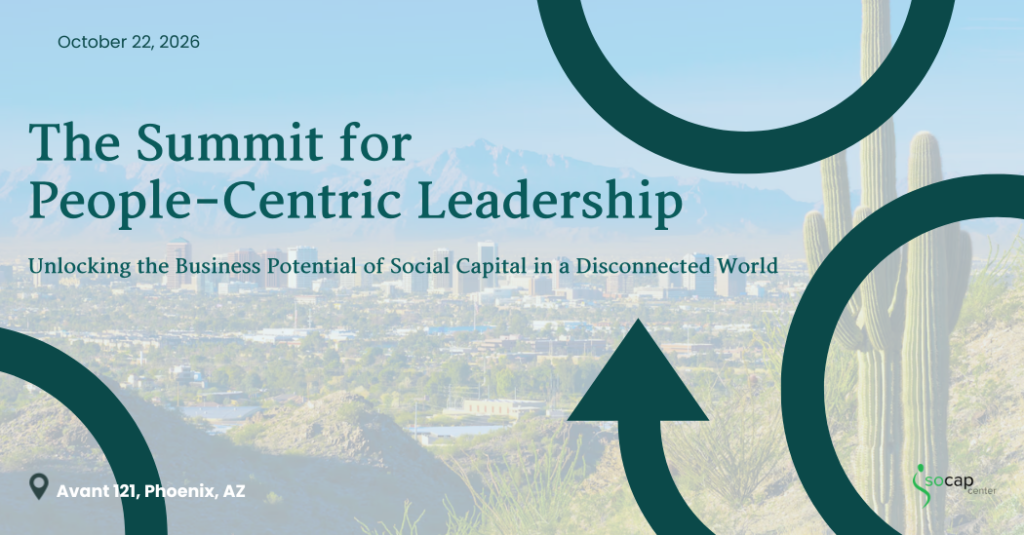
And please come to The Summit for People-Centric Leadership: Unlocking the Business Potential of Social Capital in a Disconnected World on October 22nd in Phoenix, Arizona.
Dave Alexander, Founder & Managing Member at Caljet of America
Empathy is a very important part of my life and encompasses additional words or concepts that make me a better, stronger, person and leader. Put together in my mind, intuition, sensitivity, gentleness and empathy equals one concept: intellectual power!
My life’s journey has used these words to learn how to read, influence, develop and lead people to become an entertainer, athlete, entrepreneur and good citizen. I have learned and attempted to do this with mental calmness, composure and evenness of temper, especially in difficult situations.
But when I looked up the definition of empathy in the dictionary, of the 1,000 synonyms for empathy, I personally focused on “caring.” In 2017, I was honored by being named one of the most caring people in the United States by the Caring Institute in Washington, D.C. My ability to care for others has grown as my mind has become more sophisticated, as I have grown more mature … and as my wallet has grown.
I compensate my employees very well — and in many ways. Most importantly, I give my employees and their families “peace of mind” that they are doing well for the owners, that they have a good solid working environment and that they have a great future working for me.

“When I looked up the definition of empathy in the dictionary, of the 1,000 synonyms for empathy, I personally focused on “caring.” – Dave Alexander (Image: Pixabay)
Jonathan Keyser, Managing Partner at Keyser
I think empathy begins with understanding what matters to another person. You cannot build a meaningful relationship with someone if you only understand the relationship from your own perspective. Listening gives you the information you need to understand what they value, what motivates them, what frustrates them and, ultimately, what they need from the relationship.
That matters enormously in leadership because the strongest professional relationships are mutually valuable. I don’t believe loyalty should flow in only one direction. If you want people to invest deeply in an organization, the organization has to create meaningful value for them in return.
That doesn’t mean leaders can — or should — give everyone everything they want. It means understanding what matters to your people well enough to create an environment where their success and the company’s success reinforce one another.
When that relationship works, people aren’t simply exchanging their time for a paycheck. They’re building something they have a stake in. That kind of mutual investment creates loyalty, trust and a willingness to go further for one another — and that is incredibly powerful social capital.
The challenge for any leader is that there is never a shortage of opinions. The question is how you determine which ones deserve the most weight. For me, that starts with context. Who is closest to the issue? Who has expertise I don’t have? Who will be most affected by the decision? And what might they be seeing from their vantage point that I can’t see from mine?
At Keyser, we actually recognize this behavior through an award we give at our company-wide meetings called “Courage to Disagree.” It celebrates someone who was willing to raise an issue, challenge an assumption or bring something to leadership’s attention that might ruffle feathers in a more traditional organization. I have strong opinions and move quickly, so I need people around me who are willing to tell me when they see something I don’t.
Ultimately, listening doesn’t mean consensus. It means building relationships where people are willing to give you the information and perspectives you need — even when they’re uncomfortable — and having the judgment to determine what you do with them.
More about Relationships
I think one of the best measures of social capital within a company is what people are willing to give to one another when they don’t have to.
We’ve seen that repeatedly at Keyser. We have a culture with extremely high expectations, and there are inevitably moments when someone is stretched, a deadline becomes difficult or the business simply needs more from the team. What has always impressed me is how often people step outside the boundaries of their individual roles to help each other succeed.
I don’t think you create that kind of discretionary effort through compensation or job descriptions alone. It comes from reciprocity. When people believe an organization has invested in their growth, created opportunities for them, listened to them and contributed meaningfully to their success, they develop a greater sense of ownership in its success as well.
That’s the relationship I want to build. The company invests in its people, its people invest in one another and the organization, and everyone has an opportunity to prosper as a result.
Frederica Peterson, Founder of Frederica Peterson Consulting
I define empathy as putting on someone else’s shoes. With listening, we keep our own shoes on. We are still standing in our own perspective, taking in information. Empathy requires something different, it makes us step into someone else’s experience and not evaluate it through the lens of our own judgment. Listening is the mechanism; empathy is the destination.
This distinction matters enormously in leadership. As I write in my book Inquisitive Leadership, one of the most important things a leader can do is make people feel valued, and you cannot do that from a distance. You have to experience people from where they are, not from where you assume or wish they were. That requires what I call Courageous Curiosity: asking questions about what you don’t yet understand, including the uncomfortable topics, and genuinely listening before you form an opinion or set a strategy. The courage is sitting without knowing and resisting the urge to fill the unknown with your own narrative about someone else’s situation.
When you lead this way, people feel seen. When your people feel seen by you, they understand their value to you in a way that goes beyond anything you could say in a performance review or a pep talk. That felt sense of being valued is what turns compliance into genuine commitment.
It’s important to me to listen to all our company’s stakeholders, and I do this by being curious, deliberately and consistently. I pay attention not just to what is being said but to what isn’t. Who is quiet and why. Who is trying to be the loudest voice in the room and what that voice might be drowning out in the process. Noise, in most organizations, isn’t a volume problem; it’s an attention problem — and we naturally gravitate toward whoever is easiest to hear. The quieter signals get lost.
Most importantly, I try to understand what matters to each of my stakeholders individually. It’s a tricky balance, but it’s a necessary one if you want to be effective as a leader. Motivations are ignited by what people are trying to gain, so understanding each person’s WIIFM (what’s in it for me) helps you hear the motivation behind what is important underneath the surface noise. This is really the first stage of what I call the CAPPP Advantage in my own work: establishing real connection and rapport before you ever try to assess, value or influence anyone. You cannot filter noise well until you know the players well.
My approach comes from an authentic place of curiosity and potential. I always look at the potential in a situation or a person, not just the current output. If you give people the space, they will tell you what they need to thrive.
I work mostly with leaders of leaders, and what I find most interesting is the interaction between these leaders and their own leader. There is a leader I worked with for many months who was dealing with real frustration because the measure of success for him shifted from output to strategy. That shift requires a higher intellectual gear, one that he had the potential to reach but he needed to realize that he needed to move out of his comfort zone. When someone works for a leader whose style differs from their own, they tend to get frustrated with that style rather than recognizing that their success actually depends on understanding what is needed, trusting the process and becoming comfortable with being uncomfortable.
Garry Ridge, Former CEO at WD-40
Empathy, to me, is the courage to care. It’s not nodding along while someone talks. It’s listening without the urge to fix, judge or jump in with your own story.
Empathy is also about presence and trading ego for understanding. True empathy says, “I see you. I hear you. You matter.”
Contrary to popular belief, empathy isn’t some soft, immeasurable trait leaders can afford to overlook. It’s foundational. Without it, you can’t create a sense of belonging. You won’t earn your people’s trust. And you certainly can’t expect people to bring their best if they don’t feel safe or valued.
Leading with empathy doesn’t mean being a pushover; it means being a compassionate leader and showing up with a tender heart and a backbone of steel. It enables you to cultivate a culture rooted in love rather than fear; and create a space where people show up happy, leave happy and contribute to creating happier communities — ultimately leading to a happier world.
When I was younger, I thought empathy meant nodding along while someone shared their feelings. Maybe I’d even chime in with a story of my own to show I understood. Back then, I believed empathy was all about listening and shared experiences.
With time and a bit more life under my belt, I’ve come to see empathy as far more complex.
Genuine empathy isn’t being nearby when someone’s struggling. It’s not standing on a boat deck while they’re seasick and offering a pat on the back — that’s sympathy. Empathy is getting queasy right alongside them.
This kind of empathy isn’t weakness. It’s strength, wrapped in understanding. And it’s what transforms a group of employees into a tribe. Without empathy, leadership is just a title, and more often than not it leaves a trail of disengaged people behind.
I’ll let you in on a little secret: I like to call myself the Dean of Dumbassery. More often than not, I’m consciously incompetent — probably wrong, but roughly right. And knowing that forces me to lead with empathy.
Empathy has been the secret to my success. It’s how I built a culture of belonging and trust, and why people felt safe enough to show up fully, not to just clock in but to help create something meaningful.
At WD-40 Company, empathy wasn’t a buzzword. We intentionally baked it into our way of working. We stopped using the term “managers” and referred to ourselves as “coaches” instead. We didn’t punish failure; we treated it as a learning moment. People weren’t resources. They were human beings.
Empathy helped us grow from millions to billions. Without it, we would’ve stalled. With it, we built momentum that lasted.
Don Larson, Founder & CEO at Sunshine Nut Company
I have always stated that you need to ignite the passions of an individual and give them the ability to act within that motivation to realize a truly high-performing individual. When we moved to Mozambique 14 years ago, I started to deal with all levels of society. Our objective has always been to bring subsistence farmers out of abject poverty and into a life free from suffering, malnutrition and lack of basic needs.
These subsistence farmers were quite capable of living better lives, but they lacked the resources, the opportunities and the education to act. They are smart, resourceful and motivated within their circles of opportunity. But, with almost no means to change their lives, their mindsets are focused on survival, on what will allow them to live another day. This is often misinterpreted as inability to succeed. When I went to a large European gathering and the CEO of a top bank told the large audience his bank wasn’t doing anything further with either smallholder farmers or small to medium enterprises in Africa because they mostly fail, I raised my hand during questioning and said, “My experience is that the failures are typically on our end, because we do not meet them at their level of capability.” I then added: “If you put any of us into the conditions they live in on a daily basis, we would probably die quickly from the inability to survive. My experience is that if you meet them at their level of capability, they thrive.” This is my definition of empathy.
It is understanding the life of a subsistence farmer and their true desire to improve their conditions. It is developing a solution that allows them to thrive, to work hard and shift their mindset to one of hope, opportunity and dignity. Our business model has eight core transformation goals: 1) Replacing dependence with self-reliance, 2) Substituting handouts with empowerment. 3) Shifting entitlement to earning, 4) Exchanging despair for hope, 5) Converting adversity into opportunity, 6) Overcoming stagnation with transformation, 7) Restoring dignity in place of worthlessness, and 8) Swapping failure with excellence.
I see all individuals as equals, whether they are country leaders or part of the subsistence farming community. We all have capability. It is mostly our circumstances that shape our future. Change the circumstances to allow people to see beyond surviving and you quickly see hope spring forth, allowing them to start thriving.
I had a UNICEF leader here in Mozambique ask what our metrics of success were as she marveled at the orphan homes we build and support as part of our business model. I responded, “Tears of joy.” I frequently shed tears when we get to see people who have been written off by society come into the fullness of life and possibilities. For instance, when I brought a worker into my office and told him he was being promoted to be a supervisor, this tall, burly man broke down in sobbing tears of thankfulness. It lasted for minutes. He had me and three other managers shedding tears as well. When the worker left, I remarked, “This is what it is all about. You can’t get a reward in life any better than that.” When you have the desire to feel their misery, you strive hard to be able to feel their joy.
From Words to Action
I spent more than a year developing a business model that would value people over margins, and communities over shareholders. Ten years later, in 2021, both TotalEnergies and the Mozambican government asked us to bring our model to Palma, a region that had been torn apart by insurgent violence. Over the preceding years, thousands had been killed and hundreds of thousands displaced. Many villages, including Palma, had suffered mass atrocities. While most organizations withdrew, we stepped in to help rebuild.
Today, we are the largest employer in Palma outside of the gas project. Our factory sits at the heart of the region. In early 2022, I met with village leaders under military escort. These were not symbolic visits; they were real, high-stakes conversations about trust, opportunity and renewal. This is where business becomes more than enterprise. It becomes peacebuilding.
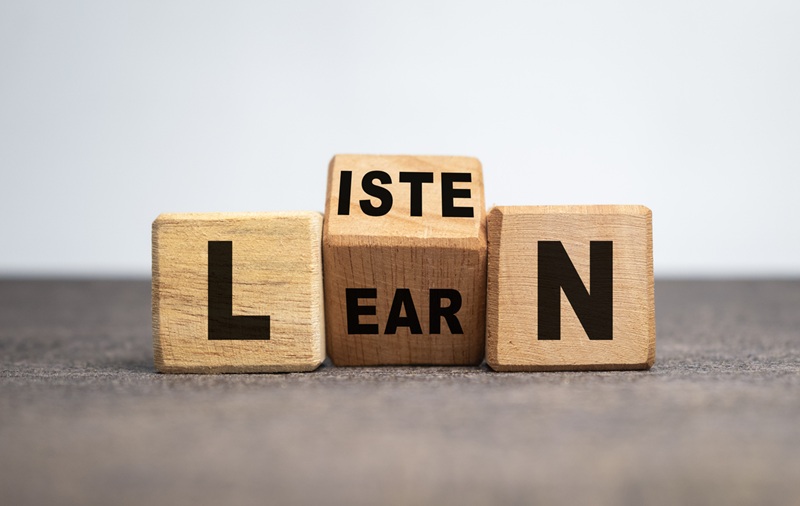
“I also discovered how to bring value by not talking, but by listening with the intent to learn.” – Ginni Rometty (Image: iStock/ Dadan)
Ginni Rometty, Former Chairman & CEO at IBM
When we’re in service of people, we also speak to and treat them with respect, dignity, and civility. We emotionally connect, collaborate, ask, and listen. We have empathy, and we step into their shoes.
I also discovered how to bring value by not talking, but by listening with the intent to learn. I’m genuinely curious about people and never particularly liked talking about myself. I’d much rather hear about others. With clients, I became strategically curious, listening for insights and information that I could use to help them. I also listened for points of connection; having something or someone in common helped us relate and establish an authentic bond. Listening with the intent to learn allowed me to make better decisions on behalf of others.
I discovered that listening breeds knowledge, knowledge breeds credibility, and credibility earns trust that allows relationships to flourish. It’s in candid collaboration with those I was in service of that I often discovered the most valuable “ah-has.”
[Excerpted with permission from Good Power (Harvard Business Review Press, 2023) by Ginni Rometty]
Duncan Angove, CEO at Blue Yonder
Empathy, to me, is a fundamental aspect of human connection, encapsulating the ability to deeply understand and resonate with the emotions and experiences of others. It goes beyond mere sympathy; it involves actively stepping into someone else’s shoes and seeing the world from their perspective. Empathy is about cultivating compassion and kindness and seeking to understand why someone feels the way they do. This sentiment resonates deeply with me because it highlights the importance of genuine care and consideration for others’ feelings and experiences.
In the context of Blue Yonder, empathy serves as a guiding principle that shapes how we interact with one another and our stakeholders. In fact, empathy is one of our company’s core values along with respect, integrity and inclusion. We believe that empathy is critical in fostering a culture where everyone feels valued, heard and supported. We interviewed associates from across our organization who echoed this sentiment, highlighting how empathy is ingrained in Blue Yonder’s DNA, with leaders who “listen to you,” “try to understand,” and provide support and guidance. This collective understanding underscores the crucial role empathy plays in building strong relationships and fostering a sense of belonging within our organization.
As a global company, empathy allows us to transcend cultures. It offers us the ability to recognize that when we approach others from different cultures and seek first to understand, we are able to better appreciate the other person’s perspective and opinions so we can better collaborate together.
Empathy is not just a soft skill but a cornerstone of effective leadership and innovation. By embodying empathy in our interactions, we create an environment where individuals feel empowered to express themselves authentically and contribute their unique perspectives. This cultivates a culture of inclusivity and trust where individuals feel valued, heard and supported. When we have empathy, we create space for mistakes, which, in turn, more greatly encourages associates to take risks and try new and innovative ways to solve challenges. This sense of psychological safety and mutual respect cultivates trust and collaboration, enabling us to work toward common goals with empathy as our compass.
Empathy lies at the heart of my leadership philosophy, guiding my approach to decision-making, communication and relationship-building. I believe effective leadership is about genuinely connecting with and understanding the needs and aspirations of those we lead. And to do that, I believe leaders must also be humble by always being open to feedback and new perspectives and ways of looking at the world.
Furthermore, empathy transcends mere internal dynamics and extends to our interactions with customers and partners. Drawing from my engineering background, I inherently approach empathy as a crucial component in the development process. By deeply understanding the needs, challenges and aspirations of our stakeholders, we engineer updates and enhancements that go beyond mere functionality. This unique perspective allows us to craft solutions that not only address immediate concerns but also resonate deeply, making a meaningful and lasting impact on our customers’ experiences. In maximizing customer value, we don’t just consider the technical aspects but also the human element, ensuring our products and solutions align seamlessly with the diverse needs and aspirations of our users.
When done well, leading with empathy becomes contagious. My hope is that by leading with empathy, we will inspire others to do the same. This builds the end result of a culture of compassion, understanding and excellence that drives innovation, collaboration and lasting success.
Seth Bogner, Chairman & CEO at HeartPoint Global
To me, empathy is the ability to genuinely understand and share the feelings of others. Empathy requires active listening, deep understanding and thoughtful action to support and connect with others meaningfully.
In the context of leadership, empathy means recognizing the emotions and perspectives of team members and using that understanding to guide interactions and decisions. It’s about creating a supportive work environment, fostering open communication and building strong, trust-based relationships. By being empathetic, a leader can better address the needs of their team, motivate them effectively and navigate challenging situations with sensitivity and care. Empathy is not just a soft skill but a critical leadership capability that enhances communication, promotes collaboration and drives overall team success.
Empathy is at the heart of my leadership style because it fosters a supportive and inclusive work environment. Our business is built on empathy, particularly for the 90% of children worldwide who lack access to cardiac care. Empathy empowers me to navigate challenging situations with sensitivity, ensuring that our decisions prioritize the well-being of all stakeholders.
This approach aligns closely with emotional intelligence, promoting a corporate culture characterized by open communication, collaboration and a strong sense of belonging. By valuing empathy, we create a successful and cohesive team, united by our commitment to making a meaningful difference in the lives of those we serve.
Maraia Tanner, CEO at STAR Harbor Academy
I define empathy as the ability to put yourself in someone else’s shoes — to imagine and feel what it is to be the other person. I find empathy to be both my greatest strength and greatest challenge as a CEO.
It’s been my experience that empathy is often expected to take a backseat in the world of business. There’s a societal presumption that business should be conducted devoid of emotion, focused solely on financial outcomes without consideration for the human element. I believe this approach, while prevalent, has discernable and widespread adverse effects: lack of employee motivation, productivity, reliability and care given to work-product, not to mention theft, high turnover, etc. In life, respect is a two-way street; business should not be set apart from that standard.
That said, I understand the rationale and the desire for mental self-preservation behind why many CEOs choose to limit empathy in their leadership: It makes a hard job much harder. Indeed, my responsibilities would be far simpler if I could disregard the personal impacts to others of the hard decisions I sometimes have to make. Yes, such detachment, while easing the burden of decision-making — “it’s not personal, it’s just business” — does not, in my belief, propel a business to reach its greatest potential.
I have always maintained that my team is the greatest asset we have, and taking care of them — as best we can given our limitations — is the most critical component of long-term success. I have found that a culture based on mutual respect and consideration generates the best results by far, for our employees and our company as well as for our partners and clients. While I have not always been able to give my team everything I wish I could and I have certainly had to make decisions that are in the best interest of the company at a cost to people I care about, my team knows I do not make such decisions lightly. They know they are not just cost line items on a spreadsheet which are easily deducted.
I am committed to doing the “right” thing by my employees, even when the right thing is hard or more costly than the easy thing, because it’s who I am and I believe this approach garners a level of productivity, trust and commitment that is hard to come by in business today. Admittedly, in the decade-plus that I have been leading Star Harbor, there have been occasions I feel have fallen short of my ideals, for one reason or another, and when that happens, it hits hard. I then take the lesson so I can do it better in the future. Your employees don’t expect you to be perfect or to sacrifice the business on their behalf; however, they do expect you to be human in the process. No one wants to feel like a number.
The decisions we make as CEOs that adversely affect people’s personal lives or professional trajectories should not be made callously. That’s not to say that the hard decisions shouldn’t be made or that it’s necessary to walk around in a cloud of guilt when they are; however, when there is a human cost to such actions, those costs should always be considered and honored if you want the best out of your team. At the end of the day, it’s just smart business.

“It’s been my experience that empathy is often expected to take a backseat in the world of business.” – Maraia Tanner (Image: Pixabay / geralt)
Mark Emery, Co-Founder & CEO at Juvo Jobs
For me, empathy is about being curious enough to really listen, especially when the feedback is hard to hear. Sometimes as a business leader, you don’t have all the answers, and sometimes you have to be willing to change your mind in the spirit of listening to others to grow. I’ve learned that people usually tell you what they need if you give them enough room to say it, because the best ideas and the most honest conversations usually come from people who know they’re actually being heard.
To Mark’s insights, Juvo Jobs Marketing & Programs Director Alexis Miller shares her experience working with him:
I think people can tell pretty quickly when you’re listening just to respond versus listening because you actually care about what they’re saying. Mark consistently curates an environment where people are encouraged to voice different perspectives and ask better questions. At Juvo Jobs, open collaboration is the norm due to Mark’s leadership guidance, which inspires us to be more creative and more efficient when our leaders are listening!
Fred Hassan, Director at Warburg Pincus and Former Chairman & CEO at Schering Plough
Empathy starts with being intensely and brutally self-aware. From there, it moves on to “listening to understand,” which turns active listening into a powerful tool. Finally, successful leaders build trust among those they lead by demonstrating a sense of humanity in what they do.
Especially in this age of AI, empathy remains a prerequisite for successful leaders.
While advancing AI promises to have the same impact on humanity as the steam engine, electricity or the internet, effective leadership will only increase in importance in the digital age.
Finally, empathy, including a genuine desire to be an active listener, creates psychological safety. When people feel safe speaking up, team spirit and collective focus on execution get amplified, and unexpectedly good results follow.
Here is an anecdote to illustrate my point: As I mention in my book Reinvent: A Leader’s Playbook for Success, I was a newly arrived, first-time CEO stepping into a very stressed-out situation. People were hunkered down. I tried to build some fluidity by holding small-group discussions with frontline managers around the world, and with no supervisors present. This unprecedented invitation to open up created psychological safety. At a small gathering in Uppsala in Sweden, I learned a very important fact I hadn’t known before taking the job. One of the company’s major new product hopes had been previously farmed out to Forest Labs. Fortunately, I was good friends with Howard Solomon, CEO of Forest Labs, and the trust between us helped us work out a deal over a weekend that brought that new product back into our fold. That product subsequently became the blockbuster Detrol, for overactive bladder. It’s an example of how empathy, psychological safety and active listening build strength for a team and for a company.
Nicholas Svensson, CEO at SMART Technologies
Listening and empathy are often talked about as separate leadership skills. I see them as connected, practical tools for helping the business succeed.
Listening helps you hear what someone is saying. Empathy helps you understand what is behind it, including the context, experiences and challenges that rarely make it into a dashboard, report or presentation. The purpose is not to avoid difficult decisions, bend the rules or create exceptions for every individual point of view. It is to use what you have heard to find principled alignment and create better outcomes for the organization and its people.
That’s why I make a point of spending time with employees across SMART. We have more than 600 people working in 27 countries, and I invest a significant amount of time each year simply having conversations. Not about project updates or status reports, but about who people are, what motivates them and what they’re experiencing.
Over the years, some of the most important things I’ve learned have come from those conversations.
A recent example was our investment in a new headquarters in downtown Calgary. As we planned the space, we recognized that the way people worked had shifted significantly post-pandemic. Rather than making assumptions, we asked employees to help determine the size and design of the office by sharing how they expected to work in the future. The approach was built around flexibility, recognizing that different roles required different levels of in-person presence and collaboration. By listening first with empathy, we created a win-win structure: It respected the business goal of strengthening collaboration and connection across the organization, and preserved the autonomy people had come to expect .
Experiences like that have reinforced something I believe strongly: Good decisions rarely come from having more authority. They come from having a more complete understanding of reality, then using that understanding to make principled changes that benefit everyone.
As leaders, we don’t have all the answers, and the moment we act as though we do, people become less willing to tell us what we’re missing. Empathy creates the trust that makes honest conversations possible. It helps people speak up, challenge assumptions and share perspectives that might otherwise go unheard.
To me, that’s not a soft skill. It’s one of the most practical tools a leader can have. Better listening leads to better understanding. Better understanding leads to better decisions. And better decisions create organizations where business goals are achieved in a way that gives people the clarity, trust and agency to contribute, grow and do their best work.
Antonio Nuño, Co-Founder & CEO at Someone Somewhere
Someone Somewhere is a brand that works with indigenous artisans in rural communities. What we do is, we combine their traditional handcrafts with sustainable materials, modern design, a lot of technology and connections to the market so they can raise out of their poverty line and we can create products that are better for the planet and for the people who make them. …
At first, it was very difficult because we arrived with some ideas of stuff — like making apps and the way we thought things should work, and we tried dozens of different ways. We knew the key was finding a very, very scalable way of working with the artisans because, if we’re going to do this, we need to build something where we’ll be able to make millions of products with artisans — because that’s the only way we’ll have a real impact. So, after a lot of different things, one day we were, like, why don’t we just ask the community, “How would they do it?” And their idea was ten times better than ours, so I think a key learning was, if you want to help someone, listen more than talk.

“Listening is the foundation of care.” – Bob Chapman (Image: iStock / AndreyPopov)
The Late Bob Chapman, Former CEO & Chairman at Barry-Wehmiller
Bob Chapman, an important, supportive and loyal friend to our Center up until his passing earlier this year, was the textbook case of how people‑centric leadership translated directly into profit and growth to the tune of turning a struggling $20 million supplier when he took over in 1975 into a multibillion–dollar global enterprise with more than 150 acquisitions that Harvard Business School even developed a case study on.
For Bob, listening – active listening – was foundational to his leadership style.
In most organizations, listening is a greatly undervalued skill.
The conventional wisdom is that leaders tell people what to do and how to act. At Barry-Wehmiller, we have found that listening — deep, reflective listening — is one of the master keys to our Truly Human Leadership culture.
Time and again, I’ve said that listening is the most important thing a leader can do. But it transcends the leader role. Listening is the most important thing we, as humans, can do for one another. It shows empathy, it shows you care and, most importantly, it shows the person you are listening to that they matter.
In 2002, we at Barry-Wehmiller drafted our cultural vision statement, the Guiding Principles of Leadership. To make sure our new principles were not just words on a wall but were instilled deep into the hearts and minds of our team members, we began holding Listening Sessions. We gathered groups of people together at each of our facilities to discuss our new set of beliefs and their feelings about it. We talked about how it reflected our aspirations for what we should and could be and then asked that very important question: “What can we do better?” Essentially, we wanted to know where our actions weren’t aligning with our vision.
The value of these sessions was — and still is — priceless. Back then, when our culture was in its formative stages, the candid dialogue opened our eyes to things we had never noticed before. Because of these sessions, we eliminated archaic practices, identified leadership gaps, discovered hidden talent and learned countless lessons about what it meant to walk our talk. Our team members saw that we were really listening to them and were intentional and passionate about becoming the kind of organization that we described in our Guiding Principles of Leadership.
In my book, Everybody Matters, Rhonda Spencer, Barry-Wehmiller’s chief people officer, tells this story about a listening session she hosted:
“As we began to try to bring about the culture envisioned in our GPL document, we tried a number of different things. At the Phillips, Wisconsin, location, we had a focus group to talk about how we were doing in living this culture. Well, that opened up a can of worms! It put our small group in the tough position of having to hear a lot of complaints and concerns about the gaps between our vision and reality. I committed to go up to Phillips to listen to these team members and help them understand where we were on the journey. After I sat and listened and talked to the group for a few hours, they said, ‘You should be having this conversation with every person in the Phillips organization.’
“I said, ‘OK, I will.’ (This is an interesting lesson in communication. We always think we’re doing a great job communicating, but in fact we can never communicate enough.) So, I had a series of conversations (now known as the ‘cabin sessions’) at the Marschke Cabin in Phillips with all 400 team members, twenty at a time.
“In one of the sessions, I was talking about trust. A woman from the back of the room yelled, ‘I don’t trust you at all, lady!’
“I thought for a minute and said, ‘Well, I don’t blame you. You’ve been through a lot here, and I imagine it’s hard to believe that the things we’re telling you are true and that we’re sincere. We need to earn your trust.’ That was such an interesting revelation for me personally; having grown up at Barry-Wehmiller and having had the benefit of being led by so many leaders who always had my best interest at heart, I developed a new level of empathy for what people in the companies we’ve acquired had been through.”
Now, as our organization has grown to 12,000 team members around the world, we have implemented a survey mechanism we call “Every Voice Matters” to make sure we’re hearing all the voices in our organization. But at every location, they are still coupled with listening sessions. I regularly hold virtual listening sessions with gatherings of team members with representatives of all our companies from all their locations to give them access to the CEO and so that I can hear their experiences firsthand.
This human-to-human two-way communication, during which we invited honest and often painful criticism, established huge amounts of trust and mutual respect, enabled people to reveal their emotions and frustrations, and sent the message that we were true partners in creating a better future.
We are not taught to listen in our society. So much value is placed on speaking, but not listening. How many listening classes do you see in schools or colleges? They have “speech” classes and debate teams. The skill of listening is special, and we need to be taught how to do it well.
Learning the skills to become an effective listener will make you not only a better leader and team member, and help you to better serve your customers, but a better human being as well. This is why we teach listening internally — not just because it is good for our business, but because it’s good for our people. Our Listen Like a Leader class is the foundation of our internal university and all our leaders are required to take it.
The most common response we get from our team members after they take the class is that it changed their lives. Not just because they can better communicate with their fellow team members, as well as their customers, but their friends and their families. I have heard stories of the skills taught in this class saving marriages and strengthening relationships between parent and child.
For example, the class helped one of our team members in Phillips, Wisconsin, make a very subtle but significant change in communication with his daughter. At the time this team member was attending Listen Like a Leader, his daughter was attending the University of Wisconsin in Madison. They had weekly phone calls that he described as more like exercises in data mining than conversation. The team member said he tended to try to meet his needs as a worried dad, with questions like “How’s school going?” “Are you keeping up with your work?” “Do you need any money?”
But one day, inspired by Listen Like a Leader, the team member did something different. He called to talk to his daughter, and when her phone went to voice mail, he left this message: “I love you.” A couple of minutes later, she called back and told him that his message made her cry while she was walking down a street in Madison.
“That is something I’m going to remember forever,” he told me. “It was like a lightbulb went on.”
It wasn’t just telling his daughter he loved her that made such an impact, as that expression is common in his family. But that day, it was a direct, sincere statement for her; he wasn’t looking for anything in return. It wasn’t about meeting his own needs by receiving information, it was about meeting hers.
Our empathetic listening course has proven so powerful that we offer it to communities and outside organizations through the nonprofit my wife, Cynthia, and I founded, the Chapman Foundation for Caring Communities, and through Chapman & Co. Leadership Institute, our leadership consulting firm. It has been incorporated into primary school and university curriculum, and we are working to bring it to even more of those audiences.
Listening is the foundation of care. If our educational institutions and business organizations taught the skills of empathetic listening, we could see beyond this world of anxiety and tension to the better world we imagine.
Everyone wants to know that who they are and what they do matters. And when you combine listening with recognition and celebration and the creation of a culture of service, you have the keys to helping that become a reality.