The Well-Being Crisis Is a Business Emergency – Protecting Your People IS Protecting Your Profits
By Chris Benguhe, RaeAnne Marsh and Elaine Pofeldt | May 21, 2026 10:32 am
It’s a full-frontal assault on humanity that business leaders must respond to now.
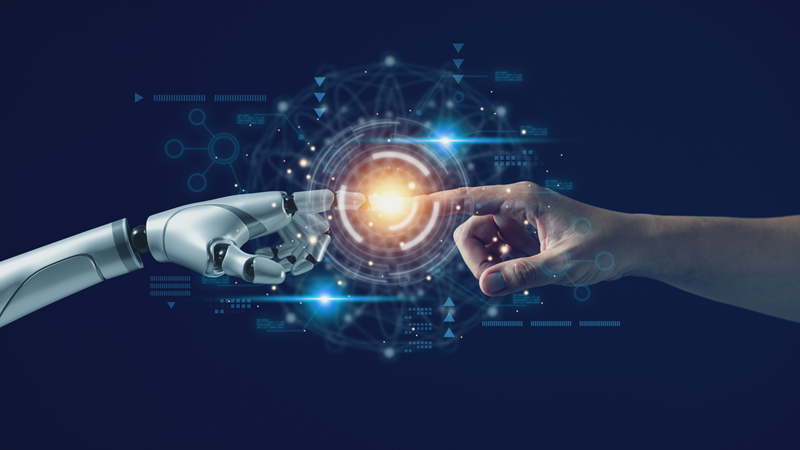
A windfall of opportunity as well as employee loyalty and productivity awaits the business leaders who step up as honest, skilled guides through the AI transition. (Image: iStock/Panya7)
At a recent roundtable luncheon on how to create meaningful connections in business, the conversation among the well-known business leaders landed authentically on a common denominator and theme: the pain, suffering and frustration happening in just about every aspect of our society.
However, there was also an overwhelming consensus on how this was an incredible opportunity to reinvigorate — or even re-invent — the dream we call America. Though they drew from very different viewpoints and experiences, they agreed that the business community can lead us to realizing that dream in a way we have never seen before — to realize a world of abundance for every single human in this nation and this world!
But for that to happen, business leaders must promote the prosperity and well-being of their employees, their customers and the people in the communities in which they operate. As Howard Schultz, former CEO of Starbucks and a true trailblazer of people-centric business, once said, “Success is not sustainable if it is defined by profit alone. We must also consider the well-being of our people and the communities we serve.”
Those who do will change the world for the better and realize unprecedented success.
America Is Hurting – and People Know It
Sadly, just a few months ahead of the United States’ 250th anniversary, a December 2025 Pew Research Center survey of 3,560 U.S. adults found that the majority of Americans say the country’s best years are behind us. Americans are also far more pessimistic (44%) than optimistic (28%) when asked to think about what things will be like in the U.S. 50 years from now. And this pessimism cuts across every demographic and is a shared national wound.
The pain is real — and, unlike last year when we documented how burnout was the energy-sucking vampire draining the American workforce, what we are witnessing now is something more extreme: complete mental, emotional and social collapse. People are not just tired. They are disconnected, despairing and done.
The American Psychological Association’s 2025 Stress in America survey — Stress in America 2025: A crisis of connection — found that more than six in 10 U.S. adults say that societal division is a significant source of stress in their lives. Half or more say they feel isolated (54%), left out (50%) or lacking companionship (50%) often or some of the time. And nearly seven in 10 people (69%) say they needed more emotional support in the past year than they received — up from 65% the year before.
The APA’s CEO Arthur Evans Jr. said it well: “People across the nation are not just feeling divided — they’re feeling disconnected. A sense of isolation and social fragmentation can have real consequences for our ability to manage stress and stay healthy.”
In fact, we at the Center for Social Capital believe it’s such an important and disturbing state of affairs that we are building our entire inaugural Summit for Social Capital in October around it: Unlocking the Business Potential of Social Capital in a Disconnected World.
We say “world” because it’s not just an American problem. Gallup’s first-ever State of the World’s Emotional Health Report – Gallup, which surveyed 145,000 people across 144 countries, found in 2024 that 39% of adults worldwide reported feeling a lot of worry the previous day, 37% reported stress, 32% experienced physical pain, 26% felt sadness and 22% felt anger. All these figures are significantly higher than they were a few decades ago.
Inside the workplace, the numbers are just as alarming. SHRM’s Employee Mental Health in 2024 Research Series — Here’s How Bad Burnout Has Become at Work, which surveyed 1,405 U.S. employees — found that approximately half of workers report feeling used up (51%), emotionally drained (45%) or burned out (44%) from their jobs. And it’s getting worse, not better. Mercer’s Global Talent Trends 2026 report, drawing from almost 12,000 executives, HR leaders, investors and employees worldwide, found only 44% of employees report thriving at work — a big drop from 66% just two years ago in 2024, and lower even than during the Covid-19 pandemic.
Gallup’s 2026 State of the Global Workplace report states that for the first time since Gallup began tracking, more U.S. workers are struggling than thriving. Employee engagement globally has fallen to 20% — its lowest level since 2020 — costing the world economy an estimated $10 trillion in lost productivity.
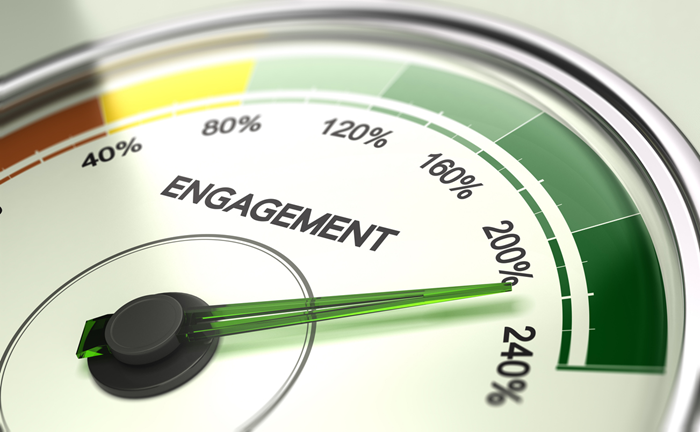
Employee engagement globally has fallen to 20% — its lowest level since 2020 — costing the world economy an estimated $10 trillion in lost productivity. (Image: iStock/Olivier Le Moal)
The Rug Has Been Pulled Out – and They Don’t Believe Government Can Fix It
What makes this moment different from every previous burnout cycle is the depth of the collapse in faith in legacy institutions. People do not feel government or their country will come to their rescue.
The 2025 Edelman Trust Barometer — which surveyed more than 33,000 respondents across 28 countries — found that economic fears have metastasized into grievance, with six in 10 respondents reporting a moderate to high sense of grievance: the belief that government actually harms them and serves narrow interests, and that the wealthy benefit while regular people struggle.
That’s further supported by data from the Pew Research Center that found, in 1958, 73% of Americans trusted the federal government to do the right thing almost always or most of the time. Today, that number has collapsed — with Democrats’ trust in government reaching an all-time low of just 9%, and only 26% of Republicans expressing trust in the federal government.
But They Still Believe Business Can Lead the Way
But here’s the very interesting and possibly unexpected plot twist to this modern tragedy.
In spite of the undeniable anger toward corporate greed, crony capitalism and predatory business practices happening lately, people still believe that well-intentioned business leaders genuinely care and can help more than other institutions. According to Edelman, business is actually seen as the most competent institution on earth — outperforming government by a whopping 49 points and on ethics by 29 points. “My employer” remains the single most trusted institution globally, at 75%.
But, and it’s an important one, those with the highest sense of grievance still believe business is not doing enough to address key societal issues. Or, in other words, they believe that since business has the greatest capacity to make a difference, it has the greatest responsibility to do so and it is not doing enough.
AI: The New Stressor – and the Next Test of Business Leadership
Add to all this the AI explosion, and you have yet another overwhelming instigator of stress. A Pew Research Center survey On Future AI Use in Workplace, US Workers More Worried Than Hopeful of 5,273 employed U.S. adults found that 52% of workers are worried about AI’s future impact in the workplace, and 32% believe it will lead to fewer job opportunities for them. While 36% feel hopeful, an almost identical 33% feel overwhelmed.
Also, Mercer’s 2026 Global Talent Trends report found that employee concern about job loss due to AI has surged from 28% in 2024 to 40% in 2026 — and that 62% of employees believe leaders underestimate AI’s emotional impact yet only 19% of HR leaders factor those emotional concerns into their implementation strategy.
Yet the powerful potential if they act responsibly and proactively on this front is enormous. PwC’s 2025 Global Workforce Hopes & Fears Survey of nearly 50,000 workers across 48 countries found that workers who are taught and supported to use generative AI daily effectively are significantly more likely to report higher job security (58% vs. 36%) and higher pay (52% vs. 32%) than those who use it rarely. In other words, human workers can really thrive when leaders provide clarity, skills investment and genuine support to help their human employees grow, rather than simply replacing them.
In other words, a windfall of opportunity as well as employee loyalty and productivity awaits the business leaders who step up as honest, skilled guides through the AI transition.
The ‘Mic Drop’ Moment: When Companies Answer the Call, They Win
When companies genuinely invest in the well-being of their people as a core business strategy, they do extraordinarily well from a profit perspective, something that is integral to our philosophy at the Center for Social Capital, according to “Thriving Workplaces: How Employers Can Improve Productivity and Change Lives,” a report published by The McKinsey Health Institute in collaboration with the World Economic Forum. It concluded that investing in employee health could generate between $3.7 trillion and $11.7 trillion in global economic value — and could boost global GDP by between 4 and 12 percent.
And, according to joint research done by professors at Harvard and Oxford, a one-point increase in employee happiness scores is associated with a $1.39 to $2.29 billion increase in annual profits. Organizations prioritizing employee health and well-being experience improved productivity, reduced absenteeism, lower healthcare costs and increased engagement and retention.
Putting a powerful punctuation on all that is research that found a portfolio of the 100 U.S. companies with the highest employee well-being scores would have outperformed the S&P 500 by approximately 20%.
So, business leaders who respond with genuine investment in the well-being, job security and AI empowerment for all their employees, and unrelenting purpose will not just change the world; they will build the most profitable enterprises of this generation.
The evidence is overwhelming. The public is speaking clearly and loudly. And the opportunity for business leaders to lead the world to collective abundance and prosperity is undeniable. The moment is now!
The only question is which leaders will lead the way. This month, we found quite a few willing to take up that charge — with a lot to say, and do, about it.

Organizations prioritizing employee health and well-being experience improved productivity, reduced absenteeism, lower healthcare costs and increased engagement and retention. (Image: Pexels/Darlene Alderson)
Ed Bastian, CEO at Delta Air Lines
At Delta, our wellness strategy enables our people to be their best and enhances their sense of purpose, belonging and affinity by providing high-value health and wellness offerings. Our Delta Wellness team takes a holistic approach to wellness — supporting our people from a physical, emotional, social and financial perspective. Over the last year, Delta has continued to enhance our employee wellness benefits, expanding our national network of pharmacies, launching a new program for nutrition and making in-network care more accessible. These offerings are a result of our annual company-wide survey, which provides a quantitative and qualitative assessment of our people’s total wellness. We strongly believe in a feedback-driven, people‑first philosophy, which allows us to elevate the employee experience while achieving a culture of safety, high performance and care.
One specific program I am especially proud of is Delta’s Emergency Savings Program, which allows eligible employees to earn up to $1,000 from Delta to fuel their emergency savings after completing a financial education and coaching program and contributing to an emergency savings account. The goal of this program is to give our people peace of mind by contributing to their financial wellness and helping to prepare them for the unexpected.
At Delta, we do not only want our people to be well, but we want them to flourish. We know in order to take great care of our customers, our people must first take care of themselves.
Jasmine Jirele, President & CEO at Allianz Life Insurance Company of North America
Allianz Life has prioritized and enhanced several of our key wellness programs this year.
Earlier this year, we increased our focus on workplace resilience. For us, this means supporting employees to balance workloads, take advantage of workplace flexibility (including additional hybrid scheduling around holidays alongside four fully remote weeks each year), support a culture of listening, and encourage mental health support when employees need it. We are also placing an increased focus on helping employees adapt to changing priorities and handle unexpected events more efficiently.
To support this, we are educating and empowering employees to speak with managers when they need support and offering additional training to help people managers become better listeners and more effectively support their teams.
Another key resource to help support our employees during challenging times is our True Balance initiative. This program offers benefits, amenities and perks designed to nurture employee health and well-being; champion their professional and career growth; care for their financial security and literacy; and support a strong, inclusive community inside and outside our organization. Through True Balance, we offer comprehensive health benefits, ongoing education on wellness and financial topics, and a focus on cultivating resilience.
Employees also have free access to our onsite fitness and wellness center, which offers a variety of in-person group exercise classes, state-of-the-art cardio and strength machines, and certified personal trainers. Our onsite health clinic offers comprehensive care at little to no cost for benefits-eligible employees and their families, with services from an onsite nurse practitioner and mental health provider. Recognizing the importance of mental health support, we make it accessible and affordable by providing it directly on campus.
Through any combination of these programs, employees can find their unique balance and support wellness that works for their lives.
Mike Brady, Co-Founder at 40 Million Owners
My thinking on wellness has shifted in a pretty fundamental way over the past few years, and a lot of that comes from what I saw at Greyston Bakery and what we are building now at 40 Million Owners.
At Greyston, a pioneering social enterprise best known for making brownies for Ben & Jerry’s ice cream, we approached wellness through an open hiring model and a deep belief in removing barriers for frontline workers. We met people where they were, helping them to overcome housing challenges, childcare gaps and financial instability. We built support systems around those realities because if issues like those are not addressed, nothing else works.
What I have come to appreciate more recently, and what ultimately led me to found 40 Million Owners, is the other side of the equation. The most powerful wellness intervention is ownership. When employees have a real stake in the outcome, everything changes. Work becomes more than a job. It becomes something they are building for themselves and their families. The sense of agency increases. The connection between effort and reward becomes tangible. That shift in psychology is incredibly powerful.
But neither approach is sufficient on its own. Ownership without stability leaves people unable to fully participate. Support systems without ownership can stabilize, but they do not always create long-term wealth or alignment. At Greyston, we built the foundation by addressing real-life barriers. At 40 Million Owners, we are focused on building the upside through employee ownership. The opportunity now is to bring those together. Ownership at the top, stability infrastructure at the foundation, and a real investment in people in between.
The AI Factor in Well-Being
The primary narrative right now is that AI is a tool for cost reduction, and in many cases that will be true. I think that framing is too narrow.
At 40 Million Owners, we are approaching AI from the opposite direction. We are using it to expand what is possible on the revenue side of the business, not just compress costs on the expense side. AI allows us to move faster in sourcing opportunities, analyzing companies and supporting growth strategies for employee-owned businesses. It means we can take on more work, serve more clients and build new skills for our team. That leads to a different conclusion from the one you are seeing in the headlines.
There is also something structural worth naming. Employee-owned companies are not immune to hard decisions, but the ownership model changes the instinct. When your workforce is your owners, the first question is not, “How many people can we cut?” It is, “How do we grow into the capacity we are building?” That is a fundamentally different conversation, and I think it produces better long-term decisions.
“We don’t have to sell off the American economy to the highest bidder. We can sell it to the people who built it: the workers.” —Katie Boland (Image: iStock/celiaosk)
Katie Boland, Co-Founder at Unlock Ownership
The current economy as built (started around 1980) concentrates ownership, extracts from people and place, and hides the harm behind layers of financial complexity, including th (e philanthropy meant to be its antidote. Most capital, including most charitable capital, reinforces the very system people say they want to change. The institutions that benefit from that arrangement work hard to keep it invisible. This isn’t an accident or the work of a few bad actors. It’s the structure of the dominant neoliberal economic model.
We’ve seen the playbook in the veterinary industry, where private equity rollups have led to higher prices, rushed appointments and a focus on upselling unnecessary tests rather than animal welfare. We’ve seen it in HVAC, where technicians are pressured to sell full-system replacements instead of affordable repairs. We’ve seen it in dentistry, where the “standard of care” is quietly rewritten to maximize billing codes. When profits are the only metric, customer value is the first casualty. The local knowledge, the fair pricing and the trusted handshake are replaced by a corporate algorithm designed to extract the maximum amount of cash from your community before the next quarterly report.
When Private Equity wins, the community loses. Decisions are no longer made by people who live in the neighborhood; they are made by fund managers obsessed with quarterly returns. The wealth that should circulate locally—paying for groceries, mortgages, and tuition—is extracted. Consider that foreign investors already own 40% of U.S. corporate stock; selling Main Street to Wall Street often means shipping our economic engine overseas.
But there is another path. We don’t have to sell off the American economy to the highest bidder. We can sell it to the people who built it: the workers. We have a unique opportunity to transition these retiring businesses into Employee Ownership. Whether through Employee Stock Ownership Plans (ESOPs), worker cooperatives, or Employee Ownership Trusts (EOTs), we can transfer these assets to the people who show up every day to make them run.
We are working to build an economy organized around well-being for people, communities and the planet — an economy where ownership is broadly shared, capital flows toward regeneration rather than extraction, and the rules of the system are written for the many rather than the few.
One of the many ways that we are doing that is through a multi-donor fund called Unlock Ownership. This fund enables anyone to participate in investing in work that enables people to benefit from where they work (employee ownership structures) and where they live (increased participation in the ownership and governance of housing). It’s designed to be the “easy button” for Donor-Advised Funds — of which there is currently more than $300 billion, largely sitting idle; capital that has already been tax-deducted and so belongs to the public good — and foundations to deploy catalytic capital. We aggregate these resources to fund specialized infrastructure for employee ownership transitions. We de-risk the deals for workers and provide a viable exit for owners who want to do the right thing.
Stefan Weitz, Co-Founder & CEO at HumanX
There’s a version of this story going around right now that basically says: “AI is here, therefore layoffs.” I think that’s a lazy take.
Inside our own company, what we’re seeing is almost the exact opposite. Give a small team the right set of AI agents and suddenly they’re not incrementally better — they’re five to ten times more effective. Same people, same context, just way more leverage. It’s like we’ve been talking about “10x engineers” for years and now it’s showing up across every function in the business.
So the question for us hasn’t been, “Who do we cut?” It’s been, “What could this team do now that they couldn’t do before?”
We’ve been pretty hands-on about it. I spent a week recently locked in a room building a bunch of internal agents — not because I think everyone should become an engineer but because it forces you to break work down into its actual components. What’s repetitive? What’s automatable? And then the more interesting question: What’s left for the human? I’m asking everyone to catalog the work they do — broken down into seven areas — that we can then rank and have our MIT intern this summer go beast-mode and build.
And that’s where things got fun. Who the hell likes doing work better done by a system? When we do it right, the human work doesn’t go away; the units of work actually get more valuable. Judgment, taste, relationships, creativity … all the stuff that doesn’t fit neatly into a prompt.
The big mistake I see companies making is they automate first and deal with the people consequences later. That’s how you end up with fear, layoffs and a lot of lost institutional knowledge.
I’m trying to flip that. Train people for the next job before you automate the current one. It’s better for morale, it’s better for the business and, frankly, it’s just more practical.
Now, to be clear, this transition is real and it’s super uneven. There are roles that will change dramatically and some that will go away. Anyone who says otherwise isn’t being intellectually honest. The lamplighter comparison is tiresome to me, but there’s a big difference between reacting to that reality and designing for it.
Companies that win are going to be the ones that figure out how to make their people exponentially more valuable.
Rasmus Holst, CEO at Zensai, with Robin Daniels, Chief Business Officer, and Nina Carøe, Chief Human Success Officer
Wellness is so important for long-term happiness and performance, so we continually look to add team opportunities to bond, including corporate walks, runs and team off-sites — which might not seem like a “wellness” thing but actually leads to a tremendous sense of belonging, which matters a lot for mental and emotional wellness.
The AI Factor in Well-Being
The current trend of companies using the excuse of AI efficiencies to lay off people seems cruel and short-sighted. Why not invest in people and give them the opportunity to shine? At Zensai we actively encourage use of AI, training for various platforms (depending on department and role) and opportunities to innovate and redefine how our companies operate. Our philosophy is simple: People have infinite capacity to learn, grow and develop, you just have to provide the opportunities to do so.
Richard Moore, President & CEO at The Good Feet Store
As a portfolio of leading health and wellness brands, Modern Performance + Recovery Brands (MPRB) should practice what it preaches regarding the well-being of our employees. This past year, we explored a wholesale change to our wellness benefits and plan for all our brands and teams. We researched other leading companies, we surveyed our employees, we held HR Q&As, and we welcomed 1:1 conversations to collect input and perspective from our employees about the strengths and weaknesses of our current plan.
We were surprised to learn that our employees, ultimately, did not want any major changes to our wellness benefits and plan.
But what’s most important is the process we undertook. We did the right thing by our people — hearing their views, proposing alternative options and keeping the status quo — by taking our time and by not rushing a decision or change. And our employees are happier for it.
Karla Trotman, President & CEO at Electro Soft Inc.
As a small manufacturing company, we found that our annual health insurance rates were rising while the offerings were declining. My goal has always been to provide benefits that are not only competitive but also as appealing as those of a larger corporation. Not being large enough to take advantage of self-insurance or level-funded plans, we decided to explore Professional Employer Organizations.
The PEO allowed us to present a more comprehensive benefits package. Instead of offering age-banded rates for healthcare, we now provide four distinct plans, one of which includes a Health Savings Account managed by the PEO. We have expanded our offerings for vision, dental and wellness programs, and Electro Soft continues to cover 60% of health insurance, regardless of whether employees enroll as individuals or families. While the Employee Assistance Program and retirement planning were previously available, the addition of pet insurance and prepaid legal advice has given our employees added peace of mind. Ultimately, our benefits enrollment numbers increased, and the staff were enthusiastic about the new offerings.
Our approach reflects something that companies sometimes overlook: True wellness begins with health and security. When your staff isn’t preoccupied with external factors such as health and wellness, they can bring their full selves to work.
The AI Factor in Well-Being
If we were to really look at the large companies that announced massive layoffs, we would see that the majority of people being laid off are from the following categories: middle management (Amazon calls it “removing layers”), corporate support functions (HR, recruiting, comms), entry-level white collar (they are not backfilling roles) and recruiters. AI hasn’t displaced these workers; it is simply being used to justify the layoffs.
Cheap capital, inflated growth projections and the pandemic hiring surge are what caused massive layoffs.
Now, there are some cases where AI has displaced workers, but mostly in process-heavy, repetitive, high-volume functions.
At Electro Soft, we do not have that issue. The skilled trades, precision manufacturing and hands-on work are still holding steady. Where we have deployed AI is to reduce friction for our employees, not to eliminate them. I took the time to do an AI accelerator to understand the changes that were happening in the marketplace because, as a leader, I need to model the adaptations I ask of my people.
We also never overhired. Everyone who works for us is load-bearing.

“The good news is that employees and their families can be empowered with the ability to control their attention, use digital technology in ways that benefit them, and defend against stress-based persuasion and cognitive exploitation.” —Keith Wakeman (Image: Pixabay/EnergieDeVie)
Keith Wakeman, Founder & CEO at SuperBetter
Today’s employees are more distressed than ever. The new 2025 Gallup “State of the Global Workplace” reports that 50% of U.S. employees experience high daily stress, and 69% are disengaged at work. An often-overlooked culprit: The human brain is under attack. The human brain is designed for a different time, and advances in digital technologies have made it relatively easy for others to exploit its vulnerabilities for their own benefit. As a result, employees feel increasingly unsettled, and struggle with stress, poor mental health, cognitive overload, difficult emotions and social disconnection.
The good news is that employees and their families can be empowered with the ability to control their attention, use digital technology in ways that benefit them, and defend against stress-based persuasion and cognitive exploitation. SuperBetter is an innovation company, and we want to collaborate with an enterprise organization to develop and pilot a program that integrates Digital Warrior Workshops, Resilience Mindset Training and tech-enabled tools for ongoing support and reinforcement. This human-centered approach can unlock the potential of employees in their professional and personal lives, enhance the success of work-teams, advance the goals of well-being and talent development departments, and even reduce risks of human vulnerabilities in cybersecurity.
The AI Factor in Well-Being
In the age of AI and rapid change, fostering a culture of resilience and thriving is synonymous with building and protecting social capital. Humans are not machines. Our brains and nervous systems are designed to keep us alive in a very different world.
People-centric leaders understand that motivation and ability are impacted by much more than knowledge alone; they are a function of emotional fitness, mental well-being, trusted relationships, a supportive culture and more. Training programs that rely on education and willpower alone will always fall short. What’s required is a mindset-led model that builds whole-person resilience and supports rapid and sustained outcomes.
We offer programs, workshops and curricula built using the SuperBetter Mindset, an evidence-based mental framework that reframes life’s challenges as a game. Ten peer-reviewed studies show its benefits for improving mental health, resilience, self-efficacy and performance, providing a clear way to empower individuals, teams and organizations to address modern challenges during times of uncertainty and change.
Kirk Reynolds, Founder & CEO at Wilder Retreats
We believe that the strongest cultures are built from within, and that includes how we take care of our own people. Our internal wellness program is designed to mirror the impact we create for our clients: grounded in nature, centered on connection and focused on sustainable well-being.
Each year, our team steps away from screens and schedules to participate in our own immersive retreat. These gatherings aren’t just perks. They’re a vital part of how we stay aligned, inspired and connected. We participate in the same restorative and energizing experiences we offer our clients: guided sound bath meditations; nature bathing practices; expert-led sleep coaching; and shared adventures like team hikes, whitewater rafting and rock climbing. These retreats allow us to slow down, reflect on our purpose, and return recharged.
Well-being is built into our everyday work life. We actively encourage time in nature, regular movement and breaks away from screens. Many of us work from standing desks or take walking meetings. Meditation, breathwork and mindfulness practices are not just supported, they’re normalized. And when the workday ends, we disconnect. Evenings and weekends are protected as time to reset, spend time with family, and simply live. We believe rest is a strategic asset, not a weakness.
This way of working keeps us sharp, creative and resilient. It also allows us to be more present for our clients, more collaborative with our teammates and more fulfilled as individuals. The result is not only a healthier team but also a higher quality of work, deeper empathy for our clients and a stronger belief in what we offer.
With our clients, our approach to wellness over the past year has evolved from offering wellness activities to designing integrated wellness experiences. In the past, clients might request yoga or meditation as add-ons. Today, we’re embedding wellness into the entire retreat architecture — from how the agenda flows to the pace of conversations to the environments we choose.
This shift reflects a broader change in how we define wellness. Traditionally, wellness was positioned as something that sits outside of work — or even in opposition to productivity. But we’ve redefined that relationship. At Wilder, wellness serves the business. When leaders and teams are well — physically, mentally, emotionally — they’re more innovative, more collaborative and more capable of navigating complexity.
Our clients consistently report boosts in productivity, engagement, creativity and cohesion after retreat experiences that prioritize real restoration and alignment. When you help people return to themselves, they return to work stronger.
Wellness, in our current thinking, is less about escape and more about alignment. It’s helping leaders and teams reconnect with purpose and return with energy and clarity.
Dr. Christie Smith, Founder at The Humanity Studio
Over the past year, I’ve seen a real shift among leaders who are serious about well-being — not as a benefit, but as a business strategy. They’re moving beyond wellness perks like fitness stipends and meditation apps toward something more foundational: trust, agency, purpose and connection.
In a volatile environment defined by uncertainty, the most effective organizations are rethinking how work is structured, how leaders show up and how psychological safety is created across teams. As we explore in our book Essential, the results are compelling: Companies that embed well-being into their culture — not just through isolated programs, but through leadership behaviors and systemic support — see an average return of 6 to 1 on wellness investments. When mental health is addressed meaningfully, employers save approximately $2,300 per person in annual health plan costs. And the stakes are high: Employee burnout is already costing the global economy an estimated $322 billion a year in lost productivity and turnover.
This isn’t about perks — it’s about performance through people. The truth is, employees can’t thrive in environments where they’re seen only as outputs. I work with leaders who are building systems that give people real agency — through intentional career development, coaching access and meaningful inclusion practices. When people feel seen, heard and trusted, they don’t just stay — they grow. And when they grow, so does the business. We’re not just managing talent anymore — we’re cultivating it. That’s the kind of leadership this moment demands.
“At P.B. Bell, we use AI to level the playing field by making our people more efficient and helping them accomplish more.” —Justin Steltenpohl (Image: Pixabay/Ralph_Germany)
Justin Steltenpohl, CEO at P.B. Bell
P.B. Bell’s company culture is not only a priority, but it is the key to our nearly 50 years of success. Prior to COVID, we established a culture club whose focus is employee engagement, and they execute various activities throughout the year to encourage collaboration, recognition (such as peer-to-peer recognition for those going above in displaying their values in their work activities), and wellness (such as employee appreciation days, volunteer events, wellness challenges and our annual holiday event).
P.B. Bell loves to get creative. We had a “Love Yourself” campaign where we encouraged staff to put wellness at the forefront of their days during an entire month. One example of this: We encouraged employees to take a walk around their community and share photos of these outdoor workouts. Another example: We did a “Cuddle Bunch” event with the Arizona Humane Society, where they brought in puppies to bring joy to the office, and we donated to the organization. P.B. Bell also offers personal perks to employees. Some of these include RecoveryOne (that includes a virtual PT solution with a designated health coach to assist with exercise and meal plans), financial wellness support with direct access to company-sponsored financial planner (Voya) and quarterly retirement educational meetings, wellness visit incentives, paid volunteer hours and rent discounts.
In addition to all these great events and perks, P.B. Bell ensures that a positive work environment is part of its core fundamentals. We pride ourselves on appropriately staffing our teams, to provide a strong work/life balance as well as prevent employee burnout. Because we take care of our employees, we have many who have been with the company for more than 10, 20 and even 30 years. Additionally, we have a roving team of tenured employees who fill in as needed across our portfolio. This provides opportunities for mentorship and seasoned support that ensures our teams are not overloaded.
The AI Factor in Well-Being
AI is a helpful tool to increase efficiency for daily projects, turning work that typically takes hours into tasks that take mere minutes. This increased productivity can eliminate the need for big companies to have large departments with employees essentially doing the same thing. It makes sense that a percentage of the people in those departments would be laid off, as the volume of work one person can accomplish is exponentially improved with AI.
Smaller, local companies, like P.B. Bell, don’t have large departments of people doing repetitive work, which makes each person an integral part of the team’s success. At P.B. Bell, we use AI to level the playing field by making our people more efficient and helping them accomplish more. And to make it to work, our people must embrace AI and utilize its capabilities to the fullest. We are actively sampling and identifying the best AI software based on the tasks we perform, finding appropriate training modules to help our people to get familiar exploring AI, and encouraging them to think about innovative ways to use AI to increase its effectiveness.
Ultimately, AI can never completely replace people, as it needs to be constantly checked and corrected by humans. For us, AI is a powerful tool that will allow us to improve, grow and flourish.
Jonathan Keyser, Managing Partner at Keyser Commercial Real Estate
At Keyser, mental health, family well-being and long-term security are foundational to our approach to caring for our team.
To help the members of Keyser feel supported in and out of the office, Keyser offers its team five mental health days annually after an employee’s first year of tenure, in addition to generous holiday and paid time off; a 12-week, 100% salary maternity leave plan; and monthly professional career-coaching.
Additionally, this year we’ve added the benefit of a retirement investment account with company match contributions to give employees financial peace of mind as they grow in their careers.
Lastly, while we are proudly an in-person organization and have fully transitioned back into the office, we remain committed to flexibility. We accommodate the needs of our team with understanding and trust, knowing that life and work don’t always operate on a rigid schedule.
Keyser’s benefits exist for two essential reasons: to allow our team to focus on making progress without worrying about who is taking care of them and their families — and because we genuinely care about our people as individuals. At Keyser, we don’t see our team members as cogs in a machine. We see them as family — and we treat them that way.