14 Authentic Leaders Driving Real Business Results – and Restoring Trust in a Disconnected World
By Chris Benguhe, RaeAnne Marsh and Elaine Pofeldt | June 25, 2026 7:58 am
How authenticity improves retention, engagement and performance – and builds deeper, healthier connections between employees and leadership
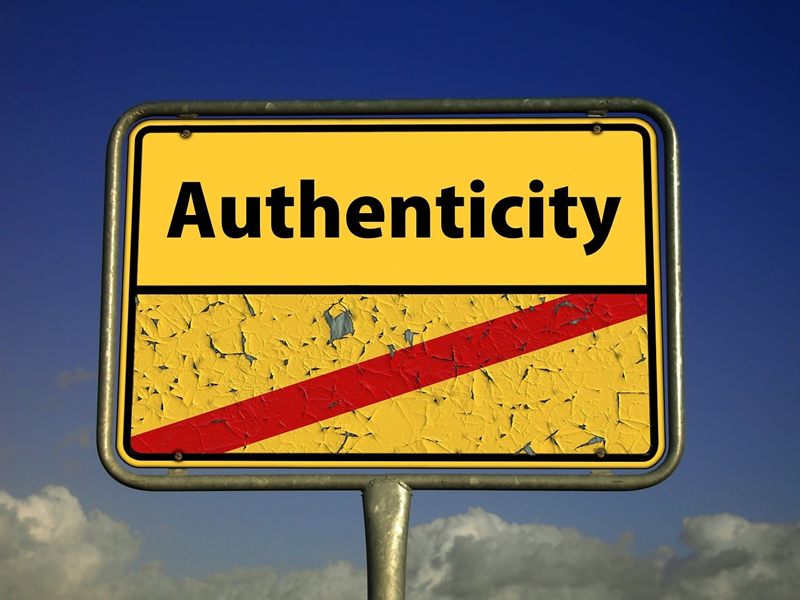
Caring and connection all must start with honest representation. (Image: Pixabay/ geralt )
Authenticity in leadership is one of the greatest and most powerful ways to address the growing crisis of connection in America — one we drilled down on in last month’s feature revealing a sobering set of statistics that show nearly 70% of Americans say they feel disconnected in a variety of ways from the institutions and leaders around them as well as from society in general.
However, on the positive side we said it was an incredible opportunity for business leaders to promote the prosperity and well-being of their employees, their customers and the people in the communities in which they operate.
But caring and connection all must start with honest representation. That’s one of the reasons we made Authenticity one of our ten core principles and decided to kick off our entire center with a focus on it back in 2023.
The principle is so particularly important at this time in history because we are in an age when misrepresentation, manipulation, fraud and fakery seem to have become so powerfully commonplace, as if we have somehow been thrown back into the days of the traveling snake oil salesman. And isn’t it ironic to think that, with all of our advanced technology, social evolution and now AI making it possible for all the knowledge ever known to be available to us at our fingertips, the one thing that seems to be all too often unattainable is just a little bit of truth and honesty.
Unfortunately, there are more than a few examples these days of imposters and charlatans using pat lines and PR campaigns that make them sound great on paper, all the while mistreating the people who make them successful in the first place. They are giving business a bad name while hurting people, our society and our world with their insincere profiteering.
But thankfully, people are getting really sick of it, and they are turning away more and more from this approach, even when it sounds slick on the surface, and running toward authenticity in every aspect of their lives, most especially business. There is a whole lot of verifiable research that shows authentic leadership in business produces measurable significant gains. An Empirical Study on the Role of Authentic Leadership found that authentic leadership improves “operational adaptability in navigating complex business environments and achieving sustainable success and business performance.”
Furthermore, Bill George, Harvard Business School professor and former CEO of Medtronic as well as the author of the best-selling book “True North: Discover Your Authentic Leadership,” makes a clear, compelling case that authentic leadership is now a competitive advantage, not a soft ideal. He argues that companies are shifting away from command-and-control models because people “don’t leave companies, they leave bad managers,” and authentic leaders create the trust, purpose and human connection that retain talent and drive performance. He credits authenticity for Medtronic’s transformation from a $750-million company to a $32-billion one — an example of how purpose-driven, authentic leadership fuels growth by aligning people around meaningful impact rather than shareholder metrics.
And Harvard’s exhaustive and far-reaching Global Research Report: Leadership Reframed for the Workplace of the Future concluded that “Organizations that reported exceeding expectations for revenue, customer experiences, and employee engagement … were decidedly more likely to emphasize Leads Authentically.” In fact, among the elite top performing 7% of companies, 76% said their culture emphasizes authentic leadership, compared with only 41% of all other organizations. Their research also shows that authenticity is a direct driver of employee engagement and morale: When leaders fail to lead authentically, engagement drops sharply. Authentic leadership also correlates with higher productivity, stronger team performance and better outcomes during uncertainty and change.
However, Harvard’s data in particular revealed a crucial caveat: while 59% of senior leaders believe their organizations emphasize authenticity, only 36% of rank-and-file employees agreed. Employees just aren’t feeling it!
Bottom line: Authentic leadership is not a soft skill; it is a measurable performance metric that separates high-performing organizations from the rest — and it’s not so easy to achieve. Its real presence and practice are a little harder to come by.
But it is achievable. And our Social Capital leaders offered up here this month are the proof, in a whole lot of ways, for how to achieve it. They are all about that classic, timeless value of respecting people and doing so in open, honest and forthright ways, which they dive into in their exclusive insights offered below.
They do not pretend to be the flavor of the month, even if it means maybe losing some business or press in the short run. Because they know in the long run it will mean more to be true and authentically committed to what they value most: people and how to serve them through their business, by creating real, honest and genuine relationships with their employees that matter and showing them they matter.
The social capital leaders we showcase this month do things this way because they truly believe people are the whole point of profits. They run their companies to serve people, not the other way around. And it works!
Now rest assured every one of the leaders we have honored and will honor as we grow and evolve our Center could be honored for this, so this month’s list of honorees is not meant in any way to exclude the rest of our powerful network. But we are highlighting these leaders because they had something very distinct to share on this timely topic, to showcase this power and commitment to authenticity — from which others may learn.
So, here for you are this month’s honorees sharing, in their own words, what they believe authenticity is all about. We hope it helps you to practice authenticity in your own business.
Don Larson, Founder & CEO at Sunshine Nut Company
While in the midst of securing funding for two large-scale Sunshine Villages Projects — one involving 4,000 families and planting 1 million cashew trees and the other involving 6,000 families and planting 1.5 million cashew trees — Don shared the following thoughts. (More perspective on Sunshine Village Projects may be gained from his article “Can a Cashew Company Save a Nation? The Powerful Story Behind Don Larson’s ‘Sunshine Approach’: A Business Model for Lasting Transformation.”)
Authenticity goes beyond how we speak to people. It extends to how we design the systems which affect their lives. The Sunshine Villages Project was built on a simple belief: If we genuinely respect people, we must create opportunities that allow them to build their own future rather than depend on ours.
Too often, development efforts unintentionally communicate a message of dependency. Resources are given, projects are implemented and communities become recipients rather than participants. While these efforts may improve circumstances in the short term, they can fail to address a deeper human need: the desire to contribute, create and take ownership of one’s future.
Authenticity requires us to see people not as problems to be solved but as partners with untapped potential. In the villages where we work, we do not arrive with the assumption that we have all the answers. Instead, we begin by recognizing the strengths that already exist: hardworking families, local knowledge, community leadership and a desire for a better future. Our role is not to replace those assets but to help unlock them.
This philosophy is the foundation of the Sunshine Villages Project. Rather than creating permanent aid programs, we help establish community-owned cashew orchards, village processing facilities, and local entrepreneurial opportunities. The goal is not simply to provide income, but to create ownership. Ownership creates responsibility. Responsibility creates dignity. Dignity creates hope. And hope inspires people to accomplish far more than any outside organization could ever achieve on their behalf.
The most authentic form of respect is not giving someone a handout. It is believing in their capacity to succeed. It is creating a pathway for them to become producers instead of consumers, employers instead of employees, and leaders instead of followers. When people realize they are not limited by their current circumstances, they begin to see possibilities where they once saw barriers.
The Sunshine Villages Project is, ultimately, an expression of authenticity in action. It is the belief that every person, regardless of where they were born or what resources they possess today, deserves the opportunity to participate in creating prosperity. When we treat people as capable partners and provide the tools to succeed, we do more than improve livelihoods. We help restore something that poverty often steals: the belief that tomorrow can be better than today, and that they have the power to help make it so.
“The most authentic form of respect is not giving someone a handout.” — Don Larson (Image: iStock/ CreativaImages)
Jonathan Keyser, Founding Member & Managing Partner at Keyser
Business leaders today are surrounded by noise. From constant advertisements to endless news alerts to a steady stream of marketers competing for attention, executives are increasingly drawn to authenticity, transparency and leadership they can trust.
That same demand for authenticity is reshaping the commercial real estate industry.
After years of remote and hybrid experimentation, many organizations are rediscovering something they have known all along: Culture, collaboration, mentorship and innovation are strengthened when people spend meaningful time together. In fact, 83% of CEOs now expect a full return to office within the next few years, signaling a major shift in how organizations view the workplace.
The conversation is no longer centered on whether employees should return to the office — they are. The focus, rather, now has shifted to creating workplaces that make the commute worthwhile. When office environments are difficult to access, in an amenity desert or generally disconnected from employee needs, organizations limit the very collaboration, culture and performance they are trying to create.
A return-to-office strategy cannot succeed without a thoughtful workplace strategy behind it. That places greater importance than ever on commercial real estate decisions.
Too often, business leaders view real estate primarily through the lens of cost. While cost matters, strategy matters more. In a rapidly evolving business environment, companies need real estate decisions that support agility, reduce risk and align with where the organization is headed.
To position themselves for success, companies should prioritize three key considerations:
- Quality Space, Employee Access and Amenities
The building you are in should be nice and inviting, and your workplace should be easy to reach and surrounded by amenities that support employee well-being, productivity and engagement. A great office experience begins long before an employee reaches their desk.
- Lease Contract Flexibility
Business conditions, workforce needs and growth plans can change quickly. Organizations should only sign lease structures that anticipate change, protect the company from unnecessary risk and provide the flexibility to adapt as needs evolve. Without that flexibility, companies can find themselves stuck in rigid lease agreements that no longer support their business, operations or long-term strategy.
- Growth Alignment & Adaptability
Your space and layout should not only address the organization’s immediate needs but also anticipate where the company is headed. The way a workplace is designed today may need to change significantly in the future, which makes adaptability in layout, furniture and overall planning essential. The right workplace strategy anticipates and accommodates growth, evolving workforce needs, operational changes and long-term business objectives.
As organizations embrace a renewed focus on in-person collaboration, the most successful leaders will be those who align real estate decisions with broader business strategy.
The office is no longer just a place to work. It is a tool for attracting talent, strengthening culture, improving collaboration and driving performance. In today’s market, companies that treat real estate as a strategic advantage rather than a fixed expense will be best positioned to cut through the noise and build workplaces people trust, value and want to be part of.
Donald Thomson, Founder & Chairman at CRDC Global
Authenticity as a Leadership Value
At CRDC (The Center for Regenerative Design and Collaboration), authenticity is not just a principle — it is the heartbeat and soul of what we consider a movement. The extraordinary passion it takes to work here demands extraordinary people: individuals who embody our vision and unite in the pursuit of “Business for Good.”
As our business group grew in recognition and value at an accelerated pace, leadership naturally came under competitive attack. In such moments, the truest measure of authentic leadership is not revealed when a founder or leader is strong and thriving, but when challenged and vulnerable. It is then that the uncompromising loyalty of employees and stakeholder support shines most brightly. Their willingness to stand firm, to carry the torch and to uphold the path set before them becomes the most poignant demonstration of authenticity — where the DNA of leadership is regenerated through the strength and dedication of its people.
Through our REAP business model — Recover, Enrich, Appreciate, Prosper — we build systems where nothing is wasted and everything has value. At CRDC, leadership is defined by the courage to live these values daily and by the resilience of a team committed to carrying the mission forward. REAP shows that authentic leadership is not abstract; it is a shared vision, transformative in its impact, and the foundation of our growing global presence.

“The truest measure of authentic leadership is not revealed when a founder or leader is strong and thriving, but when challenged and vulnerable.” —Donald Thomson (Image: Pixabay/ CreativeCanvasShop)
Dave Alexander, Founder & Managing Member of Caljet of America
Authenticity!
This word is defined by me using the twelve words of the Scout Law: Trustworthy, Loyal, Helpful, Friendly, Courteous, Kind, Obedient, Cheerful, Thrifty, Brave, Clean and Reverent.
My father was a Scout and led me in these principles by example. When I became a Scout, I accepted the Scout Law, and it drove me to become an Eagle Scout.
I would now add the word “communication” to the Law, to help teach the Law to others and make the world a better place. If you are authentic, people you interact with will know who you are, and all in your circle of acquaintances will have a better life!!!
A typical talk that I give to a new employee is: “To grow personally and prosper here at our company, you must be trustworthy — to yourself, your family, the company and our customers and suppliers.”
Adam Goodman, CEO at Goodmans
The best way I know to model authenticity is to be open about my own weaknesses. I subject myself to a regular performance review that gives everyone in the company a chance to comment on my strengths; weaknesses; and what I should start, stop and continue doing. I publish the results and share what I am doing to improve. This helps create a culture where people feel safe discussing their own weaknesses, making performance conversations less defensive and more constructive.
To this point, I posted my improvement plan to our internal Teams chat, and it received some of the highest engagement of any post I have ever done. Following are some quotes from my 360:
- “Adam leads this company in an open, transparent and upfront way.”
- “I have never been a part of an organization that is so employee driven.”
- “Adam’s ethics are an inspirational model for doing business.”
Michael Brady, Co-Founder of 40 Million Owners
I think authenticity in business is often misunderstood. Many leaders view authenticity as a matter of what they say and how they communicate, when in reality authenticity is something employees experience. Team members decide whether leaders are authentic by watching whether their actions align with their words, particularly when decisions are difficult, costly or inconvenient.
One lesson that has stayed with me throughout my career is that people are remarkably good at detecting gaps between stated values and actual behavior. Mission statements don’t build trust. Repeated actions do.
At Greyston, we saw this firsthand through Open Hiring. We removed interviews and background checks and committed to giving people a chance regardless of their past. The policy itself was important, but what mattered most was our commitment to making it work. Employees knew we were serious because we invested the time, training and support necessary to help people succeed while holding ourselves accountable for building a profitable and sustainable business. We never treated social impact and business performance as competing priorities. That consistency between our values and our actions created a level of trust and engagement that would have been impossible through words alone.
Today, my work focuses on employee ownership, and I see a similar principle at work. If a company truly believes employees create value, authenticity requires more than recognition programs or employee appreciation events. It means giving people a meaningful opportunity to share in the wealth they help create. Employee ownership aligns actions with values by making employees actual stakeholders in the success of the business.
One example that stands out is the annual ESOP participant statement that employee owners receive. For many workers, especially those in frontline or lower-wage roles, it is the first time they have ever seen a meaningful ownership asset accumulating in their name. The statement shows the value of the shares allocated to their ESOP account based on the company’s independent valuation. What was once an abstract idea — ownership — becomes tangible and personal. I have met employee owners who were genuinely surprised to learn they had accumulated tens of thousands of dollars in retirement wealth through their ownership stake. For someone who may never have viewed themselves as an investor or business owner, that moment can be life-changing. More importantly, it serves as powerful evidence that leadership’s commitment to shared success is real. When leaders say employees are valued partners in the enterprise, the ownership statement provides proof that those words are backed by action.
The conversation changes when people see themselves as owners. They begin asking different questions, thinking more long-term, and approaching their work with a deeper sense of responsibility and pride. That shift is powerful because it reflects an authentic commitment by leadership to share both responsibility and reward.
For me, authentic leadership comes down to a simple question: If someone observed your actions for a year and never heard your words, would they correctly identify your values? The closer the answer is to yes, the more authentic your leadership is likely to be.
Amy Lemire, CSP®, DTM; President & CEO at AIM Training and Consulting, Inc.
Authenticity Is Not About Being Perfect — It’s About Being Consistent
Authenticity is often described as “being yourself” but, in business, I’ve found it’s more than that. Authenticity is the consistency between what you say, what you value and what you actually do.
As a leader, I’ve learned that employees don’t expect perfection. They expect honesty. They also expect accountability. I define accountability as “what we are doing when no one is watching.” They want to know where they stand, understand the company’s priorities, and trust that leadership will follow through on commitments. When leaders consistently align their actions with their words, trust grows. And trust is the foundation of engagement, collaboration and performance.
I reflect on companies I have worked in as an employee. At the time, I didn’t think much about how the leadership team impacted the entire company’s culture, results and success. One company in particular stands at the front of the line of success. The leadership team always had an “open door” policy, were positive, and engaged with us employees in good and challenging times. As a result, we worked harder, collaborated as teams and became a marketplace leader. I learned from this that the culture starts at the top of an organization.
At AIM Training & Consulting, we focus heavily on the connection between mindset, habits and results. The same principle applies to leadership. Authenticity isn’t demonstrated through a single speech or company value statement. It’s demonstrated through the small, daily habits that reinforce respect, accountability and transparency.
One example is encouraging open conversations about challenges and opportunities rather than pretending everything is fine. When team members feel safe sharing concerns, asking questions or offering ideas, they become more invested in the organization’s success. People support what they help create.
I’ve also found that authentic leadership requires vulnerability. Admitting mistakes, asking for feedback and being willing to learn alongside others doesn’t weaken credibility — it strengthens it. It shows employees that growth is valued more than ego.
In challenging times, authenticity becomes even more important. Teams look to leaders for clarity and confidence. They don’t need leaders who have all the answers; they need leaders who are honest about the situation, committed to finding solutions and willing to take meaningful action.
Authenticity is not a soft skill. It is a business strategy. When leaders consistently align their values, actions and decisions, they create trust. And when trust exists, people perform at their best.
I particularly like this angle because it sounds like you and ties directly into your Sales Acceleration Code framework: mindset + success habits + meaningful actions = results. It also gives them the employee-focused perspective they specifically requested without sounding theoretical.
“Authenticity is not a soft skill. It is a business strategy.” —Amy Lemire (Image: Pixabay/Tumisu)
Mark Emery, Co-Founder & CEO at Juvo Jobs
Authenticity is a fundamental expectation from employees and customers, yet hiring processes have become overly transactional. Job seekers have been reduced to résumés and employers often hide behind generic job descriptions. In any industry, similar approaches diminish the human connection that’s critical for meaningful employment relationships.
At our company, Juvo Jobs, we understand that true connections happen when we move past hiring limitations. For example, introducing more personal, human elements into the hiring process — whether through video or candid conversations — can create opportunities for people to showcase who they are beyond their credentials. Authenticity isn’t just about who you hire; it’s about how you hire, which is why we challenge companies to lead with honesty in their hiring practices by being open about expectations and pay on our network.
Authenticity can’t be manufactured through policy. The moment you try to formalize it, you strip away the very thing that makes it real. Genuine leadership creates a standard that doesn’t need to be enforced because the team holds each other to it naturally. At Juvo Jobs, we believe that if you get the culture right and if you instill the right values and lead by example, the outcomes take care of themselves.
“Mark has built a culture at Juvo Jobs where people feel safe being their most honest, authentic selves,” says Alexis Miller, marketing and programs director at Juvo Jobs. “As his marketing and programs director, I’ve experienced this firsthand. Navigating challenging projects, he consistently made it clear that growth mattered more than perfection. His mentorship style, rooted in vulnerability and genuine openness, has helped me and my colleagues grow more confident in our careers and more deeply committed to Juvo’s mission. It’s hard to champion authenticity in hiring without first modeling it from within, and that’s exactly what Mark does.”
Verne Harnish, Owner & CEO of Scaling Up
“Peace and Love” — that’s our new P&L at our executive education firm Scaling Up. It started with me, the CEO, doing “the work” last year with a hypnotherapist and undergoing a hero’s journey with the Beckley Foundation.
To be authentic around the “old” me was part of the problem at my firms. Now that I’m continuing to heal, this new “P&L” approach is paying dividends since the team can see that I’m modelling the way.
From how we respond to customers to the way we deliver our services, everything is now aligning around a way that is better — and is authentic because I changed to match.
Brent Ridge and Josh Kilmer-Purcell, Co-Founders of Beekman1802 and Coauthors of G.O.A.T. Wisdom: How to Build a Truly Great Business–From the Founders of Beekman 1802
Beekman 1802 is a skin health company that started with a single act of kindness — one neighbor helping another — and we grew the company one neighbor at a time.
Authenticity and community have always been central to our success, but as social media became the most prominent communication, especially with younger consumers, we knew that we had an obligation to select people who inherently have the DNA of the brand and can speak authentically in their own voice. Using research from Kindness.org and Oxford University, each of our social media influencers (now in the thousands), is asked to take a questionnaire that assesses their individual “Kindness Quotient,” and our team scans how each of them responds and interacts with their own community in the comments section of their feeds. This ensures each person with whom we work uses their platform to put more kindness out into the world.
Brandon West, Founder & Chief Purpose Officer at PHOS Creative
The need for authenticity in leadership has never been greater. We live in the age of distrust, where people don’t begin from a place of trust but from skepticism and question marks. Authenticity and transparency aren’t just about corporate finances, organizational decision making or strategic planning. They are also deeply personal.
I’ll never forget a conversation with a team member and her reaction when I shared that some of our current struggles in business were just as challenging for me as they were for her. She responded, “Oh, I had no idea … That might be good for the team to hear. All they get from you is excitement and hope for the future.”
The truth is, I want to be a leader who dreams for a bigger, brighter future, but I also want to be relatable and connected with my people. Genuine connection requires trust, and trust is earned through the consistent practice of authenticity.
Susanne Evens, Founder & CEO at AAA Translation
Authenticity – A Leadership Quality That Can’t Be Faked
Authenticity has become one of the most discussed qualities in business leadership, and for good reason. Authenticity inspires and motivates employees, and that inspiration translates directly into better performance and better customer experiences. When leaders demonstrate genuine care for their mission and their team, it creates a workplace culture grounded in trust and mutual respect — and that culture becomes a competitive advantage no strategy document can replicate.
The philosophical roots of authenticity run deeper than the business press suggests. Existentialist thinkers like Jean-Paul Sartre understood authenticity not as simply “being yourself” but as taking full ownership of one’s choices rather than hiding behind roles or convention. Sartre called the alternative “bad faith” — performing a role so completely that the person disappears into it. The inauthentic leader is not the one who maintains professionalism, but the one who lets the title of “executive” make decisions for them; who says “my hands are tied” when their hands are, in fact, free.
Employees can detect the difference with remarkable precision. They rarely expect leaders to be flawless. What they recognize — and remember — is whether a leader’s stated values hold up when honoring them carries a cost.
When one of our employees faced a family emergency, we provided extended time off and paid for that time away. The decision allowed the employee to focus entirely on caring for a family member without worrying about a paycheck. No policy required it. But our mission statement speaks of valuing people, and this was the moment to prove those words meant something. The effect rippled far beyond one person: The entire team saw that the care we professed was real, and trust deepened across the organization.
That is what authenticity looks like in practice: alignment between what a leader claims to value and what they actually do, especially when it’s inconvenient. Leaders who close that gap don’t just earn loyalty. They build workplaces where people give their best because they know their leaders would do the same for them.
What employees recognize — and remember — is whether a leader’s stated values hold up when honoring them carries a cost. —Susanne Evens (Image: Pixabay/ TheDigitalArtist)
Penny Pennington, Managing Partner at Edward Jones
[Editor’s Note: We were absolutely blown away by these incredibly “authentic” recent comments by one of our favorite business leaders, Penny Pennington, who shared these incredibly applicable thoughts in a recent longer interview with Gallup’s Jon Clifton, so we felt we absolutely needed to include them.]
I was a banker for 14 years before coming to Edward Jones. I came to Edward Jones in 1999, and I had a very successful career with great organizations. Something was in me that was restless for making a bigger difference, for being a leader, for making a tangible difference in other people’s lives. And there was something about the person-to-person aspect of that that was very important to me. And I just wasn’t getting that where I was. I wasn’t getting filled up associated with the things I knew I had the potential to do. And so I did take a leap.
I became a financial advisor with Edward Jones. And what does that mean? Well, what I saw that it meant was that it was going to matter if it was me who showed up every day to build a practice by building trust with families in this suburb of Detroit called Livonia, Michigan. That it mattered that my gifts and skills walked through that door every day, my authenticity, my skill and acumen, as a financial professional, and that I was gonna earn the right to serve every single day. It’s the hardest thing I’ve ever done.
It is the thing that made me explore more deeply than anything I’ve ever done, including almost the job that I’m in today, who I am, what my purpose is, the way that I want to convey to people that I have something that can be of benefit to them, but equally as important that I want to learn from them about how to be better, how to be a better and more trusted professional, how to be a better mom, how to be a better community leader. And I’ll share a story with you that really brought it home for me when I was in the first couple of years of my practice.
I was diagnosed with breast cancer at 39 years old. I was a young cancer patient. It was shocking. I’m so young. How can this be happening? And I was two years into my practice, and I realized because of my treatment that I was going to have to let my clients know that I wasn’t going to be there for a minute. Now, I was pretty sure I wasn’t going to die. However, I’m a new financial advisor, building a practice, meeting families. Who wants a financial advisor that they’re worried might not be there next year to continue to serve their families? So I needed to write a letter to all my clients and tell them exactly what was happening. This was a time in the mail services and I was in a kind of town where you put the letter in the mailbox at four o’clock in the afternoon and they were going to get it the next day. Well, that’s what I did. I put hundreds of letters in the mailbox at four.
My clients started getting that letter the next day. And I was scared to death when that happened that I would start getting phone calls. Oh, Penny, you’ve been terrific for us, but we’ve decided to go work with another financial advisor. Instead, what happened is they started pouring into my office with rosary beads, nutritional books, pink teddy bears, pink flowers, advice about what to do to make sure that I got better really, really fast. What I didn’t realize, I knew how much I cared about them. I did not realize that we were building a relationship of mutual love and support.
And I say to this day that it is my faith, my family, my doctors and my clients who restored my health as quickly as they did because of the type of relationship that you build in those relationships. That’s when I really knew that it wasn’t a cliff that I had jumped off. It was a place from which I could soar because I was learning how to be a better professional but also a better human being.