Zensai’s Powerful Paradox: Using AI to Put the ‘Human’ back in ‘Human Resources’
By Chris Benguhe, RaeAnne Marsh and Elaine Pofeldt | July 30, 2026 12:34 pm
Scaling the value of people not just software is the core mission for CEO Rasmus Holst & Chief Business Officer Robin Daniels
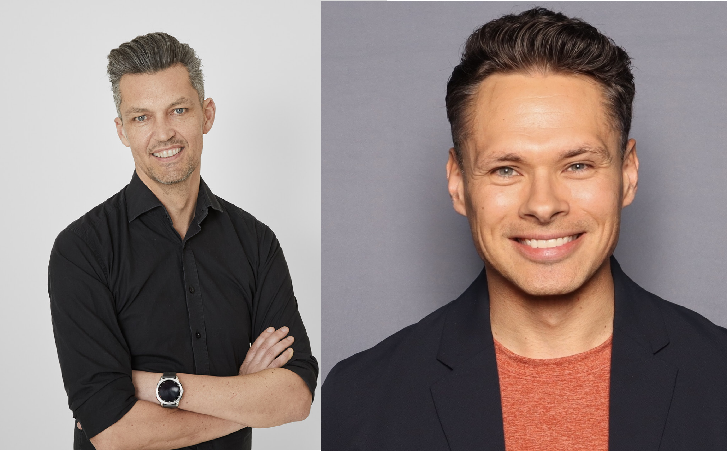
“Happiness only exists when shared.” This quote he recently heard and enthusiastically relates struck a chord with Zensai CEO Rasmus Holst. And it well sums up an underlying essence of Social Capital.
As a human resources company, Zensai is more focused on scaling the human than scaling the software.
“Robin and I felt like there’s a change needed for this and there’s a different just articulation of what it is that department does. Does it manage human resources, moving around machines and people in the same way?” says Rasmus, who co-wrote The Human Success Playbook: Leadership Tale for the Age of AI with Chief Business Officer Robin Daniels and Chief Human Success Officer Nina Carøe. And Robin adds, “The book is really meant as a rallying cry and manifesto to give everybody else who’s in positions of leadership the inspiration they need to push humans at the center of this revolution that we’re going through.”
And, while Rasmus talks about building Zensai to unicorn status, there’s another goal he identifies. “If we never ever make it to 100 million but every human resources department is called ‘human success,’ I’m the happiest camper on earth. I’ll sit in my old age and overlook the ocean and go, ‘That’s what we did.’”
Shares Robin, “We really bonded over this idea of, ‘How do we make sure that every single person has the skills and knowledge and motivation they need every day to be successful, from the individual to the team to the department that they work for, everything is aligned that way?’” He dismisses the idea that a technology platform will just solve all of this. “You just need the right culture, the right leadership,” he says, noting, “That’s also why we wrote the book — to inspire you how to actually do that in your company. But at some point you also do need the right platform to do so.”
And this, Robin explains, is where Zensai makes its mark. One of its core pillars is ensuring people are trained on the skills to be successful today while also prepared to learn the skills for the future “because we know skills get outdated very quickly.” And beyond that, Rasmus and Robin believe there’s a need to identify what that learning is building toward.
“Over time, what you start seeing is really interesting,” Robin shares. “Trends: You can see how an employee or department is trending up or down, what they’re struggling with, what they’re not.” Which, he points out, makes it easier for leaders to address problems. “And you start seeing this cohesiveness that happens between employees.”
“If we can add to that,” says Rasmus, “then what AI has enabled us to do is to insert coaching at all these levels.”
But software can’t replace the human element of leadership. As Robin points out, “A key part of this is having the courage to stand out for what is right.” He offers as example: “Let’s say you’re a thousand-person company and you have a binary choice in some ways. You can either say, ‘I’m going to cut 300 people and try to get more efficient that way’ or maybe you say, ‘Okay, we’re not going to cut anybody. We’re actually going to invest in them and we’re going to grow much faster instead.’” The first may be seen as the safer choice, one that Wall Street cheers, and the company’s stock goes. “The other one is a little bit more hard because it’s a little bit more unpredictable. You have to have a vision. It starts there by having clarity of where you’re going and what you want to ultimately achieve. And then also within that vision, give people some freedom to learn and grow and surprise you.”
Robin and Rasmus are very open throughout the interview about their aligned vision and how they came together around it — and how they see Zensai taking it forward. “We can get learning and growth from a lot of different places, but we really bonded over the fact that there’s no doubt we are where we are because a lot of people along the way have helped us in our own kind of way to become the best that we could be,” Robin says. “And I just think what a different place the world would be if everybody had access to that, if they had access to the best coaching and sometimes that’s through people, sometimes that’s through other ways as well — and that’s, again, what our platform is for.”
From Rasmus’s perspective, “The way we think about it is that when we create space with AI, we try to move teams closer to the customers because I still think that, even where we are at today, people and people relations matter.”
Click on the link below and listen in as Rasmus and Robin talk about their book, The Human Success Playbook: Leadership Tale for the Age of AI, and turning AI on its head for “Human Resources.”